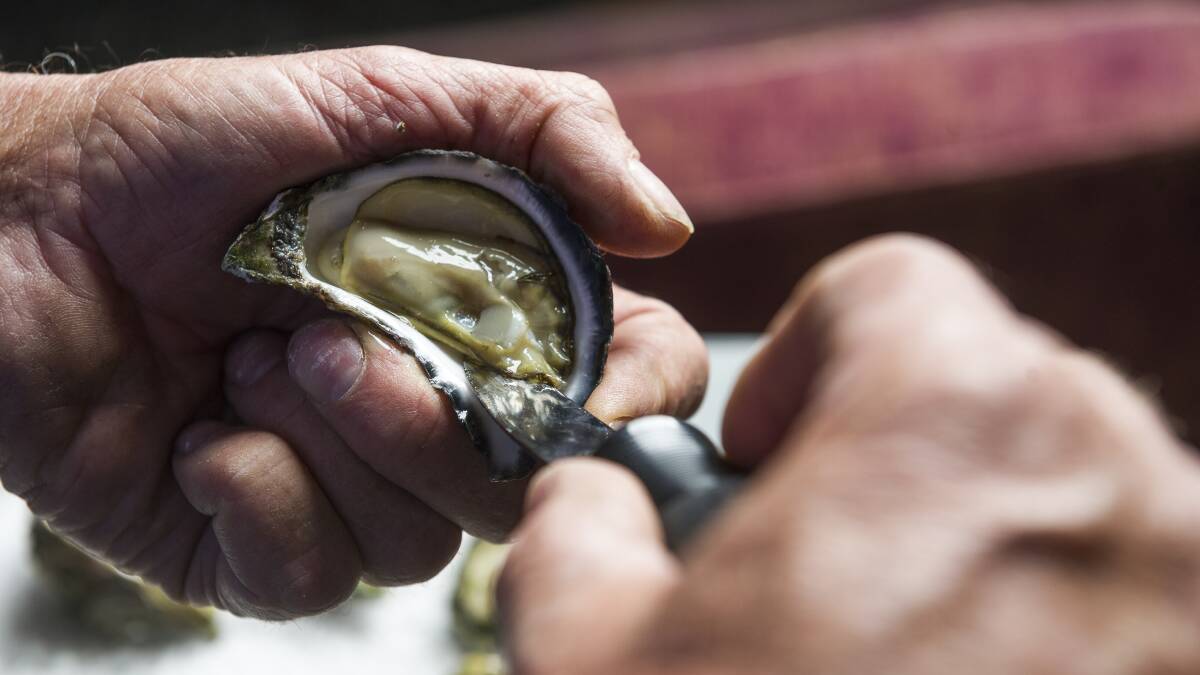
Health authorities are warning Canberrans to avoid eating raw or partially cooked oysters from South Australia's Coffin Bay following an outbreak of gastroenteritis-causing bacteria.
ACT Health, in conjunction with from other jurisdictions, is urging oyster lovers to check the label and think twice about consuming raw oysters from the affected area.
It follows two cases of gastroenteritis in the nation's capital identified as being caused by bacterium Vibrio parahaemolyticus, most commonly found in affected raw oysters.
The health directorate said it was continuing investigations to determine where the oysters were sourced from amid an emergency recall for oysters in South Australia.
The state's health authorities closed Pacific oyster farms in Coffin Bay on the Eyre Peninsula and have issued an emergency recall for oysters produced between September 4, 2021 and November 16, 2021.
While raw products were of most concern, the advice extends to frozen products produced from the region between those dates.
Gastro symptoms usually occur within a day of eating contaminated oysters or shellfish and can include watery diarrhoea, nausea, vomiting, fever, abdominal pain, headache and muscle aches.
While most people recover with rest and fluids after a few days and symptoms are usually mild, the health alert said, it can be more severe for the elderly and people who are immunosuppressed.
Anyone experiencing symptoms is encouraged to seek medical advice.
Coffin Bay is famous nationally for its oysters, which grace the tables of some of Australia's top restaurants.
The SA Department of Primary Industries said on Wednesday it had stopped oysters from leaving the area as a precaution, as it investigates a recent rise in Vibrio parahaemolyticus cases.
Since September, 45 Vibrio parahaemolyticus cases have been linked to eating raw oysters, compared with zero cases in 2020 and eight in 2019.
Officials are trying to trace back the recent cases.
"Many growers had already voluntarily closed their harvesting operations," the department's executive director of biosecurity Nathan Rhodes said.
- with AAP