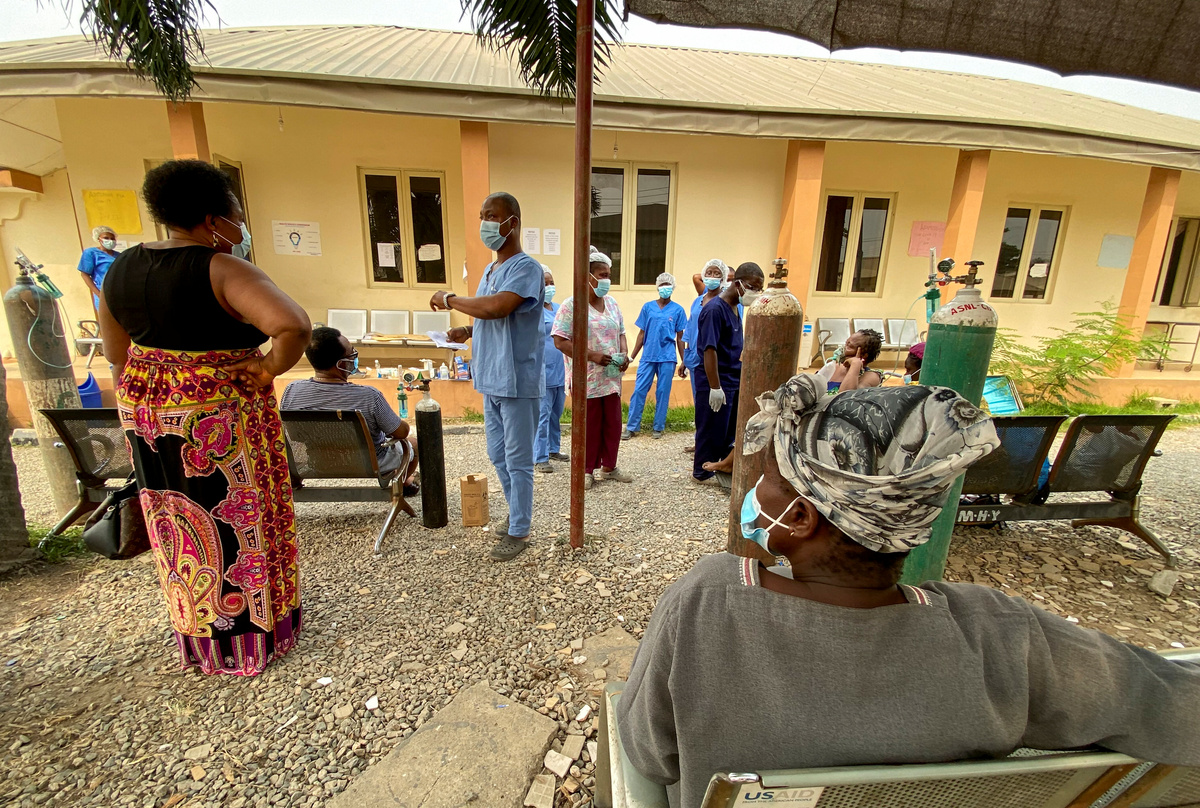
The Lagos businesswoman recalled the "horrendous" week she spent in the COVID-19 wing of a city public hospital, where the sense of crisis was lifted only briefly by whoops of joy when a patient secured one of the few available tanks of oxygen.
"There was a shortage," the 47-year-old, who did not wish to be named in order to protect the staff who struggled to treat her, told Reuters. "It was discussed all around. It felt like that was the main issue – oxygen, oxygen, oxygen," she said, convalescing in a private hospital to which she moved.
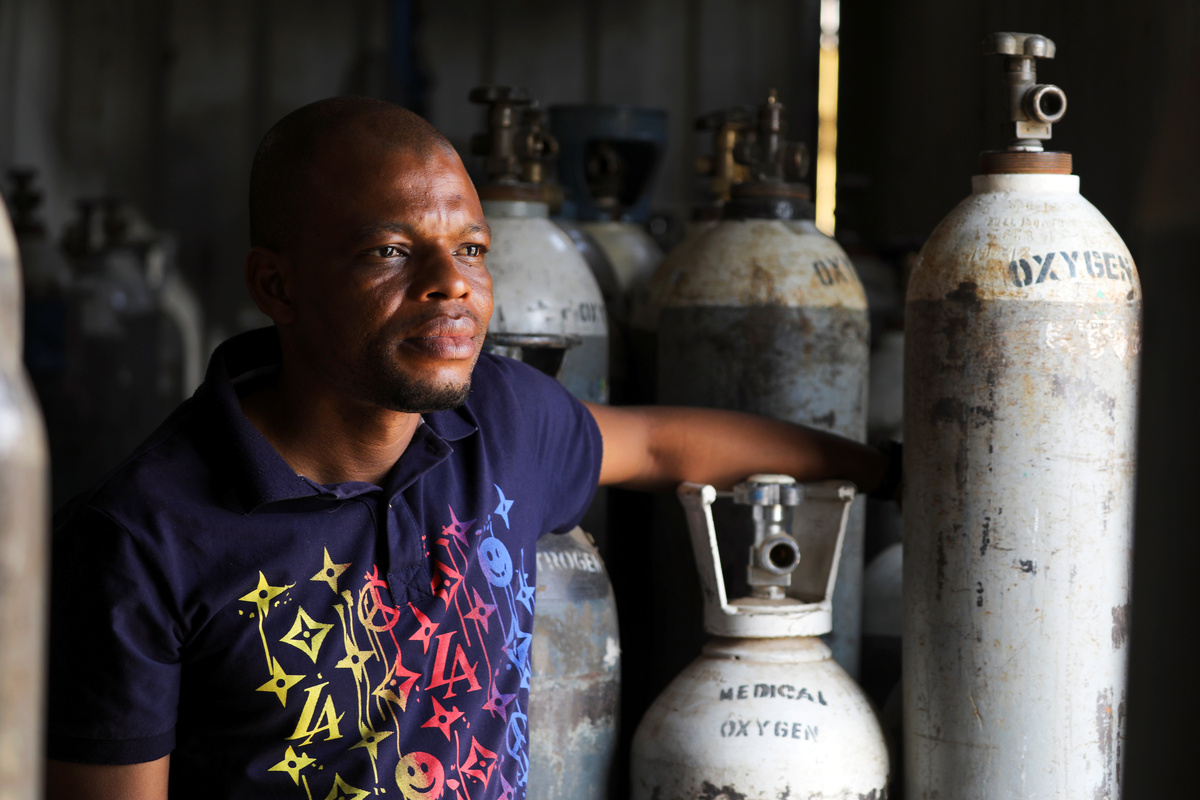
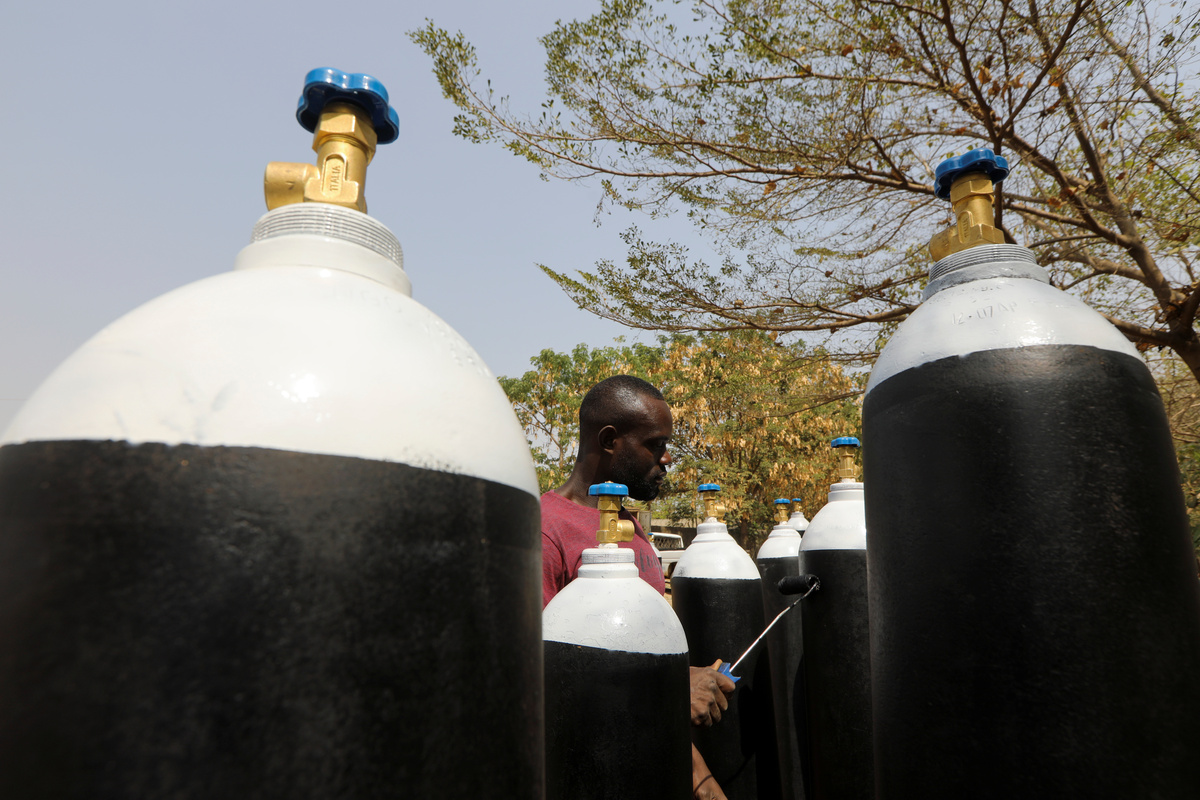
Authorities are battling a second wave of infections that has caused nationwide oxygen shortages. Hospitals in the capital, Abuja, have come close to running out, while demand in Lagos, the centre of the outbreak, has increased as much as sevenfold since early autumn.
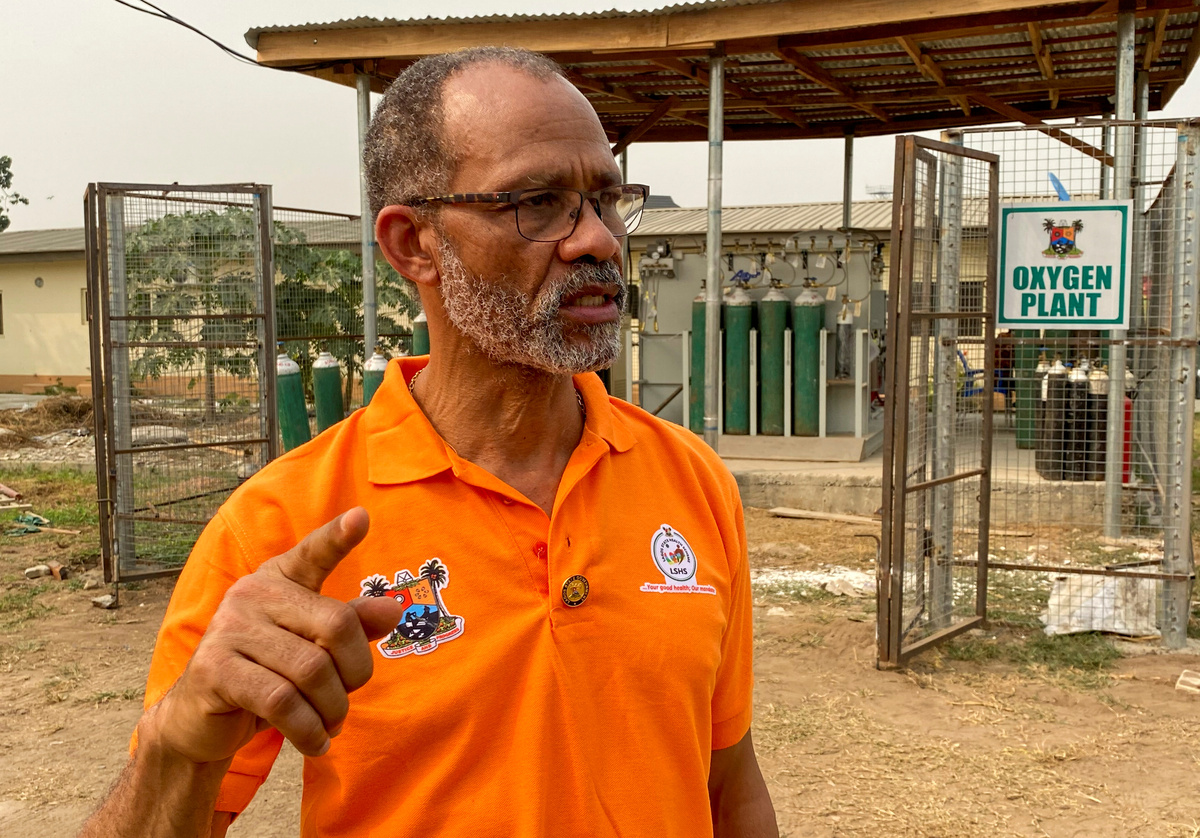
"There was a national scarcity of oxygen. We were pulling from all our normal suppliers, and finding new suppliers," Lagos State Health Commissioner Akin Abayomi told Reuters in an interview.
Demand for cylinders in Lagos went from around 70 per day early last year to as high as 500 daily from November, Abayomi said.
Nigeria, population 200 million, was spared the worst in its first COVID-19 wave that began in February last year. But a second wave has hit hard. More than half of Nigeria's 131,242 confirmed cases have been logged in the past three months. Fatalities now total 1,586.
In December, the government enlisted Nigeria's Air Force to increase liquid oxygen production at a plant in the northeastern city of Yola and fly 117 cylinders to two COVID-19 centres in Abuja.
Authorities pledged in January to build a new oxygen plant in each of Nigeria's 36 states.
FEES
A Clinton Health Access Initiative study in 2018 found widespread oxygen supply shortages across Nigeria well before the pandemic hit. It said that due to high demand, hospital patients were often asked to pay fees for oxygen that "vary by facility and ... can be quite exorbitant".
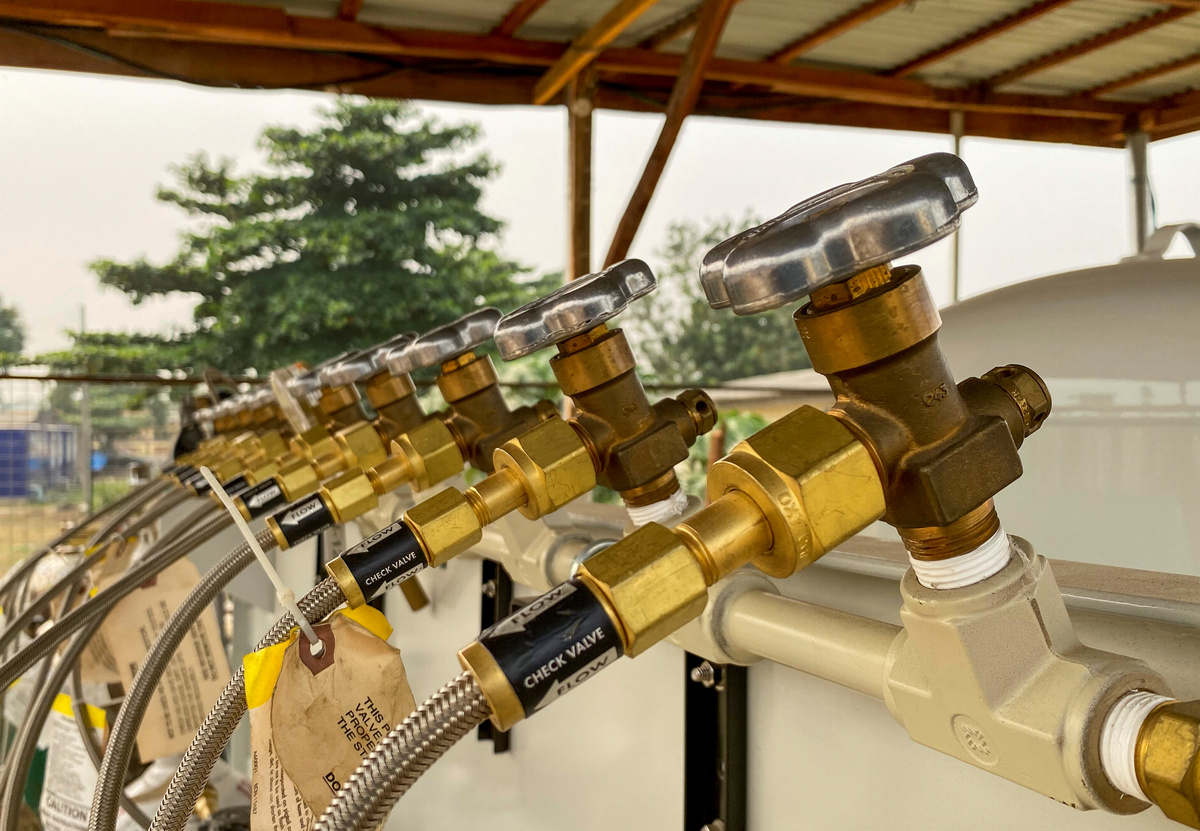
Nigeria has at least 30 oxygen plants but there are frequent production disruptions due to poor maintenance, aging equipment and the notoriously unreliable power supply, the global health organisation said.
Abayomi said patients are not charged for oxygen, and none who need it have been denied. But patients sometimes only need oxygen for a few hours, and it is taken away afterwards.
"Oxygen is scarce at this point in time, so we are not wasting it," Abayomi said.
The businesswoman said scarcity prompted wealthy patients on her ward to pay for oxygen from private suppliers.
"Either you get it from outside or you find a way of accessing it internally. These were the conversations that were going on," she said.
Declan Eugene, an oxygen dealer whose company Feligene Global Enterprises supplies hospitals in Abuja, said oxygen became "very scarce" in November when demand soared.
Eugene said he received anxious calls from customers, some who had not called in seven years.
"It was a really terrible situation," Eugene said. "And it has become a norm somehow."
Tanks that he sold for 7,000 to 8,000 naira ($18 to $21) spiked to 20,000 naira ($52), he said.
Eugene said oxygen supply had improved this year because more plants were working at full capacity. Lagos state last month launched a new oxygen plant that can fill 60 cylinders a day, and plans to build two more.
"You can't be in a position where you need oxygen and cannot give it," Abayomi said. "That's just irresponsible and cruel."
(Reporting by Libby George and Alexis Akwagyiram in Lagos; Additional reporting by Abraham Achirga in Abuja; Editing by Giles Elgood)