Academics at Oxford University are to vote on proposals to remove the top floors of six student buildings following a row over their impact on one of the city’s most famous views.
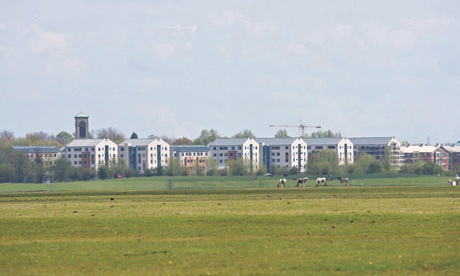
The university’s Castle Mill development on the edge of Port Meadow was built after approval from local councillors in 2012, but campaigners say that it has had a detrimental impact on the area, and that locals have been robbed of their view of Oxford’s famous dreaming spires. Oxford Alumni, including the authors Mark Haddon and Philip Pullman have spoken out against the scheme, while the then planning minister Nick Boles described it as “one of the worst examples of modern design that I’ve seen”.
Following a lengthy campaign by the Save Port Meadow group, and the production of a Environmental Impact Assessment of the buildings, two of the university’s professors have forced a meeting of its ruling members to debate the removal of the tops of the graduate buildings. The university said the work would cost £30m to carry out if approved, more than the £24m originally spent to create the blocks of flats.
Plans for Castle Mill were approved by Oxford City Council in 2012, and at the time it did not believe an environmental impact assessment was necessary as the development was on a brownfield site that was previously a railway marshalling yard and storage area.
However, once the flats were built the decision was challenged with a judicial review and although this failed, the university agreed to commission the EIA. This made three proposals, from the university’s preferred option of cladding the building with wood and planting trees, at an estimated cost of £6m, to the most radical suggestion of removing the top floors of some of the buildings, which campaigners are backing. The other suggestion, which none of the groups involved have approved, is the remodelling of the roofs.
On 10 February the university congregation, a group of 5,000 senior members, will be asked to vote on a motion proposing that the top floors be removed. Jane Caplan, emeritus professor of modern European history at St Antony’s College, is one of two academics who is bringing the proposal before a rare meeting of the governing body. She said that the consultation before the flats were built had been inadequate and that their impact on the landscape was quite disproportionate.
“None of us has ever said there should be no development there – we were happy with the first stage which was done about 10 years ago. It is the scale and appearance of this that is the problem,” she said.
Caplan said that academics were divided and it was unclear which way the vote would go. “This is restitution. It’s like a theft – they stole the skyline from everybody in Oxford. They can’t just say sorry – they have to put it right.”
The university said that due planning process had been followed before the flats were built and that removing the floors would result in the loss of 38 bedrooms and cause disruption to residents while the work was done.
“Castle Mill has now been occupied for nearly a year and a half, home to more than 300 graduate students, some with young families. At the same time we have relieved pressure on Britain’s most unaffordable housing market. Independent experts have reported that Castle Mill, with the mitigation measures we propose, delivers clear benefits to the city,” it said.
“The resolution before congregation would undo these benefits. All 300 students would have to leave for at least year and 38 flats, including family units, would be lost permanently. There would be knock-on damage to the city’s hard-pressed property market.”
The student union is also against removing any of the floors of the buildings, warning that the need to house students while the work is done would “create a dramatic spike in rents” and that in the long term a significant proportion of family accommodation for graduates would be lost.
The council said that any decision would need new approval from planners before it could be put into action. The leader of Oxford City Council, Bob Price, said the council had requested more information from the university about why it had rejected the proposals for more radical changes to the development and that once it had received its response it would put those recommendations out to public consultation.
Price said: “At this point in time the council has not taken a view on the adequacy of the proposals in any of the three options. The planning committee will consider the issue after the further information that has been requested from the university has been received and the public consultation concluded.”