As the forefront charity in the Philippines, where typhoons, floods and tsunamis abound during the June-August storm season, Oxfam International personnel typically deliver aid under dire situations after the weather has washed out roads and communities have lost power. But its cash-based system, which helps people and the market to recover, also brings additional risks, says Justin Morgan, country director for Oxfam in the Philippines.
“In the first days, as agencies prepare, the need for information [identifying and targeting those needing assistance] and the type of assistance required, along with access to affected areas, constrains the delivery of the response,” Morgan says. “Some assistance will take days, weeks, months or even years to deliver.” Many people have needed that help: the Philippines – ranked in a new study as the world’s most disaster-prone nation – as well as India and China suffered disasters that displaced 19.3 million people in 2014 alone.
Working with Visa, Oxfam has tackled the challenges in these situations, such as increasing security for both beneficiaries of aid and Oxfam staff; reducing costs; speeding delivery of funds; and increasing the level of dignity for those in need. The solution: electronic prepaid Visa cards.
Stuart Tomlinson, Visa’s country manager for the Philippines and Guam, says the collaboration with Oxfam is ideal. “Visa’s global scale and existing partnerships with banks ... along with Oxfam’s on-ground expertise, make real impact for affected communities,” he says.
The prepaid Visa cards are issued from a local bank that delivers them to recipients before disaster strikes. This method gives the recipient time to learn how to use the cards and the government time to determine partnering merchants. Oxfam and the issuing banks work together after a disaster happens to deliver funds to the cards, which are sourced from the government, nongovernmental entities (NGOs) and charities. The beneficiary then can buy food and supplies from predetermined merchants.
Since the pilot program launch in February, with Bank of the Philippines support, Visa developed a platform with Union Bank and has issued 2,700 cards so far. Merchants including Sweet Sell Grocery, Sweet Savers and PHL Post became partnering cash-out partners.
Ihab Zaghloul directs Visa’s financial inclusion initiatives in the Philippines. He points out the prepaid card also improves prospects for unbanked and underserved populations typically excluded from financial services. “Our goal, from a financial inclusion perspective, is to actually reduce the user’s reliance on cash in order to include them in the financial system,” Zaghloul says. Morgan note that many beneficiaries are looking to convert prepaid cards into their own personal bank accounts. “The take-up is significant,” he says.
The Philippines pilot system also ties into Visa’s broader initiatives to provide governments, charities and partnering banks with a disaster preparedness guide to work collectively to ensure a pre-emptive plan exists.
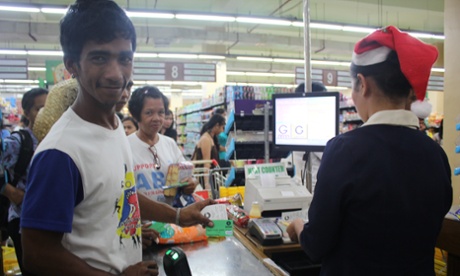
With the Philippines pilot program ending in August, Oxfam reports 100% successful transactions with the cards and overwhelmingly positive user feedback – for those who’d never entered a store and purchased groceries with a debit card, a prepaid card felt exciting and empowering. Others say the card increased their morale, dignity and status. Rosanna, a secretary of the local Fisherfolk’s Association in Tacloban city, calls her experience “comforting.” She says the card helped her feel important and valued, particularly these words emblazoned on it: “Friend of Oxfam.”
The prepaid card also reduced Oxfam’s delivery costs by 60%. Additionally, users quickly claimed their cards and handled cash much less; real-time tracking allowed Oxfam to better monitor – and target – its aid disbursement and decide how to support communities more quickly and accurately.
Morgan says beneficiaries and Oxfam staff also experienced increased security: “Now women and men have the funds, but are not expected to line up for cash or be seen collecting and carrying cash around with them. Transporting the cards is much safer for Oxfam staff as well.”
Both Visa and Oxfam have long planned to design a platform that improves the way organizations in other geographies perform cash-based humanitarian work. Morgan says the system in the Philippines has created significant interest – three international events on innovation in development have invited Oxfam to share the concept. Oxfam is also working with a UN agency to use the platform to support its cash-based work in the Philippines. Meanwhile, Zaghoul’s team is exploring best practices in India and throughout Asia where prepaid cards with multiple wallets provide saving opportunities for end-users.
“Improving financial literacy and financial inclusion is the responsibility of NGOs, the private sector and government. This process works best when everyone collectively provides a good framework,” he says. “Just like our CEO mentioned in the World Bank Spring meeting, Visa plans to connect an additional 500 million consumers to the financial mainstream by 2020. This work is important to us.”
Content on this page is brought to you by Visa, sponsor of the Financial inclusion hub