This week some of England’s players have visited the Meiji Shrine, dedicated to one of Japan’s most influential emperors, where worshippers go to write prayers and wishes on small wooden tablets called ema. These are then placed in a designated area to be sent on to the gods. “Can you improve Owen Farrell’s form?” is currently in danger of becoming a frequent request.
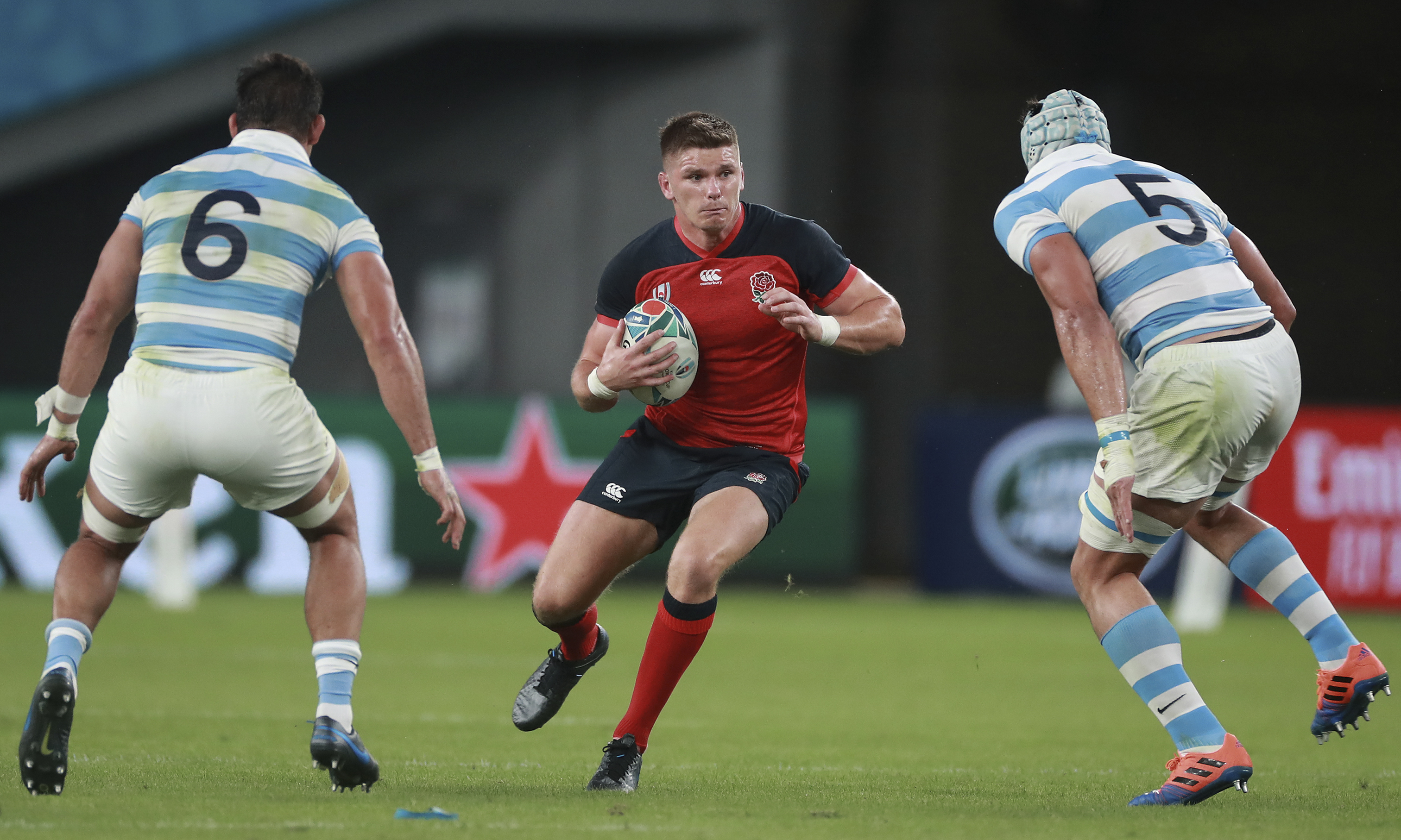
If that sounds a touch unfair on England’s relentlessly competitive captain, even the squad’s attack coach, Scott Wisemantel, has conceded aspects of Saturday’s midfield display against Argentina were “clunky” before Farrell’s four missed first-half kicks from four attempts are also taken into account. No one should ever doubt the 28-year-old’s mental strength but his shift back from 10 to 12 to accommodate George Ford has not yet prompted a noticeable upturn in influence.
There could be an entirely simple explanation: maybe he was still feeling the effects of the high tackle which earned Tomás Lavanini an 18th-minute red card. Given he also took another heavy illegal blow the previous week courtesy of the USA’s John Quill in Kobe, Farrell has definitely been in the wars, even before he was forced out of Tuesday’s training session because of an upset stomach.
According to all and sundry within the England camp, however, Farrell was not dazed or suffering from concussion in any shape or form. How interesting, then, to hear Wisemantel acknowledge that the coaches’ post-match review had indeed raised a couple of midfield question-marks. “In and around him there were a few things that were clunky and that I need to fix this week,” confirmed the Australian. “It is not just Owen, there are other things that I see that aren’t perfect that we need to get right.”
As always with such things, everything has to be placed in context. George Ford has been playing outstandingly well at 10, England have won all three of their pool games to date and despite spluttering at times against the Pumas they still registered six tries. Against top opposition, though, England will need both the Ford-Farrell axis and the Farrell-Tuilagi centre combination to fire consistently. At his best Farrell would still make most teams in the world but, for whatever reason, he has started this tournament relatively quietly.
It could yet be that, with his training preparations having been disrupted by illness and England already qualified for the last eight, Eddie Jones decides that, on balance, there is more value in resting Farrell for Saturday’s France game.
Wisemantel confirms that possibility will be discussed but, either way, believes there is nothing major to worry about. “He is a tough, competitive player who, because he competes so hard, probably tries to over-rectify situations.”
Farrell, he argues, is simply filling an unselfish supporting role and also playing a key part in drawing some of the heat from his friend Ford. “The thing about the dynamic is that Owen becomes more of a runner at 12. You can pull it apart and say he is not his usual self [but] you are seeing a different Owen. You are not seeing the distributor all the time because George fills that role. It’s the two of them changing roles, that’s all it is. I don’t think you can read too much into it as far as Owen’s performance is concerned. He did the role that we wanted him to play. I don’t think the bump had any effect on him. I asked after the game and he said he felt pretty good. We have reviewed the game and there are a couple of areas we need to pick up on, but he was fine.”
It is also the case that England’s World Cup pursuit is a collective rather than individual enterprise. If Farrell were only to land every penalty and conversion he attempts, defend stoutly (and legally), offer an effective midfield second kicking option and strike the right tone in the team huddle he would still be contributing more to the cause than most people. That said, if England wish to secure the Webb Ellis Cup they cannot settle for second best en route. “When I say clunky, I am a perfectionist,” emphasised Wisemantel. “You are never going to get a perfect game of rugby. We scored six tries, five of them to the backs, so we are not too clunky.”
It is also his view that England would still have beaten Argentina convincingly even had the Pumas not been reduced to 14 men so early. “I think you could see the writing on the wall even before the red card. I think the result would have been very similar with 15. There’s a real steeliness to the way the boys are approaching their work, with a concerted effort to put pressure on the opposition and turn the screws.” France, in summary, should expect no respite, Farrell or no Farrell.