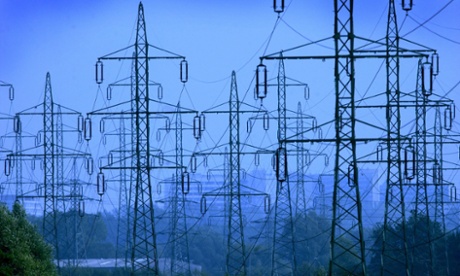
What is electricity? Is it a means of powering our way of life and our prosperity? Or is it just another commodity, like coffee beans, to be traded at a price based on supply and demand? Most players in the energy market insist it should be one or the other and fight fiercely to promote their point of view.
I believe it has to be both, but that customers’ interests should come first. At the moment, customers aren’t anyone’s priority. Given that they pay the piper, it’s bizarre how little choice they have over the tune – and, indeed, how little power they have to shop around for a song at a price they like.
There is a way for customers to get into the driving seat but it needs a new business model. Suppliers need to hop over the fence and understand what customers really need, rather than delivering the juice in a manner that best suits themselves.
Looked at this way it is, of course, pretty obvious that the companies that generate electricity can’t be the same as the companies that supply it. Their business objectives are diametrically opposed. One wants to sell energy at the highest price, the other wants to buy it on behalf of customers at the lowest – which in the future, I hope, will increasingly mean helping consumers manage their energy use to take advantage of cheaper price periods.
But to get to this point, the energy industry has to get over its terror of change. It’s a fear that is stultifying the market, and creating risk where instead there could be a huge business opportunity for this country.
The big players will find they can’t stand still anyway because everywhere else in the world, the energy industry is moving on. In the UK we need to shift away – and fast – from a business model that worked when we only had fossil fuel generation to a new business model tailored to a new energy reality.
Fear stalks the sector – intensive energy users too are scared about availability and the soaring price. And while demand flexibility – having your use managed so you draw power from the grid when it’s cheapest – should not be imposed on UK industries, if security of supply is only delivered at a crazy cost, the market will have failed.
Right now, however, fear is pushing us down the route of ruinously priced energy – and overpriced energy that means vibrant companies can’t compete is as dangerous to industry as no energy at all.
Sara Bell is managing director of Tempus Energy and principal of the UK Demand Response Association
More stories like this:
- Why we need European state aid to support the energy market
- There is still a future for North Sea oil and gas
-
How I launched a renewable energy start up
This article is part of the Guardian’s #bigenergydebate series. Click here to find out more about this project and our partners.