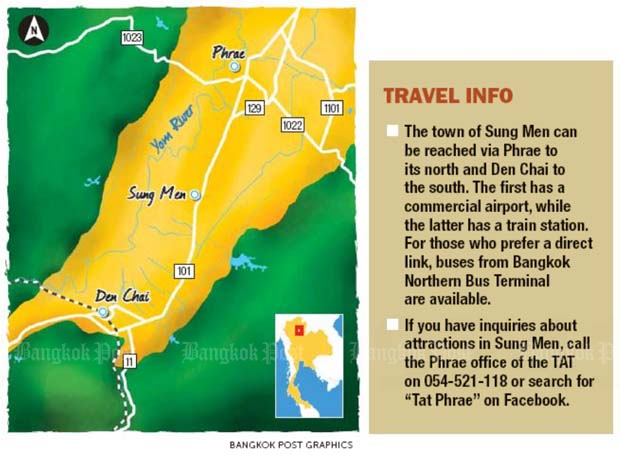
If you make a northward journey to Phrae via Highway 101, just before you reach the provincial capital, you'll pass Sung Men. As you rush along the highway that cuts through the small town, you'll find Wat Sung Men right on the roadside.
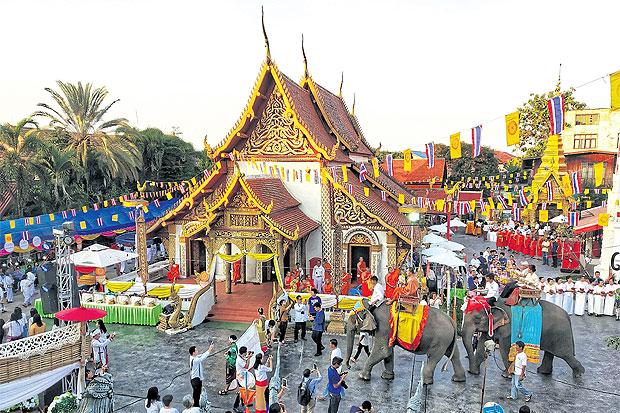
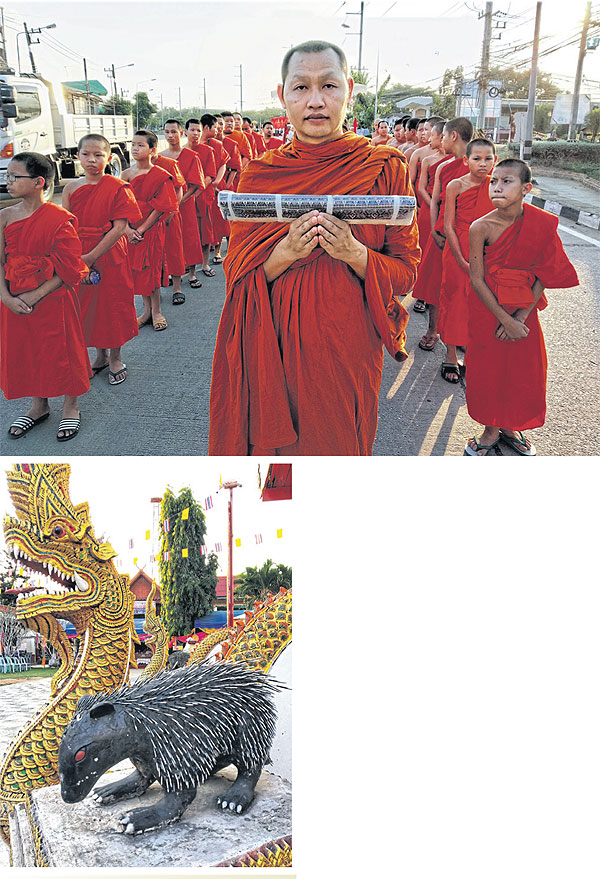
During the Tak Tham ceremony, which takes place every January to preserve the temple's large collection of Buddhist manuscripts written on palm leaves, Wat Sung Men teems with locals who gather in traditional costumes. The temple grounds become a venue for various activities, including a colourful parade by both monks and laypeople. At Wat Sung Men, which shares the name with the district it is located in, you'll see several sculptures of porcupines, called men in Thai.
From the window of your vehicle, Wat Sung Men seems to be nothing more than another typical temple. But the truth is, it houses something much more interesting than the pair of porcupine sculptures that adorn its main gate. Its namesake district is home to several hidden gems, and should not be overlooked by travellers.
Like many visitors to Phrae, I've used this section of Highway 101 a few times, travelling between Phrae city and Den Chai, the town where the northern railway makes a stop before veering west toward Lampang. Each time, I ignored Sung Men although it sits on the way. Recently, however, thanks to the Phrae office of the Tourism Authority of Thailand (TAT), which invited members of the media to the Tak Tham ceremony held recently at Wat Sung Men, I got to learn more about this part of Phrae.
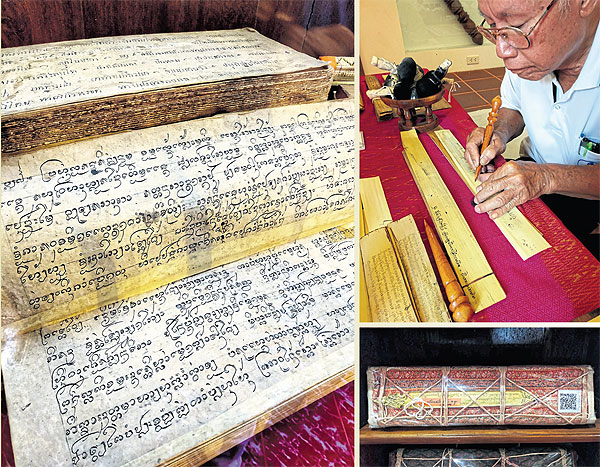
To my surprise, Wat Sung Men boasts thousands of Buddhist manuscripts, many over a century old. Written with Lanna characters, these palm-leaf "books" contain the teachings of Lord Buddha, as well as the local history of the time they were created.
The collection at Wat Sung Men is not only the largest in Thailand but also is likely to be the most well kept. Every year, the Tak Tham ceremony is held to clean the stored manuscripts, dry them and change the wrapping cloth that is no longer in good condition. Locals in surrounding communities join in to carry out the task. People of all ages work together, hence the art and pride of manuscript preservation are passed on to the new generation.
The temple has a building built especially to display the old manuscripts and everything related. This learning centre is open year round so you don't need to wait for the next Tak Tham ceremony to learn about this interesting tradition. Like at several temples in Phrae city, there are usually senior volunteers in Wat Sung Men who are eager to guide visitors around and answer their questions.
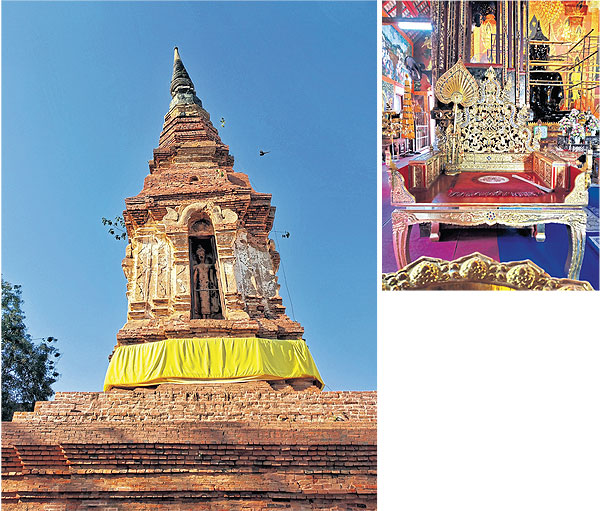
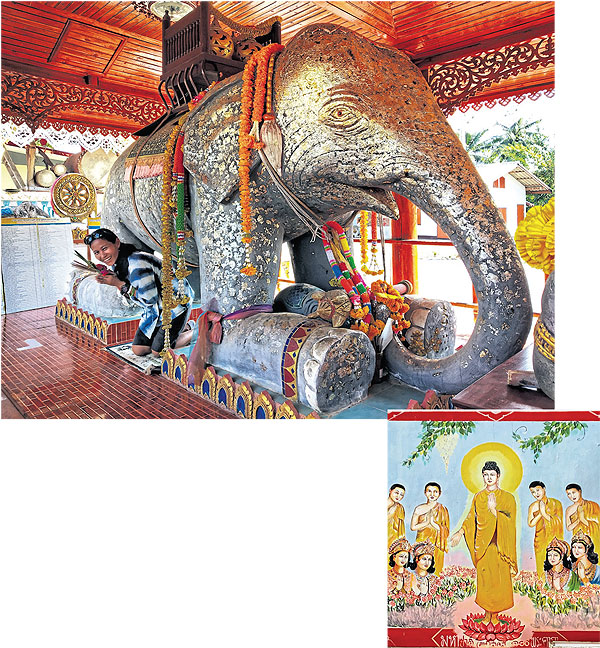
Apart from Wat Sung Men, the district also has a few other temples that are worth visiting, such as Wat Phra Luang That Noeng where one of Sung Men's most venerated pagodas stands in a gravity-defying fashion and Wat Kunchon Nimit, which was built in memory of a royal elephant during the Sukhothai period.
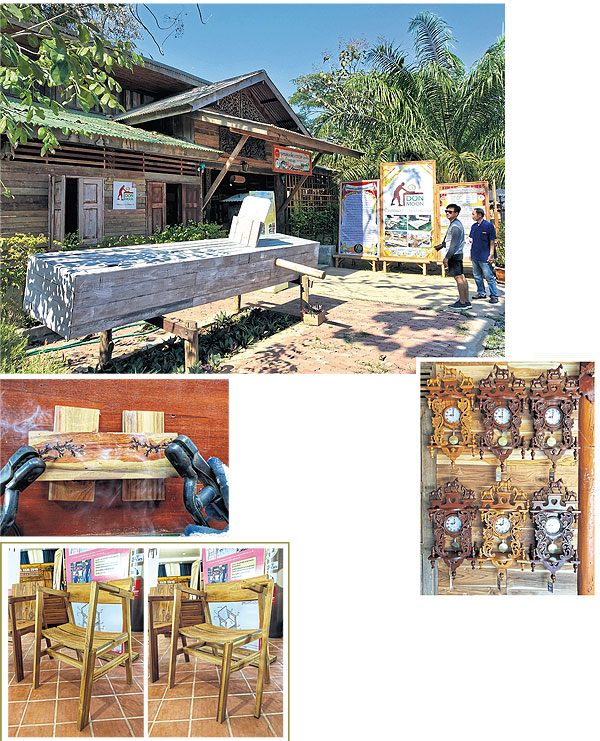
A number of communities in Sung Men districts are proud of their craftsmanship. They create many products with a variety of local materials, including teak wood. Visits to these communities are fun and eye-opening.
Next time you go to Phrae province, make sure you spare at least a day to explore Sung Men. You won't regret it.
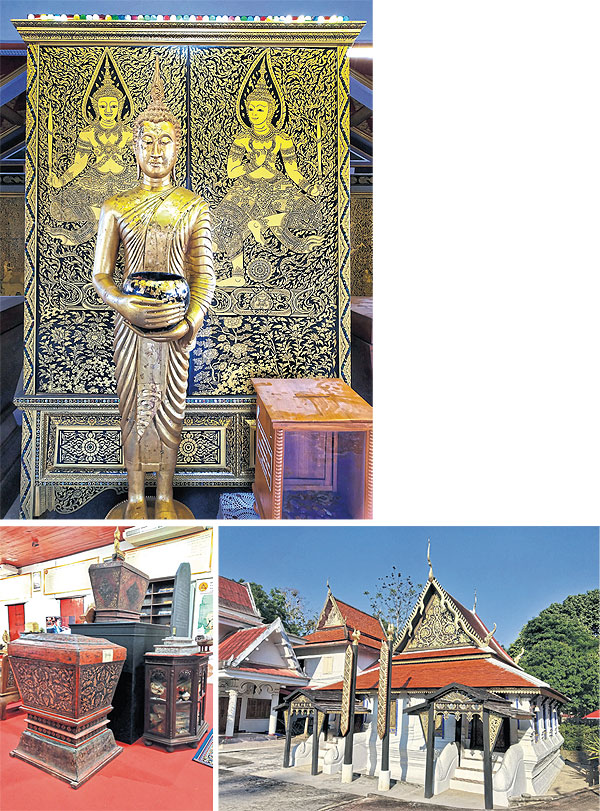
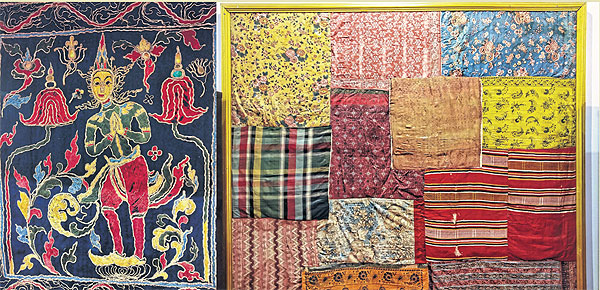
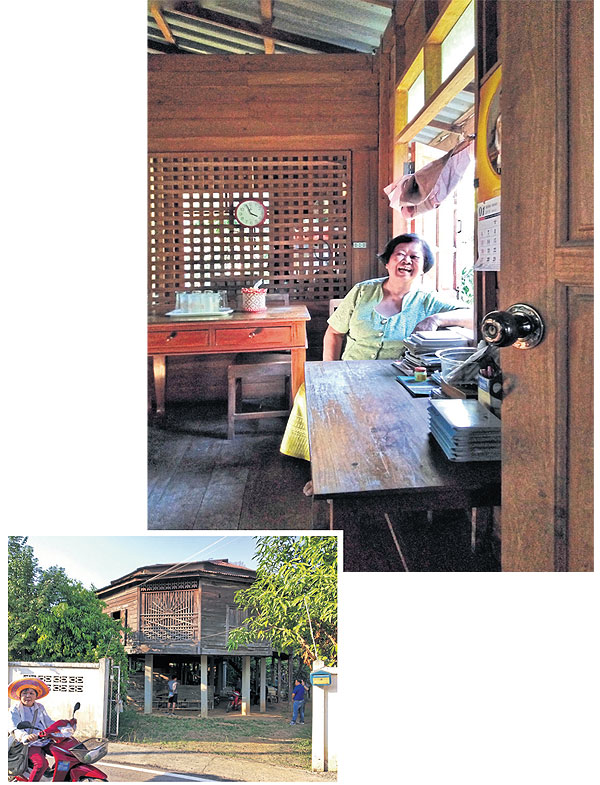
Thousands of religious manuscripts are systematically stored at Wat Sung Men. Many have QR codes attached so anybody with a smartphone can have an idea of the contents written in Lanna characters without even having to unfold the cloth each manuscript is wrapped in. At Wat Sung Men, you can learn about how these traditional books were made. With advance notification of your visit, a mini-workshop can be arranged so you can also try your hand at etching your name in Lanna script on a palm leaf.Pisa in Italy is not the only place with a leaning structure. This revered stupa at Wat Phra Luang That Noeng has been standing in this manner for centuries. The temple also boasts a Lanna-style ho rakhang (bell tower) and ho trai or ho tham (library). Several items in the ubosoth (ordination hall) such as the monk's seat shown here are exquisite works of art.Conventionally, religious manuscripts are wrapped with cloth and kept securely in beautifully adorned wooden boxes or cupboards that are housed in a library surrounded by water to prevent termites from gaining access to the precious records. Strangely, unlike in other parts of the country, libraries at some temples in Phrae province were built not on stilts but close to the ground. The one shown here is in Wat Phra Luang, about 2km from Wat Sung Men where the pictures of the manuscript storage boxes were taken.Etching the Buddha's teachings word by word on palm leaves is no easy task. Therefore, the resulting manuscripts are considered treasured assets of each temple and the communities in the vicinity. The cloths used to wrap the manuscripts, therefore, are not ordinary materials. Wat Sung Men houses a collection of such pieces of cloth, which also includes one depicting a deity. It was presented to a temple in Luang Prabang, Laos, over a century ago by the wife of a Phrae ruler.Tambon Don Mun of Sung Men district is known for wooden furniture and other wooden products. With teak from the plantations of the Forest Industry Organisation and training provided by agencies such as Phrae Community College and Thailand Creative & Design Centre, new and more practical designs are being introduced. The chair shown here can have its armrest removed to make it easier for the elderly to sit in it or get out of it. The detachable armrest can also double as a walking stick. At Ban Don Mun not only can you shop for a variety of wood products, from dinner tables and vanity stations to wall clocks, saucers and mobile phone stands with noise amplification, you can also learn about special techniques such as using electric current to create a pattern in the wood.It is believed that six centuries ago Phya Lithai, a king of Sukhothai, while on his way to the highly respected Cho Hae stupa in Phrae, travelled past what is now Ban Kwang of Sung Men district. One of his favourite elephants happened to die here so he had a temple built at the site in its remembrance. The monastery, currently called Wat Kunchon Nimit, is frequented by worshippers who come to pray and crawl underneath this elephant sculpture for good luck. The murals in the interior of the temple's ordination hall may not be the most sophisticated but, in my opinion, they present the Buddha in a way that is more realistic than what you find at most Thai temples.Some families in Ban Phra Luang offer a homestay that gives visitors a good chance to learn about the local way of life. This house with the octagonal front building is one of those that welcomes guests who wish to stay overnight.
Sign up to read this article
Read news from 100’s of titles, curated specifically for you.