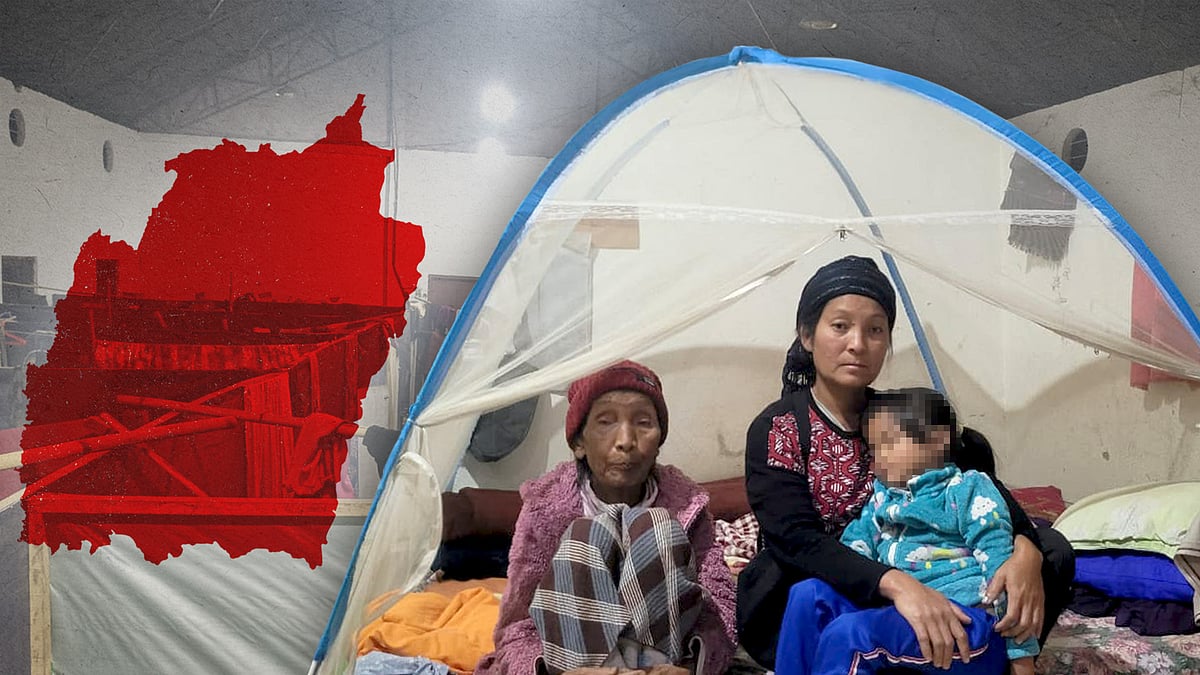
Thirty-nine-year-old Tingkim says she is down to her last Rs 200. What worries her most is the embarrassment of being unable to contribute to buying Christmas gifts for the children in her relief camp in Manipur.
Speaking to Newslaundry over the phone from a camp in Churachandpur, Tingkim – a tailor who once earned enough to live on her own in Kangpokpi district’s S Kanan village – broke down as she described her life for more than 750 days.
Her meals, she says, have been limited to dal and rice, twice a day, every day. She shares a single bathroom with nearly 100 people, sleeps in cramped spaces with no privacy, and says she often struggles to even buy basics such as sanitary pads, toothpaste or soap. With no income and no clarity about her future, anxiety has given way to depression, she says.
While the Centre maintains that life in Manipur is returning to normal, many of the 50,000 people who were internally displaced by violence remain in camps. The state had set December as the deadline to close all camps and rehabilitate residents, but of the over 300 relief camps that emerged since May 2023, many still remain. A petition before the Manipur High Court in October alleged the reality on the ground was so devastating it had forced at least 10 to die by suicide so far.
In July, months after President’s Rule was imposed, then state chief secretary P K Singh had told journalists that a three-phase resettlement plan was worked out in consultation with the Centre, primarily the Ministry of Home Affairs. According to Singh, some relief camp inmates would go back during the second phase by October, followed by the third phase by December. “We feel that even after December, there will be around 8,000 to 10,000 people who will not be able to go back. They may be from Moreh, Kangpokpi or Churachandpur. They will be allowed to stay in some 1,000 pre-fabricated houses we are building. We have plans to shut the relief camps by December,” he had said.
There are many like Tingkim, who cannot return to their villages because of fear, and have no option but to endure allegedly degrading conditions in camps.
The relief camps are overseen by the district administration offices.
‘I feel ashamed and small’
Speaking to Newslaundry over the phone from a relief camp in Churachandpur, Tingkim broke down as she described her life.
“When our village was attacked in May 2023, I escaped with my 84-year-old mother on my back because she couldn’t move fast. We hid in the jungle and walked through the night. In the morning, we reached the Naga village of Lairamphunka. We had nothing except the clothes we were wearing…After three weeks there, we were shifted to this camp in Lingsiphai. I have been here ever since, with my mother, nephew and niece,” she said.
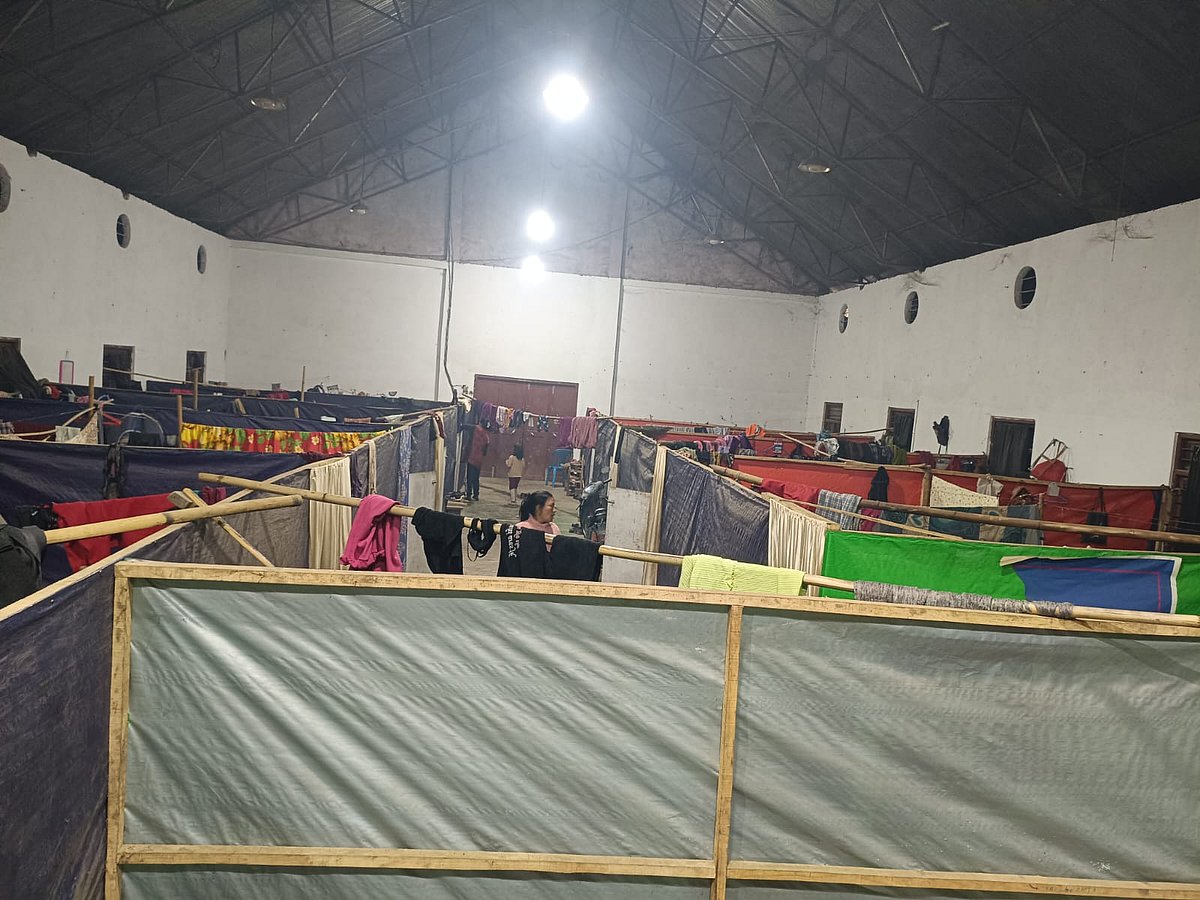
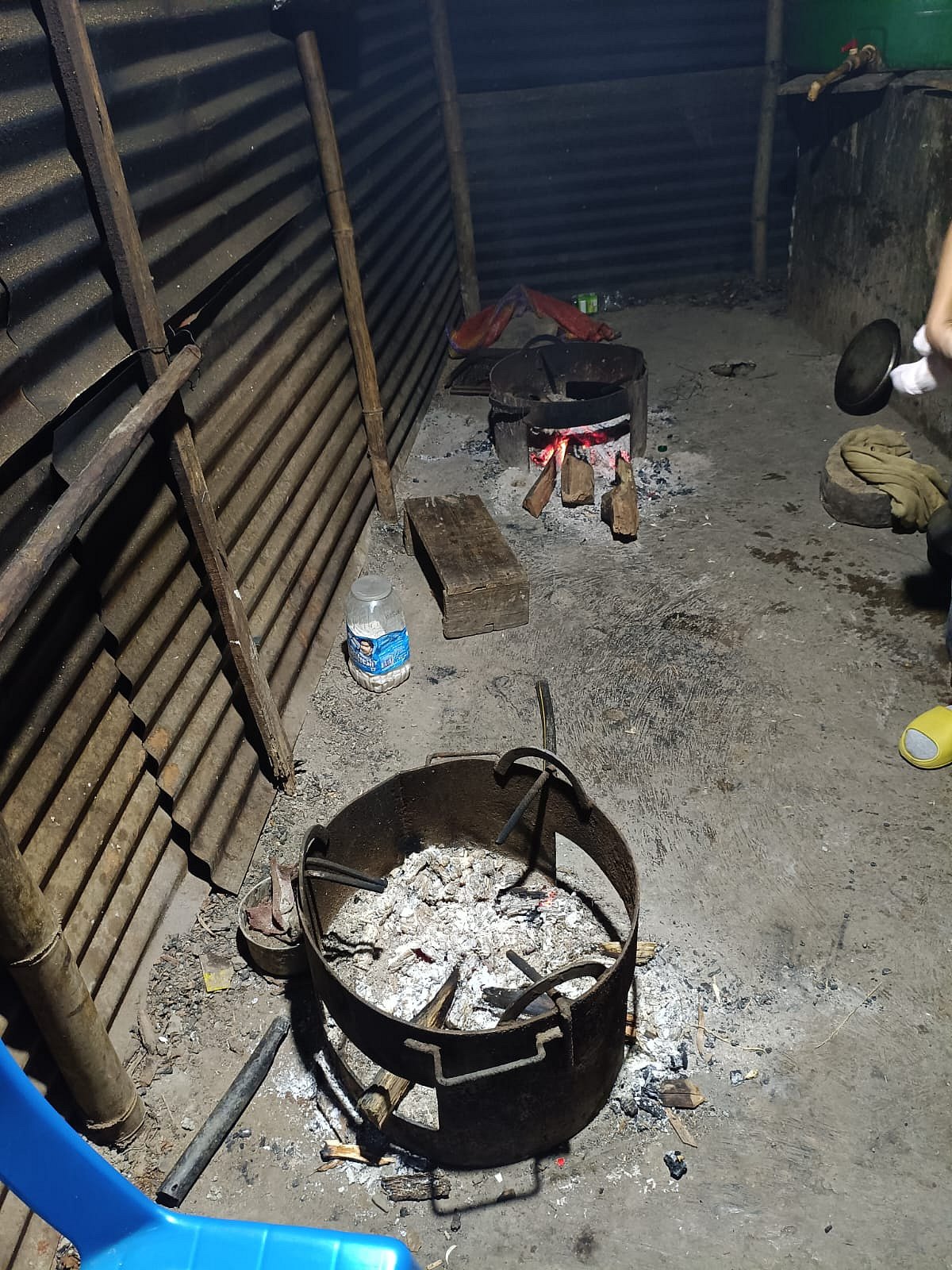
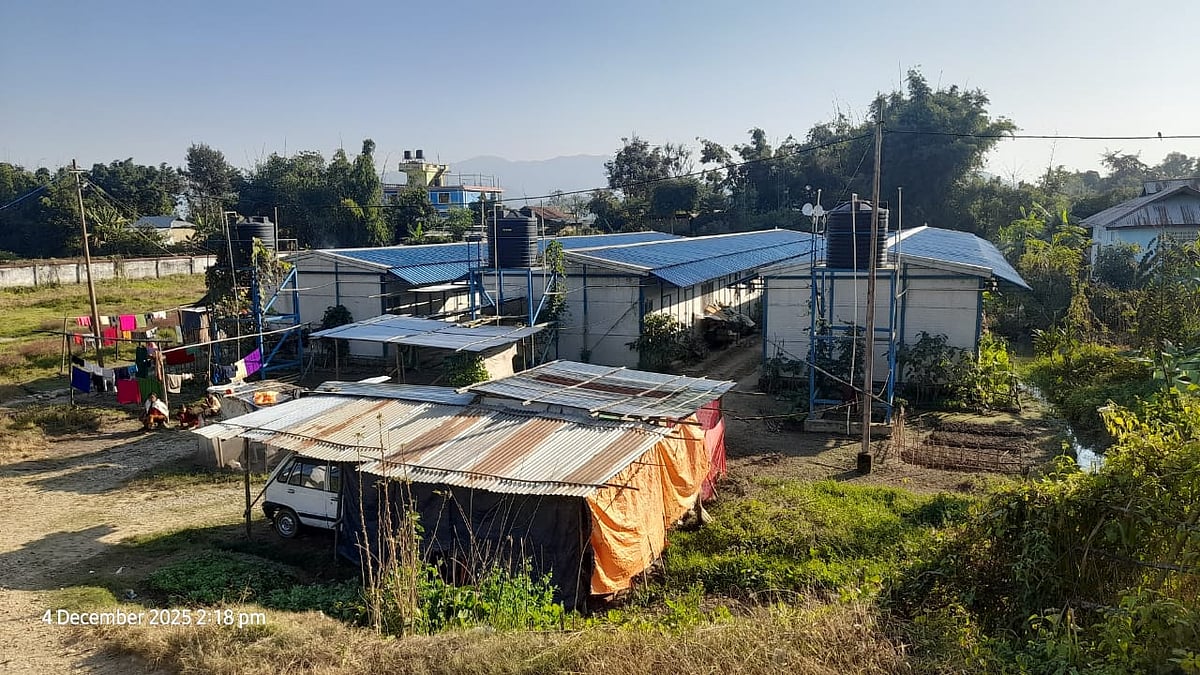
“I worry constantly about my mother, about daily needs, about the future…Before the violence, we had two acres of paddy field, we used to have enough rice at home. We grew our own vegetables. I was independent and earned my own money…It feels like living in a cage, fed just enough to stay alive…It is very hard when you don’t even have Rs 500 in your pocket. I feel ashamed and small. My mother needs proper care and medicines that I can’t provide. I myself have kidney stone issues, but I just bear the pain because treatment costs money. We cannot return home because of fear. And we have nowhere else to go. No one stays in a relief camp for this long by choice,” she claimed.
“Now the central government is planning to remove these relief camps. If they shut down, we don’t know where we will go. We don’t know what will happen next.”
Forty-year-old Khakham Vaiphei has lived with his wife and three young children in the Dorcas Veng relief camp since their village in Kangpokpi was attacked in June 2023. Once a farmer with a large home and paddy fields, he now survives without steady income to feed a family of five.
“My eldest son is nine, my daughter is six and my youngest is three. I am a farmer. We had a big house and paddy fields back home. But everything was destroyed in the violence. I can’t even go back to see what’s left because of fear,” he said. “The biggest problem is that I have had no steady income for more than two years. Sometimes my wife and I get daily-wage work, but only for three or four days a month, if we are lucky, maybe a week. Together, we earn just around Rs 1,400 a month. We have to survive on that.”
“The government has given a one-time financial assistance of Rs 1,000. Earlier, my children studied in a private school, but now they go to a government school because we can’t afford anything else. They need clothes, books, medicines…but I can’t provide them. When they fall sick, it hurts that we can’t give them proper treatment. It hurts when I can’t even buy a Rs 10 chocolate for them,” Vaiphei said. “Christmas is coming and the children are excited, asking for new clothes. I don’t know what to do. We can’t live in a relief camp forever, but we have no house to return to.”
His wife, Thiamary, said, “I don’t know how long we can live like this.”
‘Many men have turned to alcohol’
Irom Abung Meitei, who once supplied mineral water and helped his wife run their hotel in Churachandpur, had to shift with his family of six to the Kwakta relief camp in Bishnupur district after their hotel was burnt and their home looted during the violence. He has been living in one of the largest relief camps with 911 residents since May 2023 and now works as its caretaker.
Abung’s wife developed severe anxiety and depression after their home and business were destroyed. “The camp conditions were bad, there was no income, and we couldn't provide proper food. She fell into depression. She is better now, stitching work and kitchen gardening keeps her motivated. Many men and women in the camp are dealing with similar mental health problems,” he said.
“The biggest crisis is the absence of work…under President’s Rule, they have started direct cash transfer, Rs 84 per person per day (since November this year). It’s too little. Prices are high, families can’t survive on that…Many men have turned to alcohol” he claimed.
Abung also claimed that healthcare is bleak. “The government health card helps only during hospitalisation.”
Petition before the high court
In July 2025, Manipur businessman Anthony Naulakh submitted an application to the deputy commissioner, Churachandpur, state chief secretary and the Ministry of Home Affairs, detailing the condition of relief camps. When he received no response, he approached the Manipur High Court in October 2025. The court admitted his petition and directed him to the three-member Justice Geeta Mittal Committee, set up by the Supreme Court in 2023 to address the humanitarian crisis caused by the violence in Manipur.
Speaking to Newslaundry, Naulakh said he filed the application after visiting several camps. “Around 60,000 people are living in more than 300 relief camps…The government should at least provide basic necessities,” he said.
“Recently, a 13-year-old boy from a relief camp in Churachandpur went for the recruitment of Territorial Army just to support his parents. His video went viral, and senior army officers later helped him get admitted to Assam Rifles Public School. This shows how desperate the situation is.”
While raising questions about the food supply in camps, Naulakh alleged subsidised food is not reaching the displaced, “People cannot survive on rice and dal alone; they need proper nutrition.”
According to Naulakh, the suffering goes far beyond hunger. “Around 10 people have died by suicide, including four children in the last six months.” He alleged that since 2023, more than 200 people have reportedly died in relief camps from inadequate medical care and untreated chronic illnesses.
This breakdown of healthcare is so severe that a helicopter service was introduced to airlift patients from Churachandpur to Aizawl, since going to Imphal for treatment is unsafe. But Naulakh claimed the service almost never operates. As a result, even critically ill people are forced to take the nearly a day-long road journey to Aizawl, he claimed.
“Instead of improving camp conditions or planning rehabilitation, the government has announced plans to close the relief camps. If they want to close them, they must first rehabilitate people properly. And if they can’t do that immediately, they should at least improve the camps.”
PTSD among displaced children
According to a study conducted by Imphal’s Regional Institute of Medical Sciences assistant professor Pampak Khumukcham and Professor Wahengbam Julia in June 2025, which was presented at the Medical Society of the institute, 211 out of 300 internally displaced children between the ages of 7 and 17 exhibited probable Post Traumatic Stress Disorder (PTSD).
Khumukcham said, “Basic necessities are not luxuries, they are essential for emotional healing. When people who are already broken are deprived of even these, their condition worsens. Many slip into chronic depression, some even lose the will to live. Unfortunately, conditions in most relief camps are far from adequate. As a result, a large number of residents including men, women and children are struggling with severe anxiety and depression.”
Newslaundry has reached out to Chief Secretary of Manipur Puneet Kumar Goel for his comments. His reply will be added in the story once he chooses to respond.
Twenty-five years have transformed how we consume news, but not the core truth that democracy needs a press free from advertisers and power. Mark the moment with a joint NL–TNM subscription and help protect that independence.
Newslaundry is a reader-supported, ad-free, independent news outlet based out of New Delhi. Support their journalism, here.