Two out of every five board members of local NHS funding organisations are GPs who are in a position to put their own financial interests before their patients, the public spending watchdog has found.
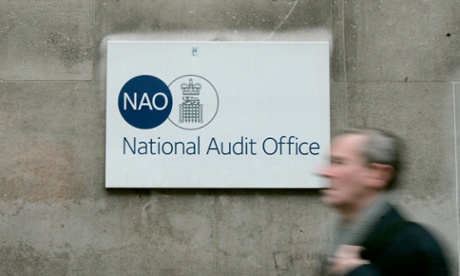
An investigation by the National Audit Office discovered that 1,300 family doctors have the potential to personally profit from new health services because they are also members of the governing body of their local clinical commissioning group (CCG).
The findings were published on Friday as part of an inquiry into conflicts of interest in CCGs, which plan local health services in England and are made up of local GP practices.
The finding follows concerns raised by the union Unite in March that one in every four governing members of CCGs have links to firms involved in healthcare.
The NAO report said that the role of GPs needed to be transparent. “Under these arrangements there is potential for some GPs and their colleagues to make commissioning decisions about services they provide, or in which they have an interest.
“Where this is the case, there is a risk that commissioners may put, or be perceived to put, personal interests ahead of patients’ interests,” said the report.
CCGs were established by the Health and Social Care Act 2012 to replace, to a certain extent, primary care trusts. They are clinically led groups that include all of the GP groups in the local area.
The NAO found that between 2014 and 2015, some 41% (1,300) of CCG governing body members who were also GPs might have made decisions about local health services and have been paid by their CCG for providing them.
While the NAO found during the same period that a “minority” of CCGs had reported an actual or perceived conflict of interest, it said it was not always able to assess how issues had been dealt with.
NHS England has so far collected little data on how effectively CCGs are managing conflicts of interest or whether they are complying with requirements, the NAO said.
Since April, CCGs have been able to choose to co-commission primary care services from GPs, which is likely to increase significantly the number and scale of conflicts of interest.
The Commons public accounts committee said in November last year that it understood that in the London boroughs of Barnet, Enfield and Haringey, a number of GPs who worked for the CCGs also had shareholdings in the organisation that provided out-of-hours care. It said such arrangements had “inherent risk of conflicts of interest”.
In February, the King’s Fund medical thinktank said the act had left the NHS weaker, structurally “incomprehensible” and less able to improve care for patients. But it also said it had not produced the widespread privatisation of NHS services that many critics feared.
The NAO added: “To promote public confidence that conflicts are well-managed, CCGs will need to ensure transparency at the local level when making commissioning decisions.
“In addition, NHS England will need to be satisfied that it has sufficient and timely information to assure itself that CCGs are managing conflicts promptly and effectively.”