Donald Trump's humanitarian immigration policy is facing intense criticism in Washington after new figures showed the administration has slashed humanitarian admissions to a 50‑year low in the United States, while largely opening that narrow door to white South Africans.
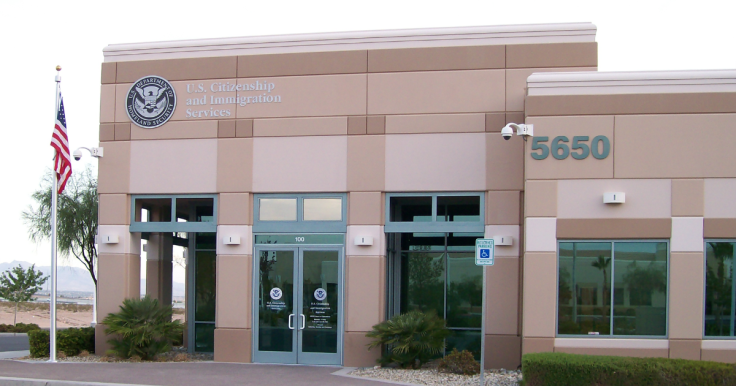
The latest numbers suggest a much broader squeeze than the White House's border politics alone. US Citizenship and Immigration Services, or USCIS, approved 8.3 million applications in 2025, down from 11.4 million in 2024, a decline of 27% that reached across employment, humanitarian and green card-related cases.
Humanitarian Immigration Cut To 7,500, Mostly White South Africans
The news emerged that, of the 7,500 humanitarian immigration places set for 2026, all but three granted so far have gone to white South Africans.
That racial imbalance has intensified accusations that the administration is using a supposedly neutral humanitarian route to favour a specific, largely white group, while shutting out people fleeing conflicts and crises elsewhere.
In fiscal year 2024, more than 100,000 people had been admitted to the US on humanitarian grounds.
The new 7,500 ceiling, set for 2026 under Trump's second‑term agenda, is the lowest in almost half a century.
As of this writing, IBTimes UK cannot independently verify the reported demographic breakdown of those admitted so far under the new cap.
Legal Immigration Shrinks, With Knock‑On Effects For The Economy
Humanitarian immigration is only one piece of a much wider slowdown. The USCIS approval figures show a broad tightening of legal pathways, not just the better‑known crackdowns at the southern border.
Julia Gelatt, associate director of the US Immigration Policy Programme at the Migration Policy Institute, warned that the effects will ripple out for years. 'Immigrants are not just workers; they also create jobs. That is partly because they, like all of us, consume goods and services that create demand for jobs,' she said.
The State Department, which handles visa applications overseas, has yet to release full 2025 statistics, but partial data to September tell a similar story.
International student visas issued were down 31% compared with the same period in 2024. Many of those students would typically move on to work visas, then permanent residency. 'If you cut off that pathway, you could see the impact of that for years to come,' Gelatt said.
There is also the dull but crucial matter of the Social Security trust fund, which supports more than 75 million Americans and is projected to run dry in 2032.
Income taxes and payroll contributions from immigrants, including many who will never collect benefits themselves, help prop that system up.
Make America Closed Again: How Trump Squeezed Legal Routes
Trump's second administration has layered multiple legal barriers on top of each other.
Student visas were abruptly cancelled, temporary protected status was cut for migrants from countries with dangerous conditions, a $100,000 fee was slapped on H‑1B work visas, and dozens of countries were added to a travel ban list that paused asylum applications and work permits for their nationals.
Some of that stuff did not survive contact with the courts or public opinion. Mass student visa cancellations sparked more than 100 lawsuits, prompting partial reinstatements.
The eye‑watering H‑1B fee led to a scramble among companies and foreign workers trying to protect status, before a judge struck it down in June.
Another judge halted travel‑ban‑linked policies, accusing the government of having 'thrown the lives of countless immigrants living in the United States into indeterminate legal limbo.'
USCIS must now resume processing 1M+ backlogged cases and treat every nationality equally. pic.twitter.com/oqikIYxRwD
— TheSteadyState (@steadystate2025) June 22, 2026
But even when policies are reversed, the signal they send lingers. 'There is definitely a lot of backtracking,' said Jeff Joseph, president of the American Immigration Lawyers Association. 'The problem with that is the damage is done. You send out a memo to all your field offices basically saying this is how you exercise discretion, and it is hard to turn that message off.'
The USCIS did not respond to a request for comment in the material provided.
Border Control Promised, Legal Immigration Squeezed
It can be recalled that Trump campaigned vigorously on border security and tighter immigration controls, while at the same time insisting that the US still needed foreign workers.
According to USA Today's immigration tracker, Border Patrol encounters at the US‑Mexico frontier fell during his second term. At the same time, immigration detention surged, particularly for people with no criminal record.
What many voters did not expect, according to Joseph, was the ferocity of the parallel attack on legal immigration.
An analysis by David Bier, director of immigration studies at the Cato Institute, found that legal immigration declined 2.5 times faster than illegal entries in the first three quarters of 2024.
'When the workforce starts to decline, that means less economic growth. That means less things are produced, which means higher costs for consumers,' Bier said. 'It is a real problem for the country that the administration has taken such a hard line, even against legal immigration.'
He also argued that the Trump approach is damaging the country's reputation as a reliable destination. 'You are setting yourself up for a situation in which people do not want to come to the United States any more because the US government is unreliable,' Bier said. 'I think the United States' reputation is really taking a blow here.'
Backlogs, 'Frontlogs' And A System Straining At The Seams
Beyond ideology, there is simple administrative dysfunction. The USCIS, which processes employment authorisations, green cards and citizenship applications, was hit by workforce cuts in early 2025. It is reported that 50 application processors were among those laid off.
The result has been a ballooning backlog. Through 2025, the pile of pending applications was 48% higher than at the end of Joe Biden's term, with processing times increasing across every category.
On top of that sits what officials bluntly call a 'frontlog,' unopened applications. That frontlog peaked at nearly 250,000 in 2025, up from zero before Trump's second administration began.
'Each of those envelopes also usually contain payment for a processing fee for that application,' Gelatt noted. 'So USCIS was not even opening the envelopes to get the money that funds its operations, it just suggests an agency that is not performing as well as it could be performing.'
Unlike most US government agencies, USCIS relies on filing fees for 96% of its budget.
After Covid‑19, many of America's biggest cities saw population declines, a trend that began to reverse by 2024 as international migration picked up. Last year, that recovery slowed again, a pattern experts largely attribute to the renewed decline in immigration.
The outcry sits on top of a broader clampdown on legal immigration under Trump's second term. Fresh data from US Citizenship and Immigration Services, or USCIS, show that in 2025 the agency approved 8.3 million applications, down from 11.4 million in 2024, a 27% drop.
Employment‑based petitions fell by 26% and humanitarian cases by a staggering 69%, while green card‑related approvals declined 16%.
Only family‑based petitions rose, by 8%, with naturalisation approvals broadly flat.