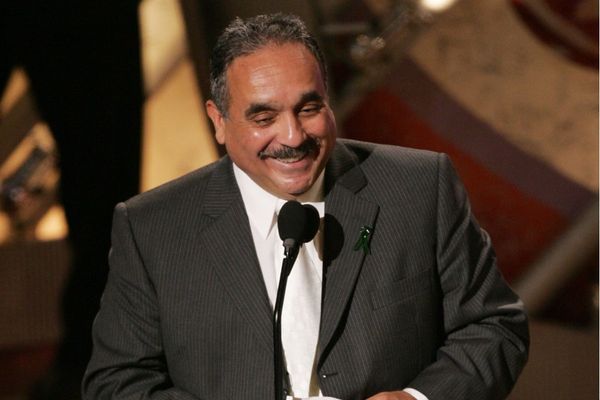
Australia’s outgoing disability discrimination commissioner, Graeme Innes, has marked the first year of the national disability insurance scheme by saying it was not surprising there had been some minor “glitches”.
As politicians celebrated the first anniversary of the NDIS launching in several trial sites, Innes said on Tuesday the broad public support for the increase in the Medicare levy to partly fund the national disability insurance scheme was heartening.
Innes also warned that the voice of people with disabilities would be significantly downgraded as a result of the loss of disability discrimination as a standalone portfolio at the Human Rights Commission. He finishes in the role this week.
The former Gillard government legislated to increase the Medicare levy by half a percentage point from 1 July 2014 to partly fund the NDIS, which is being rolled out in stages.
The opposition leader, Bill Shorten, cited the NDIS as an example of a reform for which the then government built so much community support that it was able to pass a tax to fund it.
“That last point is worth emphasising – a government low on political capital, pilloried on tax for three years, had the courage to fund this reform by increasing revenue,” Shorten said in a speech on the need to build consensus for major reforms.
Innes said the public’s willingness to accept the increase in the Medicare levy demonstrated “the strength of feeling and the support for the NDIS across Australia and across the parliament”.
“I think it [the NDIS] is going well,” he told Guardian Australia. “There are clearly some glitches at the edge, which is not surprising when it’s a new scheme, a total change in process and giving people with disability for the first time in our lives choice and control … but overall the satisfaction with the NDIS is very high.”
The NDIS had 6,434 eligible scheme participants at the end of the March quarter across all sites, or 5,414 participants with an approved plan, according to figures from the National Disability Insurance Agency.
About 900 disability support providers were registered and the average annualised package cost was $34,000.
Shorten marked the anniversary while criticising the government for failing to continue to have a discrimination commissioner dedicated full-time to disability issues.
“When you get the privilege to meet people who have profound and severe impairment, and see how they and their families and their carers can have greater choices and a fairer go in life because of the national disability insurance scheme, that is really heartening,” Shorten said.
“But today is also sad, because for the first time in a very long time, people with disability and their carers will be without a full-time disability discrimination commissioner. This Abbott government has made the wrong choice when it has withdrawn funding from a passionate and strong voice for people with a disability.”
The attorney general, George Brandis, announced on Tuesday the current age discrimination commissioner, Susan Ryan, would have disability discrimination added to her responsibilities.
Ryan, a minister in the Hawke Labor government, would “fulfil the role to a very high standard”, Brandis said.
“This appointment is in keeping with the common practice of appointing commissioners to dual portfolios,” he said.
“For all but three of the last 15 years, the person who has held the disability discrimination commissioner role has also been responsible for another portfolio. This includes the entire time Mr Shorten had responsibility for the disabilities portfolio in the Rudd-Gillard governments.”
Brandis pointed out that Innes had also been responsible for other portfolios during parts of his tenure, and said he expected all commissioners to continue to address disability discrimination issues that arose within their own portfolios.
Innes said there was no doubt the area would not have the same focus when shared with another full-time responsibility.
“Susan is a very capable woman and I’ve had the greatest pleasure working with her and I’ve got a lot of admiration for her, but she’s got a full-time job as the age discrimination commissioner; she’s going to do this work on top of her age discrimination role,” Innes said.
“She hasn’t, apart from an unfortunate accident a couple of years ago when she broke her leg, had any lived experience of disability. And she doesn’t have the knowledge of the disability sector, so in three ways the voice of people with disability will be significantly downgraded.”
Innes will address the National Press Club in Canberra on Wednesday before finishing in the role on Friday.