

Seattle-based adventure apparel and gear manufacturer Outdoor Research (better known as OR to its friends and fans) have been producing top-quality equipment since 1981, and I’m always excited by the prospect of testing kit designed and produced by this brilliant brand.
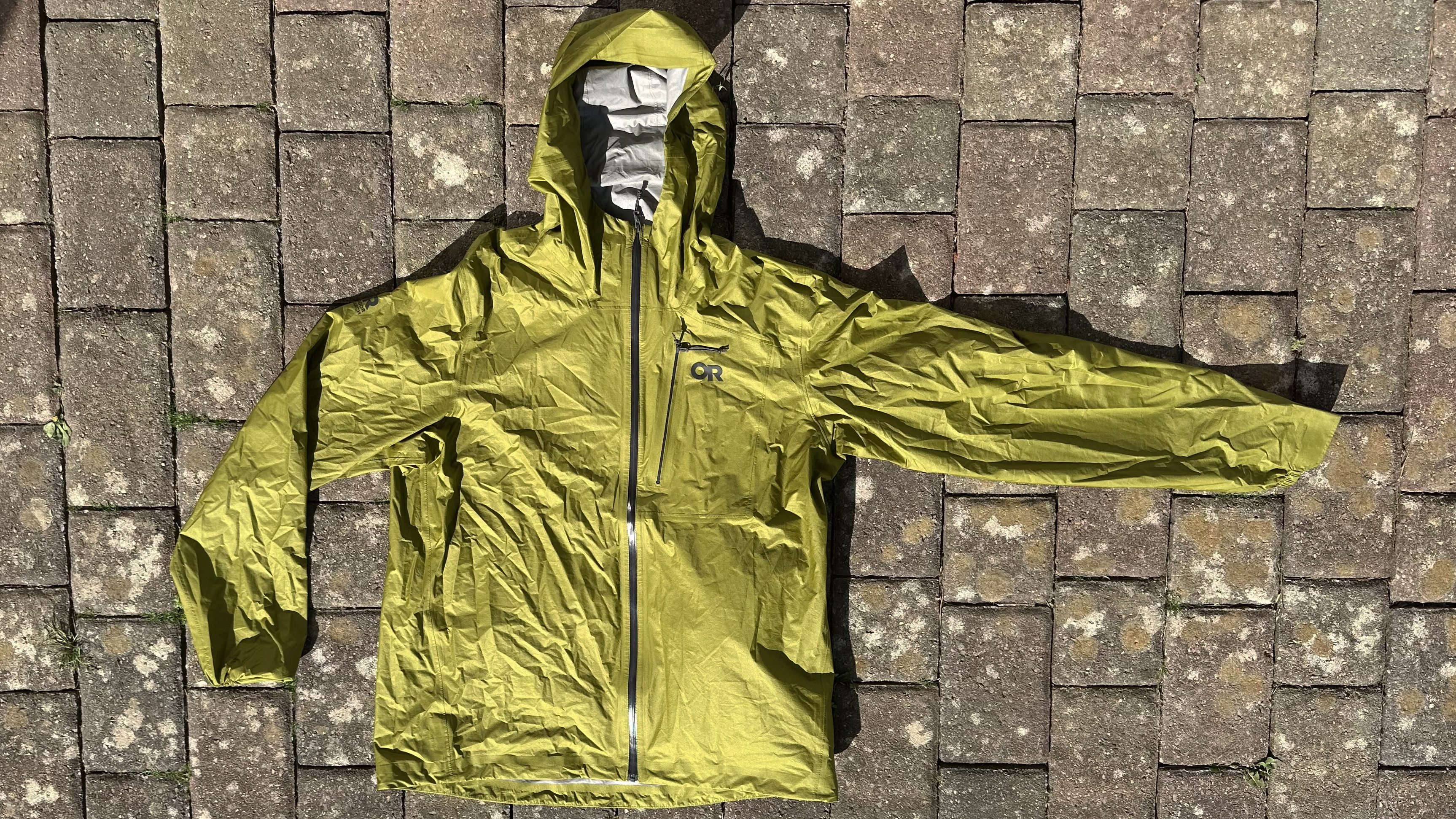
When I first held OR’s Helium UL jacket, however, I thought someone was pulling my leg. I couldn’t quite believe just how featherlight it felt. Obviously, I knew I was getting a lightweight waterproof jacket, but this seemed almost ridiculous.
It weighs less than a decent pair of hiking socks and when stashed away in its pocket, at its most compressed, it’s about the size of a coffee tumbler, making it ultra easy to throw into a daypack or running vest, even on days when the weather looks good and you don’t think you’re going to need a shell layer (but having one provides a nice insurance policy).
But what about when the elements are in a less benign mood – could something that feels so barely-there actually supply substantial protection during downpours and in serious wind? Only one way to find out.
Outdoor Research Helium UL Jacket review
Price and availability
The Helium UL jacket from Outdoor Research is now available for men and women at a wide range of outdoor shops and websites. In the UK, you can expect to pay around £190 full price; in the United States, the price will be $225 or thereabouts; and in Australia, you’re looking at the best part of AU$300.
Specifications
- RRP: £188.95 (UK) / $225 (US) / $299.95 (AU)
- Sizes: Men’s: S–3XL; Women’s: XS–XXL
- Weight (Men’s large): 161.6g
- Materials: 15-denier 100% polyamide shell, with Dermizax membrane & YKK Aquaguard zippers
- Centre Back Length: 29in (73.7cm)
- Waterproof rating: HH 20,000mm
- Breathability rating: 20,000g/m2/24h
- Colours: Men’s: Skyline / Pro Khaki / Rainforest / Black ; Women’s: Madrone Red / Mallard / Oyster / Black
Materials
A multiuse but minimalist shell, OR’s Helium ultralight 2.75-layer jacket is made with Toray Dermizax 3D, a Japanese technology that adds a waterproof/breathable membrane to a super-thin layer of polyamide outer fabric, producing garments designed to be waterproof, breathable, and exceptionally light.
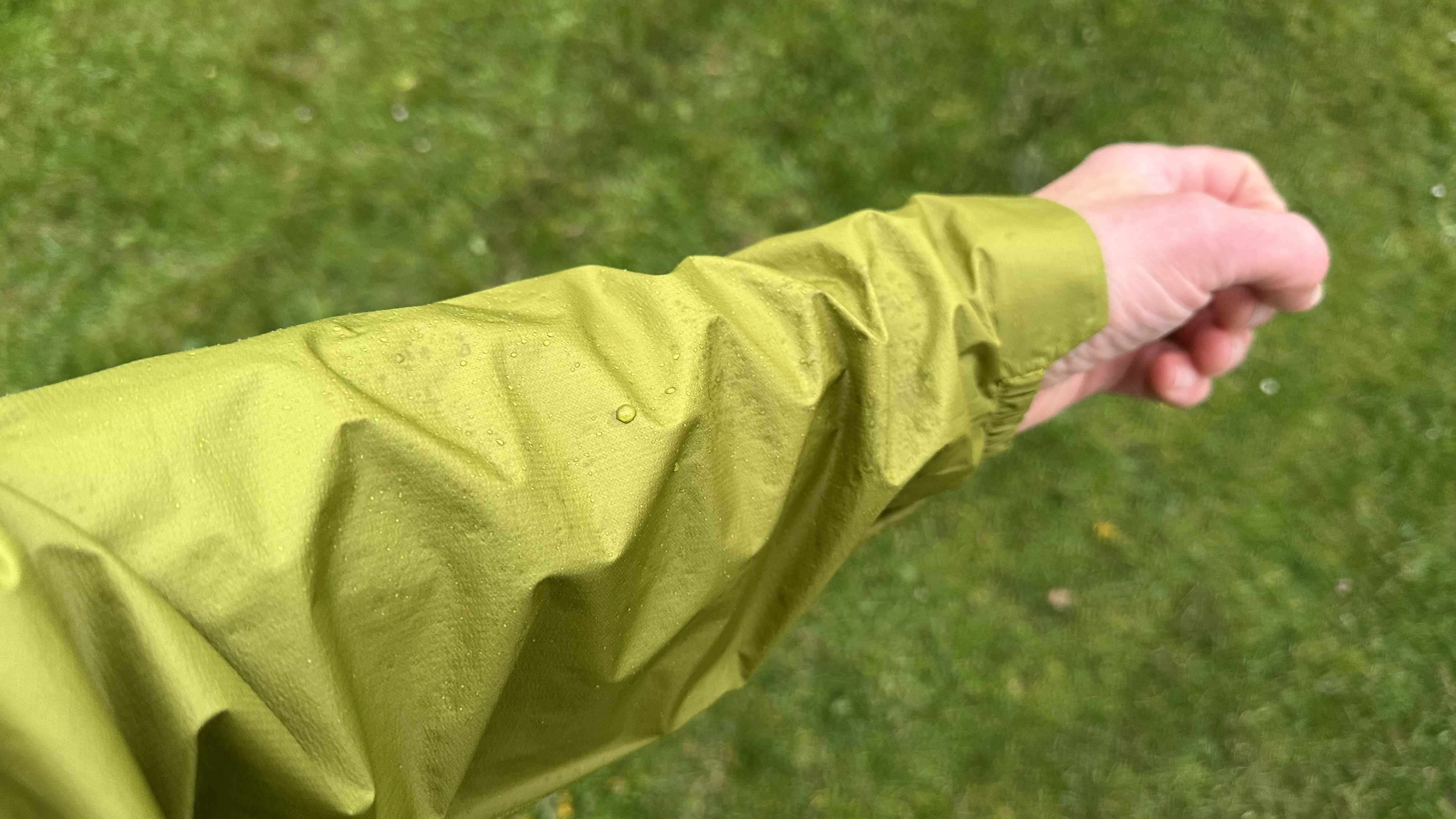
The jacket has a lab-tested hydrostatic head (HH) rating of 20,000mm and a breathability rating of 20,000g, both extremely impressive figures (almost unbelievable for such a lightweight shell, to be honest).
By OR’s own assessments – as shown in a graphic on the brand’s website – the Helium UL offers mid-level waterproofing, breathability, and durability, a low level of warmth, and some stretch.
All of this sounds more honest and accurate, reflecting the garment's thinness and what it’s designed to do (provide first-layer protection against wind and wet weather in relatively mild conditions).
You might be wondering, ‘What does a 2.75-layer mean?’ It's halfway between a 2.5-layer jacket, when the waterproof/breathable membrane comes in the form of a laminate backer (and sometimes behind a cheap mesh inner), and a full 3-layer garment, where the membrane is sandwiched between a tough outer shell and a proper moisture-wicking fabric liner.
On the OR Helium UL jacket, the svelte 15-denier shell (treated with a PFAS-free durable water-repellent and complete with sealed seams and YKK Aquaguard zippers) is backed by a 3D-printed Dermizax membrane. The intended result is a jacket that offers performance, next-to-skin comfort and breathability, minus the weight.
Too good to be true? Well, there are definitely compromises, starting with the outer fabric's thinness.
A more robust 3-layer waterproof jacket will use a face fabric that is twice (or three times) as thick as the Helium's 15-denier shell, combined with a moisture-wicking inner layer, offering much more protection from the cold and far better breathability.
However, they weigh three or four times as much, take up more space, cost a lot and feel over-the-top in less extreme conditions.
Design
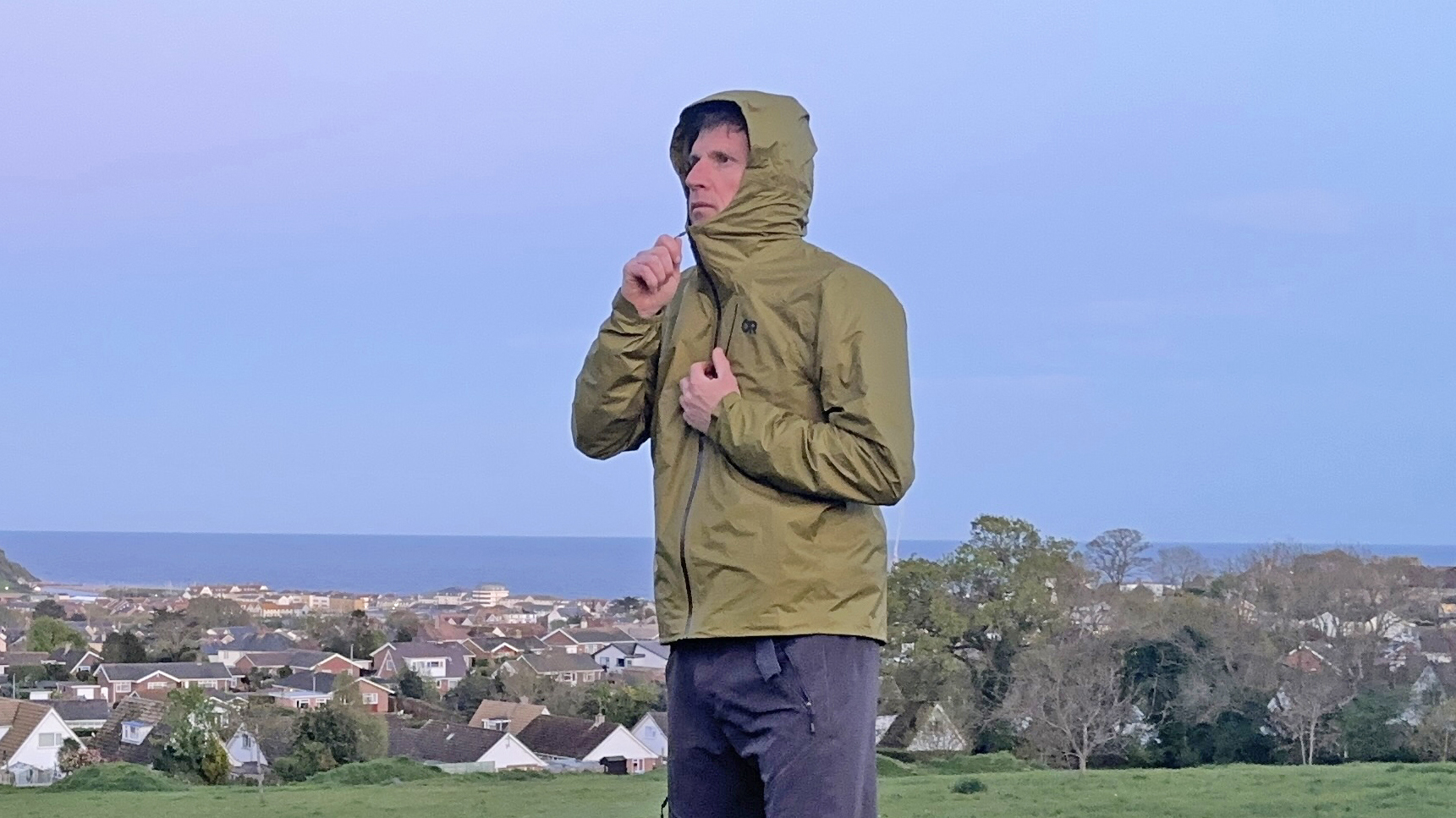
The Helium UL jacket is designed to be lightweight, above all else, but the seams are all sealed and the components, including a full-length YKK Aquaguard zipper on the front and another on the vertical chest pocket, are all excellent. The pocket, the only one on the garment, doubles as a stash pouch, swallowing the entire jacket for easy storage and transportation.
The Helium UL jacket also has partially shaped, elasticated cuffs and a drawstring hem, both good features for keeping the wind out. It has a hood, too, which is fully adjustable via a single toggle at the back, and a small peak to keep raindrops from falling straight into your eyes.
Performance
So, as mentioned, the Helium UL jacket has sky-high ratings for waterproofing and breathability. However, lab tests are one thing, but you don’t really know how a garment like this is going to work until you get out and wear it in real-world conditions.
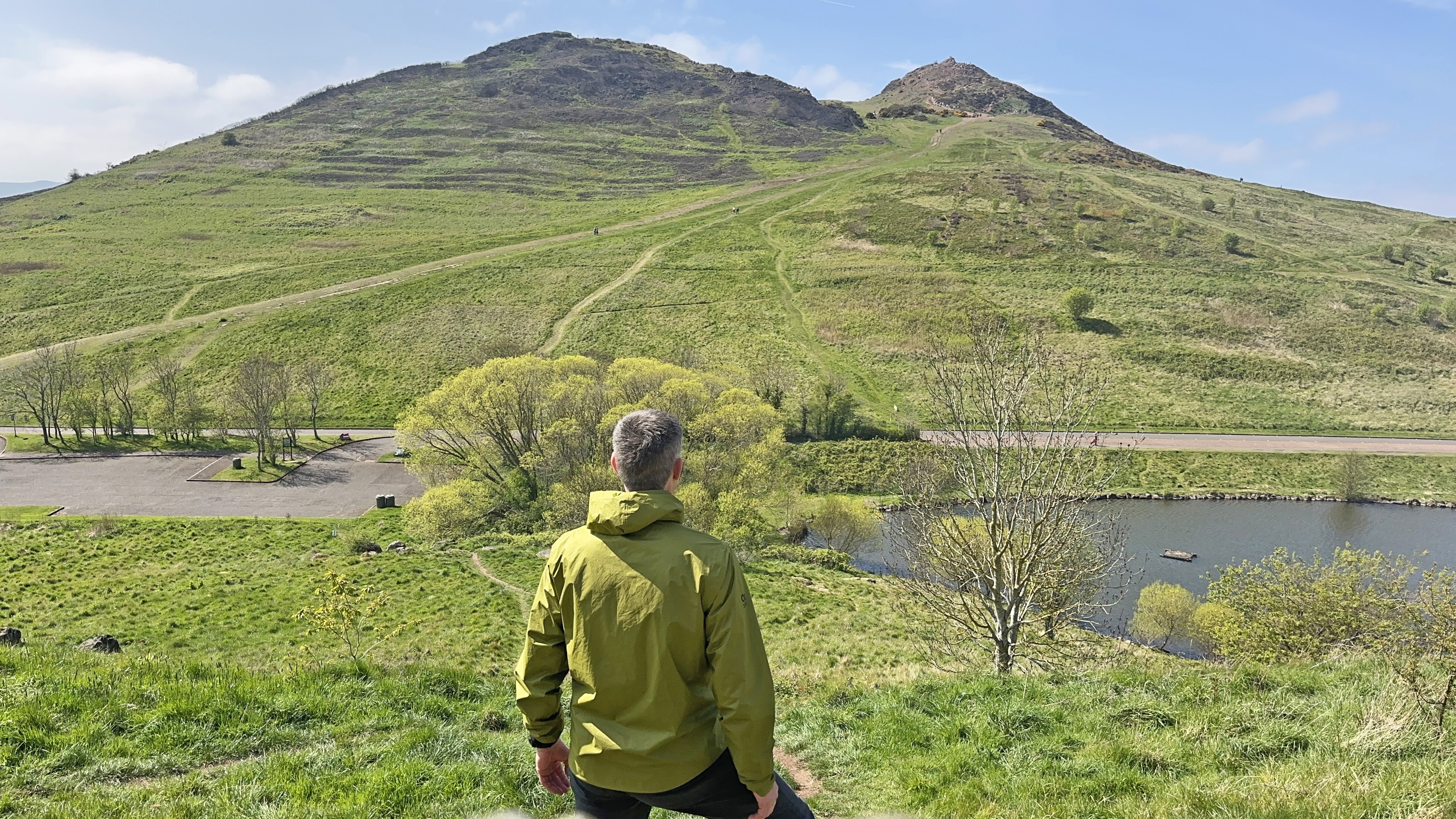
This is exactly what I’ve been doing over the last couple of months, including during some hiking escapades in the Scottish lowlands, in the hills above Holyrood and around Arthur's Seat, an extinct volcano overlooking the Scottish capital.
These were day hikes in blue-sky conditions, when it was warm in the sun but very cold in the shade, with a northerly wind that brought the temperature down significantly, necessitating an outer shell at times. Perfect testing conditions.
Also, before talking about performance, it’s important to say that this jacket is designed primarily as just-in-case lightweight layer that’s easy to carry and capable of providing some protection from cold winds and light and is not intended for use as an all-day outer shell for winter adventures or high peak escapades.

Don’t be fooled into relying on it for all-weather protection by its high waterproofing stats; it is very thin, and aside from fending off wind chill, it will not keep you very warm. You could think of it as a coat-shaped emergency blanket, but that’s a little unfair, because it’s a very nice-looking and highly functional garment, so long as you don’t overestimate it.
When used for what it’s designed for, as I have been doing, this is a great little shell jacket, especially as part of a layering system, and when worn with a good base layer. As we’ve moved through spring, I have been using the Helium UL regularly while hiking and trail running.
Depending on the time of day and weather conditions, I often start off wearing the jacket until I warm up, before removing it and stashing it in a pack, or the other way round, starting with it in my bag and then putting it on when I stop for a break, conditions cool, or it starts getting windy and/or rainy.
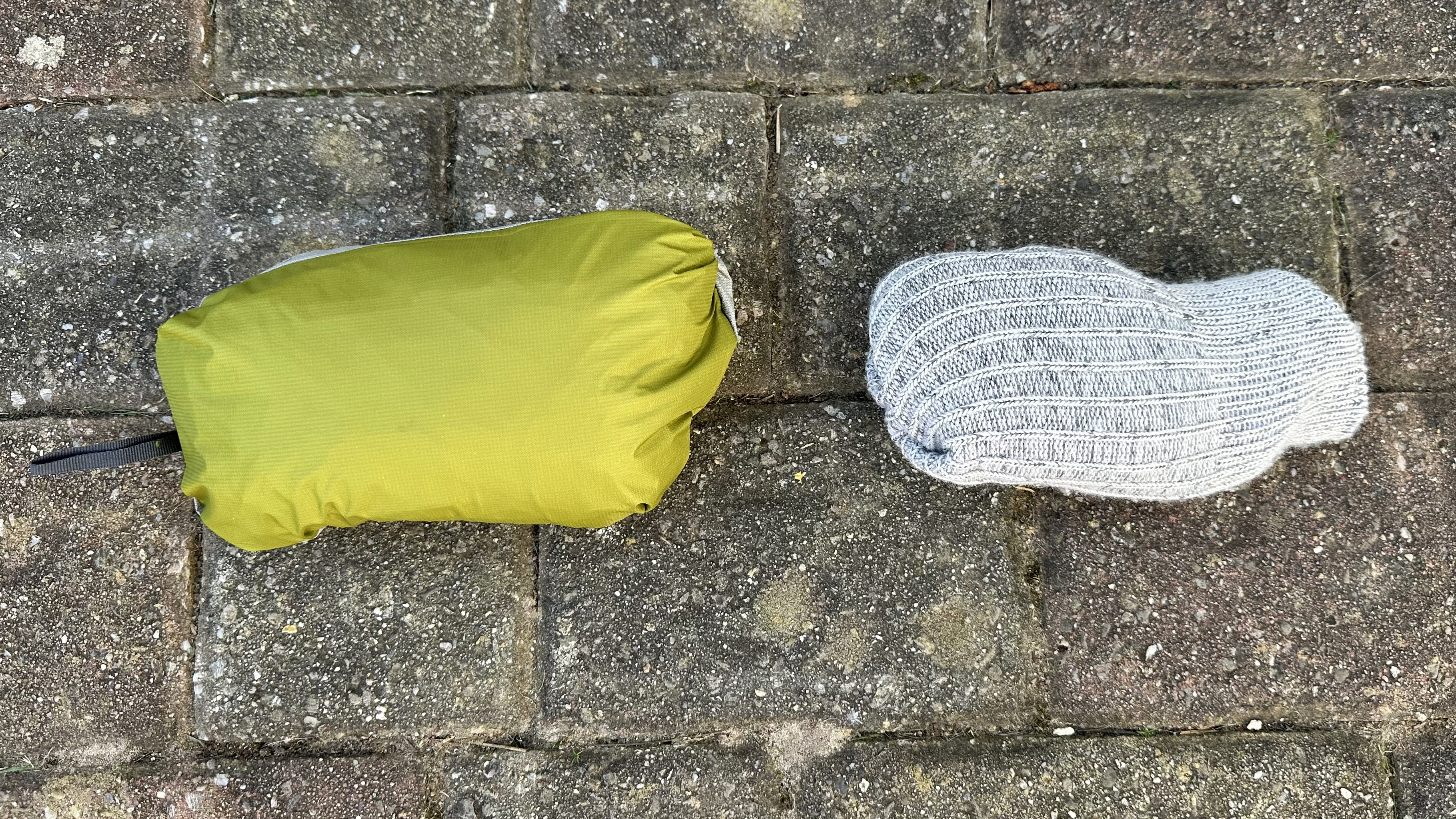
It’s a good-looking jacket, but one of the best things about the Helium UL is how easy it is to carry when you’re not wearing it. This means you never have to think twice before throwing it into a pack, so you always know it’s there when needed.
I regularly put it in the rear pouch of my cycling top when I go mountain biking or road cycling, just in case I need it when I stop for coffee, or when the weather turns, and it’s also perfect as a superlight waterproof layer for use in ultra running (many races stipulate such a garment in the required kit list).
And when called into action, it works well. It’s especially excellent as a windcheater, and effectively fending off a biting breeze can make all the difference to your comfort and enjoyment levels when you’re out and about. In extreme circumstances, the difference between life and death (but please don’t rely on it for that).
The waterproofing is impressive, although the thin outer layer can wet out quite quickly in heavy conditions, and it does lack any thermal oompf. Also, I didn’t find the jacket quite as breathable as I’d hoped from the stats, and when used for trail-running, especially, it left me feeling a bit clammy.
Final verdict
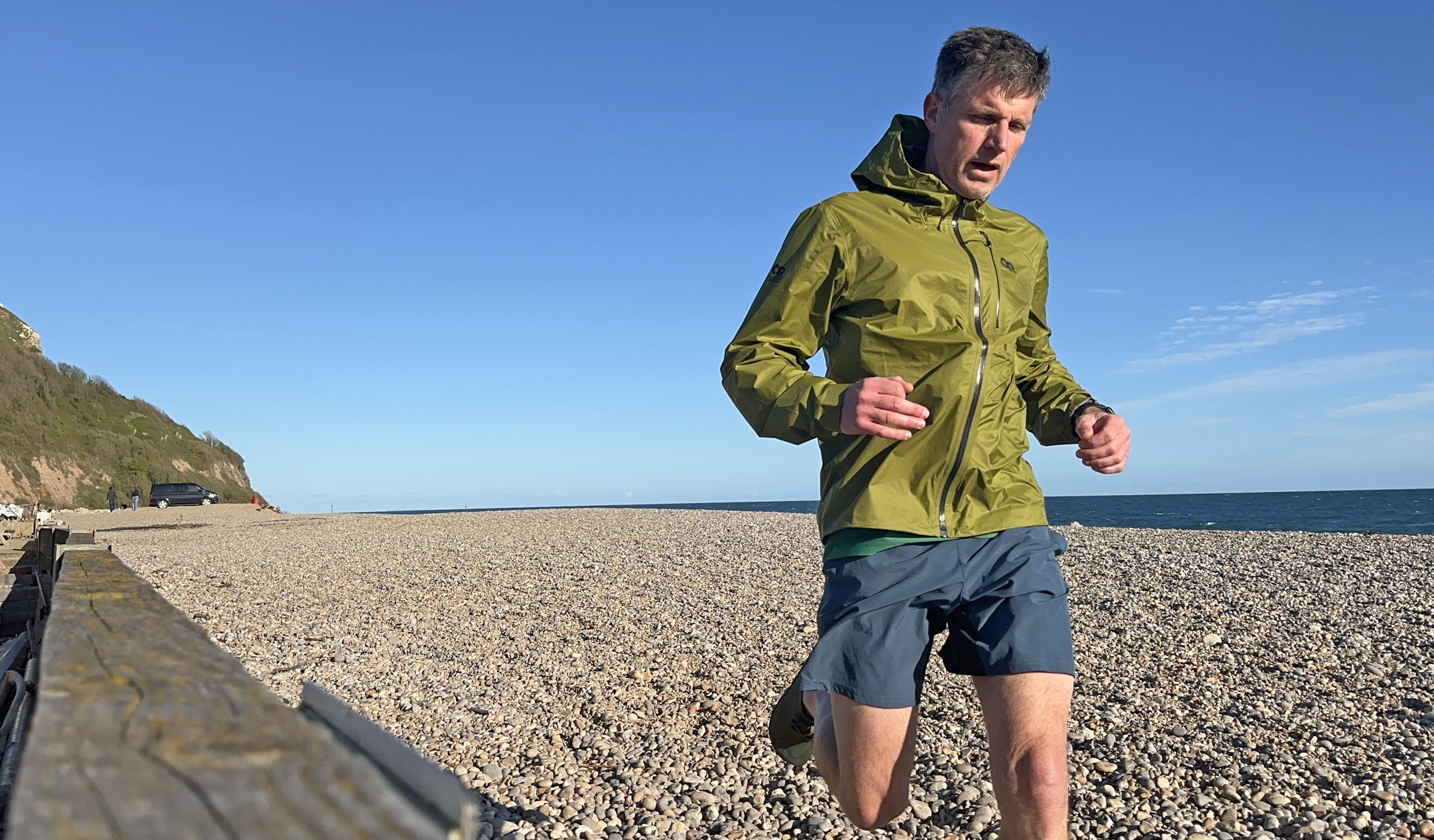
The Helium UL jacket from Outdoor Research is an exceptionally lightweight shell layer (the lightest I’ve ever come across), and it’s superb as an easy-to-carry emergency layer, no matter what you’re doing in the outdoors.
It offers excellent protection from the wind and will keep rain and mist out for a decent period of time. However, despite the technology boasting high breathability, the lack of a moisture-wicking lining makes this a clammy garment to wear during high-intensity activities such as trail running or cycling, and I prefer to wear it while walking or climbing.
Also consider
The Patagonia Storm Racer isn’t quite as light as the OR Helium UL, but it’s still a high-performing minimalist shell jacket and is made mostly from recycled materials, so it leaves a smaller footprint.
For a much higher level of breathable protection from the cold and the wet, check out the excellent 3-layer Helly Hansen Foil X Jacket, which is considerably heavier (and more expensive) than both the Helium UL and the Storm Racer, but will keep you much warmer and works well for all-day wear in challenging conditions.
Personally, I prefer shell jackets with a pit zip (no matter how breathable the membrane claims to be, it will only work well in distinct circumstances, and having vents is the best way to manage internally generated moisture levels), and the 3-layer, relatively reasonably priced Rab Namche offers this feature, and it’s made with mostly recycled fabrics too.