Afternoon summary
I’m wrapping up for today, but here’s a summary of the key events:
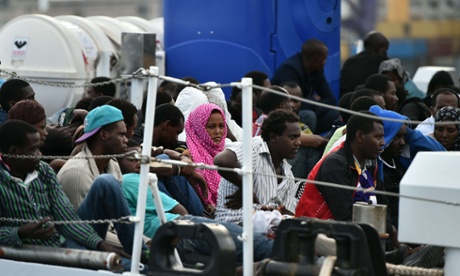
- Labour has condemned the government for washing its hands of responsibility to work with other countries to stop more refugees drowning in the Mediterranean.
- The mayor of Calais, Natacha Bouchart, has said migrants are willing to die to reach Britain from France and a major “magnet” is the UK benefit system
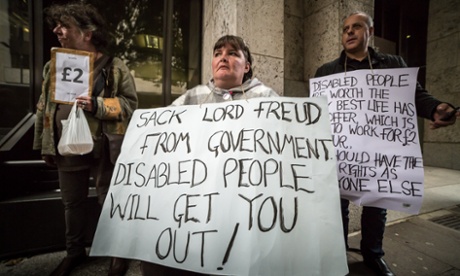
- Labour lost an opposition day debate vote of no confidence in Lord Freud, the welfare minister, who suggested disabled people are not worth the minimum wage
- Sarah Boyack, MSP and local government spokesman at Holyrood, has declared herself a candidate in the race to be the next Scottish Labour leader.
Labour has finally responded to our story about the UK withdrawing its support for migrant rescue in the Mediterranean with a strong statement of disapproval.
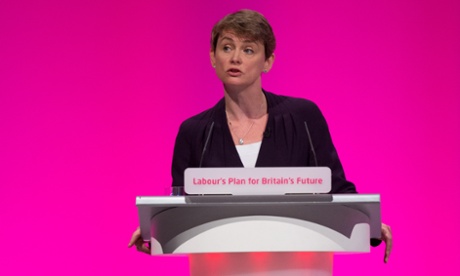
This is Yvette Cooper, the shadow home secretary:
It’s just not good enough for Britain just to wash its hands of its responsibility to work with countries across Europe to stop more refugees drowning in the Mediterranean.
Of course, we should be doing much more to discourage people from trying a dangerous journey in the first place and cracking down on the gangs who are exploiting people’s desperation by sending them off in crowded unsafe boats, but the idea that you discourage people from coming by leaving them to drown instead is appalling and inhumane.
Home Office ministers seem to be saying that European countries should deliberately turn our backs on those whose lives and safety are at risk in order to set an example for others. That’s never been the British way. We should be working with other countries to renew efforts to stop people attempting this dangerous journey in the first place, not calling on everyone to stand aside and let men, women and children drown.
Downing Street has responded to the mayor of Calais’s claims that migrants at the border are attracted to the UK’s benefit regime. The prime minister’s spokesman said:
Clearly, one of this government’s focuses in this area is to look at what are the pull factors around immigration and how we can address them.
We have under this government introduced a three-month delay before EU jobseekers can access jobseeker’s allowance or child benefit or child tax credit.
We are limiting jobseeker benefits to only six months, and we will shorten that to three months in the future. Entitlement to housing benefit (has been) removed from EU jobseekers.
What we are seeing across the board with the measures we are taking on immigration is that non-EU net migration is close to its lowest level since 1998.
We have also been working with the French. One of the things we’ve done is a 12 million investment by the UK to bolster security and infrastructure in Calais.”
I’m just catching up on what has been going on at the Commons health committee, where Simon Stevens, new chief executive of NHS England, has been giving evidence.
It sounds like he has tried to be very politically diplomatic about some of the key issues. Health Service Journal reporter Nick Renaud-Komiya has been tweeting about it:
Valerie Vaz asks Stevens about TTIP. Stevens says “we don’t deal with international trade negotiations”
— Nick Renaud-Komiya (@NickRenKom) October 28, 2014
Valerie Vaz is trying desperately to get Stevens to say “The Health and Social Care Act should be repealed”. She fails.
— Nick Renaud-Komiya (@NickRenKom) October 28, 2014
In the meantime, here’s something to brighten the day of people who like the seaside.
The government’s coastal communities scheme (AKA the Stop Ukip Fund) is giving £1.8m to Thanet District Council to “bring back into economic use” the iconic but derelict art deco cinema, which is part of the Dreamland site in Margate, Kent. Other chunks of cash are going to projects in Whitehaven, Cumbria (£450,000) and Littlehampton, Sussex (£573,000).
Margate is in the constituency next door to Thanet South, where Nigel Farage is standing to be an MP in 2015. This is our piece from earlier in the month about the revival of Dreamland and its conversion into a vintage-style amusement park.
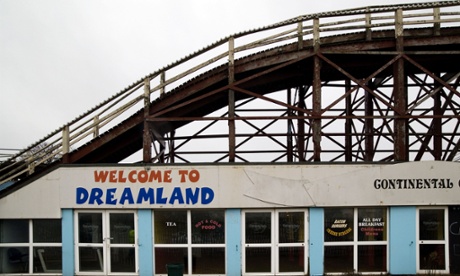
Updated
Labour loses the vote on the motion of no confidence in Freud by 243 votes to 302. They are now moving on to a debate about the regeneration of coalfield communities.
Michael Dugher, the shadow Cabinet Office minister, is talking about the recent release of cabinet papers that revealed a plot to close more than 70 mines - even though the government only publicly claimed it wanted to close 20 in 1984. Labour backbenchers are shouting “shocking!”.
MPs are voting on the Labour motion about whether Lord Freud should be sacked as welfare minister for his comments about disabled people not being worth the minimum wage.
Isabel Hardman in the Spectator has summarised the whole debate as both sides saying:
1. We are very offended by what you are saying and will offer nothing more to the Chamber than our deep anger at your offensiveness.
2. We care more about disabled people than the other party, which has done all these bad things.
3. The other party is being very cynical.
Updated
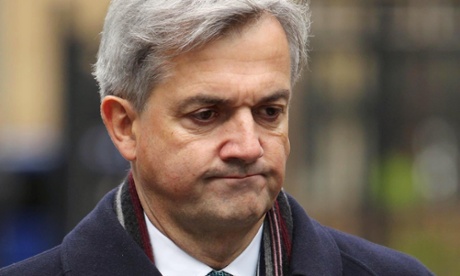
PA is reporting that former cabinet minister Chris Huhne has lost a Court of Appeal challenge against an order that he must pay £77,750 costs from his prosecution for passing speeding points to his ex-wife.
Various stories about migrants are clearly the topic of the day, from boats in the Mediterranean to the situation in Calais. But Europe is still bubbling away as well, without any good news for David Cameron.
- Outgoing EU justice commissioner Martine Reicherts has warned that the UK Conservatives cannot “pick and choose” what they like when it comes to human rights law. She told Debating Europe that if the UK leaves the European Convention on Human Rights it should also leave the European Union as well (the ECHR is not, of course, part of the EU, but EU Member States are expected to sign up).
- Danish prime minister Helle Thorning-Schmidt, who shared a selfie with Cameron at Nelson Mandela’s funeral, has warned the UK that “countries must follow the rules as they are” when it comes to the extra £1.7bn of contributions to the EU. She told Bloomberg: “I respect that the UK wants to discuss this among ministers, but there are rules that must be kept.”
BBC journalist Rebecca Keating has noticed some awkward parliamentary scheduling:
Welfare Minister Lord Freud is at the dispatch box in the Lords while in the Commons, MPs debate a motion calling for his sacking
— Rebecca Keating (@RebeccaKeating) October 28, 2014
Tim Wigmore at the New Statesman has come to an inescapable conclusion about the government’s decision about stopping help for migrants in the Mediterranean.
The UK government is acting brazenly out of a need to be seen to be doing something – anything, really – about immigration. Political expediency trumps the needs of some of the most distressed people in the world.
They are not the only losers. Acts like these, together with the ‘Go Home or Face Arrest’ vans last year, create the image of the UK as distrustful and even resentful of foreigners, which has already manifested itself in the steep drop in foreign students studying in the UK. If talented foreign people see a country that seems suspicious of them, they will be less likely to work in the UK or do business with it, with negative economic consequences for everyone in the UK.
The government’s stance on search and rescue operations not only fails on a humanitarian case, but also on the most hardheaded business one too.
There is a bit of a dispute about whether the migrants in Calais are aslyum seekers and if so, why are their claims not processed by France? Bouchart says they are not.
In that case, says Ian Austin, a Labour MP, why are some of the migrants in Calais not deported by the French authorities as people who are in the country illegally?
Bouchart says she is in dispute with the French government about this.
Michael Ellis, a Tory MP, says Bouchart needs to go to the French president and tell him about what is wrong with the European Schengen agreement, rather than expecting the UK to solve a French problem.
Updated
MPs are now tackling the Calais mayor about her comments blaming the British for the migrant crisis at the border.
Bouchart says: “If you didn’t have such an attractive regime for migrants coming to the country, that is your responsibility.”
The Calais mayor argues the current situation is worse than the days of the notorious Sangatte camp, because it is spread throughout the town and “in the open”
Bouchart, speaking via a translator, is saying benefits in Britain are a “magnet” for migrants waiting at French border for a chance to sneak across.
Mayor of Calais on immigrants in her city: "these people are prepared to die to come to England."
— Chris Mason (@ChrisMasonBBC) October 28, 2014
I’m just dipping into the home affairs committee meeting on Calais migrants now with the town’s mayor Natacha Bouchart. Keith Vaz has started the session in French...
Keith Vaz is stretching the A level French I've mostly forgotten by introducing today's session of @CommonsHomeAffs in French. Show off
— Ian Austin (@IanAustinMP) October 28, 2014
At immigration select committee, Keith Vaz is interrogating the Mayor of Calais. Naturally Vaz has prepared a welcoming spiel in French
— Michael Deacon (@MichaelPDeacon) October 28, 2014
Next up in the welfare debate is Jackie Doyle-Price, the Tory MP for the marginal Ukip- and Labour-threatened seat of Thurrock. She is actually defending the thrust of Lord Freud’s comments even though he has apologised for them.
We need to show more maturity when debating these issues. The truth is unemployment for people with disabilities exceeds 50% and amongst those with severe learning disabilities it is more than 90%... When we are tackling youth unemployment through apprenticeships, we’ve conceded its legitimate for employers to pay less than the minimum wage, we have conceded it is legitimate for the government to give support for employers so why can it not be the case that we can consider it for people with disabilities...
The truth is the minimum wage does act as a barrier to employment, when an employer will judge that the amount they have to pay exceeds the value added to them by that employee. It is surely self-evident that we should be can be doing to elimate that barrier. That’s not talking about people being worth less but making practical interventions to fix a problem.
She goes on to lambast those who “sit on the sidelines and whip up hysteria”, and defends Freud as an “honourable man” whose only offence was sloppy language. She then gets quite worked up:
The way in which Labour has inflamed this row has shown them at their holier-than-thou worst. They like to pretend this party is the nasty party. Well I’ll tell you what’s nasty: it’s distorting the comments of a decent honourable man and to use people with disabilities as a political football with which to beat the government. Shame on them! Shame on them!
...Frankly if Labour haven’t got anything constructive to say about this issue, they should shut up.
Dame Anne Begg, the respected chairman of the Commons work and pensions committee, says many disabled people feel the government’s welfare reforms are less about reform and more about saving money.
They feel that somehow everything that is being done with regard to welfare reform is landing on their doorstep.
She calls yet again for a cumulative impact assessment of the welfare reform, which the government has refused “umpteen” times before.
The Home Office has now issued a further explanation of Theresa May’s decision to opt out of the international efforts to rescue migrants trying to cross the Mediterranean:
Ministers across Europe have expressed concerns that search-and-rescue operations in the Mediterranean … [are] encouraging people to make dangerous crossings in the expectation of rescue. This has led to more deaths as traffickers have exploited the situation using boats that are unfit to make the crossing,” the statement said.
The full story by Alan Travis is here.
The Whigs have emailed to add that there are about 12 of founder members of the party and 150+ people who have expressed interest since its website went live last week.
Formal membership will open soon, and will be free but in the meantime, people can express interest here.
Sarah Boyack has declared her candidacy for the Scottish Labour leadership. Our story by Severin Carrell is here, but this is an extract:
Boyack, a former transport minister at Holyrood, told the Guardian she would be formally declaring her intention to stand later on Tuesday making her the first to confirm she will contest the leadership.
She is expected to stand as a unity, centre-ground candidate in what is emerging as a three-way contest between her, Jim Murphy, the Blairite shadow international development secretary seen as on the right of the party, and Neil Finday, currently education spokesman at Holyrood, a leftwing trade unionist and Campaign for Socialism activist.
Neither Murphy nor Findlay have yet confirmed they plan to stand. Murphy is said to be still finalising his leadership and campaign team and has a critical decision to make on whether to stand soon for election to Holyrood.
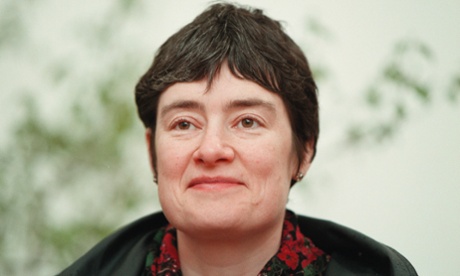
Liz McInnes, the new Labour MP for Heywood and Middleton, is making her maiden speech in the House of Commons in the debate about Lord Freud’s comments on the disabled.
She pays tribute to her predecessor, the late Jim Dobbin, and talks of a disabled man she met who was forced to pay an extra £14 a week under the bedroom tax.
Updated
This is the full quote from Amnesty International about the UK’s withdrawal from the effort to help migrants in the Mediterranean. UK director Kate Allen has a pretty damning conclusion - that Britain is turning its back on migrants and letting them drown:
This is a very dark day for the moral standing of the UK.
The Italian navy’s desperately needed search and rescue operation in the Mediterranean has saved thousands of lives and other European countries should now be stepping up to share that responsibility with them, not shirk it.
The vague prospect of rescue has never been the incentive. War, poverty and persecution are what make desperate people take terrible risks.
History will judge this decision as unforgiveable. When the hour came, the UK turned its back on despairing people and left them to drown.”
Harper claims some of the outrage about Freud’s claim is false, as one MP cites a Guardian article from 2000 about Mencap calling for disabled people doing “low output” work with a high therapeutic value to be exempt from minimum wage legislation. The charity’s policy has now changed.
Tory backbencher Conor Burns has just intervened to castigate the “disgraceful” and “misleading” speech of Green, arguing the Conservatives care just as much about disabled people as Labour.
Mark Harper, the minister for disabled people, is now answering for the government (yes, he’s returned to the frontbench already after resigning over the immigration status of his cleaner in February).
He says Labour is being “cynical” in its attack on Lord Freud and he is “deeply disappointed” in the shadow minister’s tone.
Harper says Ed Miliband brought up Freud’s comments in prime minister’s questions weeks after they were first made in order to distract David Cameron from talking about the coalition’s economic record.
Iain Duncan Smith, the work and pensions secretary, is slouching beside him, heckling with cries of “down by a third!”. We can presume he means the deficit, not the minimum wage for disabled people.
Updated
Green set out her thinking on the issue yesterday in a blog for LabourList with Stephen Timms, the shadow employment minister.
No wonder disabled people are angry. No wonder people have called for Freud to go. Rightly so. Such views have no place in a department with a central responsibility for ensuring that disabled people get the extra help they need to support them when they can’t work and meet the additional costs they face, as well as make the most of their potential in work.
She is speaking with passion in the House of Commons as she talks of feeling “deeply ashamed that disabled people feel hounded and bullied” at the moment.
A debate is now underway in the Commons about the position of Lord Freud, the welfare minister who suggested disabled people were not worth the full minimum wage.
It is an opposition day debate called by Labour, led by Kate Green, the shadow minister for disabled people. This is the motion:
That this House notes the comments of the Parliamentary Under-Secretary of State for Welfare Reform, Lord Freud, on 30 September 2014 that the work of disabled people is not worth the minimum wage; believes that these comments have further undermined trust among disabled people in this Government’s policies, a trust which had already been damaged by delays in assessments for a personal independence payment, problems with work capability assessments, and the poor performance of policies aimed at helping disabled people into work; further notes that the conduct of Lord Freud had already damaged that trust through his oversight of the housing benefit social sector size criteria which has had a particularly severe impact on disabled people, many of whom have nowhere else to move to and need extra room for medical equipment or carers; and therefore concludes that this House has no confidence in the Parliamentary Under-Secretary of State for Welfare Reform; and calls on the Prime Minister to dismiss him.”
Anyone remember the Whigs? Probably not, as the party was dissolved in 1868.
It is now being revived by a man called Waleed Ghani, who was interviewed on Today programme this morning. He tells me:
I want to do my bit to bring a spirit of intelligence and progress back to British politics, with a party based around social media and the internet. I think something needs to be done for those of us who have deep political concerns, but are disengaged from the current political process, and the revival of the Whig party may just be it.
According to the new party’s website, these are the values of Whiggery:
1. The Whig View of History
We believe that our best days are ahead of us. We put our faith in reason and progress, and on what unites us rather than what divides us.
2. Human Rights
We believe that society should enable human flourishing and respect the dignity of all its members. To achieve this we fight against poverty, discrimination, and disease.
3. Mångfald
Diversity makes Britain great, and it makes Britain strong. We celebrate the fact that so many people choose to make their homes here and contribute to our national life, because the widest range of inputs are essential to deliver the best outcomes.
4. Social Justice
We believe that a developed nation is one whose laws are made from the perspective of all members of society. We believe that the laws passed by Parliament should benefit the worst-off in society as much as the most advantaged.
5. Democracy
We believe that our political system is simple and accessible, and that everyone has the right to take part in politics. We encourage as many people as possible to exercise their right to vote and to stand for election.
6. Love of country
We are proud of the institutions that we have built together and that we share – like the NHS and the BBC – and which set this country apart. We believe in investing in them for our future.
7. Britain’s central place in the world
Whigs have always believed that Britain belongs at the top table of global affairs. Today we believe that our position should depend on our moral authority and our allegiances with the Commonwealth, the Anglosphere, and the European Union.
8. Confidence
We believe progress, intelligence, and decency are what the British electorate expect. We are confident that our values reflect the best aspects of ourselves and are shared by most of the British people.
Updated
A second Labour former home secretary has intervened in the political debate about immigration today.
Jacqui Smith told BBC 2’s Daily Politics that politicians need to take people’s concerns about immigration seriously.
You need to take action where there are short term impacts of new people moving into an area, take that seriously which this government hasn’t done, but avoid suggesting that this is something that, through the language we use, can create division when actually what we’re trying to do is bring people together and integrate communities.
I said a few weeks ago I didn’t think the problem for Labour was new policies. I think we’ve got some strong policies about making sure that people can be confident, they’re not going to lose out on jobs, that there are things we need to do as I’ve suggested to better integrate people. I think... sometimes it’s as much about heart and gut as it is about the detail of policies. And I think that we need to respond in a human way to people’s concerns without playing into the wishes of some people who would actually want to create division.
Whatever the merits of her points, all these backseat drivers from governments past are not terribly helpful for Ed Miliband.
A reader has emailed with a link to an Ottawa Citzen article about the world’s response to drowning refugees. Thanks, Drew.
Nigel Farage has been speaking at something called the Milken Institute this morning. He seems to be in jolly form according to former Telegraph columnist Liam Halligan:
This morning I asked Nigel Farage how many more Tory defections before general election? "Oh shedloads," he said. Then louder "SHEDLOADS!!"
— Liam Halligan (@LiamHalligan) October 28, 2014
Not to be outdone by George Osborne’s plans for a Crossrail of the north, Boris Johnson has been talking about a second Crossrail for London.
He envisages the line running from Wimbledon in the south-west to Tottenham in the north-east.
Crossrail 2 is a vital project not just for the capital, but also for the regions from which people travel in to London on packed trains each day of the week.
With London’s population soon to surpass its previous 1939 peak of 8.6m, and with more people travelling by Tube and rail than ever before, we need additional rail capacity to support future growth.
For the capital to remain globally competitive there needs to be continued investment in our transport network and that’s why we have to get cracking on planning for Crossrail 2.
It’s an essential infrastructure project that will deliver thousands of new homes and jobs, as well as helping to keep our great city moving.
Over at the Telegraph, commentator Dan Hodges is outraged by the government’s dropping of support for migrant rescue efforts in the Mediterranean.
A couple of years ago the former BNP leader Nick Griffin infamously said he would solve the Mediterranean refugee problem by sinking their boats. The British government has now adopted the same policy. It’s simply decided to save on the ammunition.
This is what happens. This is where the death spiral into a political bidding war on immigration leads us. To a position where in 2014 the British Government – our Government – is saying that we should stand aside and watch asylum seekers drown.
Bring us your tired, your poor, your huddled masses yearning to breathe free. So we can sit back and watch as they vanish for a final time beneath the cold dark waters of the Mediterranean.
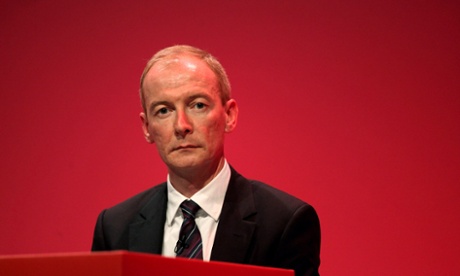
Pat McFadden, Labour’s new shadow Europe minister, is making a very pro-European speech in the House of Commons. He tells MPs that it was a victory for foreign policy when Warsaw Pact countries signed up to join the EU and no one should forget that.
Updated
Natalie Bennett, of the Greens, the only female leader of a UK-wide political party, is getting exercised about our story on the country’s continuing gender gap.
Britain going backwards in so many ways: here on the gender gap - a disgraceful record: http://t.co/jUHsV9TjNF
— Natalie Bennett (@natalieben) October 28, 2014
Updated
Labour backbencher Diane Abbott agrees with Sarah Teather on the cuts to migrant rescue efforts. She says it will mean “further tragedies” and “won’t stop people fleeing atrocities”.
Still no word from the Labour frontbench.
Updated
Sarah Teather, the Lib Dem former children’s minister, and chairman of the all-party parliamentary group on refugees, finds the decision “deeply depressing” and has released a punchy statement.
We would rather let people drown for nothing other than baseless political motives. It shows that when it comes to immigration, the government has plumbed new depths of inhumanity.
We cannot pretend this problem has nothing to do with us and wash our hands as people die. It is the policies we are pursuing, attempting to turn Europe into a fortress with no safe routes in, that is forcing migrants into risking their lives. We are forcing people to choose between dying in their own war torn country and drowning in the sea.
While we agree to bomb ISIS and dish out weapons to other groups in the Middle East, we offer no protection to those fleeing the conflict. Instead we have to listen as ministers claim that UK towns are “under siege” from migrants.
Last month I visited Lebanon, where nearly a quarter of the population are now refugees from the region. The hospitality I witnessed there was inspiring. How depressing that the UK’s response, rather than to extend a hand of welcome, is to turn our back on the biggest refugee crisis for over half a century. We should all be ashamed.
Alan Travis, our home affairs editor, has this update on his story about the UK stopping rescue efforts for migrants in trouble at sea.
Home Office to issue statement shortly defending policy of refusing to save drowning migrants in Med but no minister to defend it on air
— Alan Travis (@alantravis40) October 28, 2014
Amnesty International has been tweeting about our story with some background and context:
With search & rescue operations running, 2,500 refugees drowned this year. What happens when the mission stops? http://t.co/DioZtxsg3D
— Amnesty UK (@AmnestyUK) October 28, 2014
Is it fair to ask where Labour is on this issue? Not a peep from them yet this morning as far as I can see.
The level of support for Labour in Scotland is likely to be crucial to the outcome at the next election, as quite a few of the party’s seats are in danger of falling to the SNP in the wake of the independence referendum.
It really matters who the party picks as its next leader north of the border, after Johann Lamont left the role with a warning that Westminster was treating her like the head of a branch office.
However, the number of mooted candidates is dwindling. At the moment, it looks like a contest between Blairite shadow development secretary Jim Murphy (who hasn’t declared) and Holyrood health spokesman Neil Findlay, who looks to be backed by the unions.
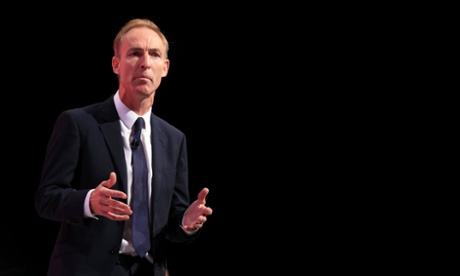
This morning, Anas Sarwar, the well-respected interim leader, ruled himself out of the race and warned about the disconnection between Westminster and the rest of the country:
I’ve made it clear that I have no intention to seek leader of the Scottish Labour party, I think I’ve got a really important job to do in this interim period... The reality is everyone feels disconnected from Westminster, not just in Scotland. People in the north of England, people in all parts feel disconnected from Westminster. On the party structures, let’s look at what the referendum told us. The referendum told us that people wanted as many decisions as possible to be made in Scotland. The Labour party works the exact same way, that principle of solidarity, of working together. Decisions made in Scotland, but still recognise we’re part of a UK Labour family. That’s why we have our own leader and deputy leader in Scotland.”
He also argued a vote for the SNP would help let in David Cameron in a sign that Labour is worried about losing seats to the nationalist party. It is a similar argument to the one that David Cameron is making about voting Labour and letting in Ed Miliband.
The choice next year is not going to be between the SNP and the Labour party. The choice next year is whether you want a Labour government, led by Ed Miliband…or a Tory government, led by David Cameron. The SNP last month said vote yes and you get rid of the Tories forever. They’re now saying vote SNP and keep the Tories. In essence, go to bed with Nicola Sturgeon, wake up with David Cameron. I don’t think that’s what Scotland wants.
While we’re on the subject of immigration, a ComRes survey for the Independent suggests support for Ukip has surged to a record high at 19%. It also found the Conservatives level with Labour, with both parties on 30%.
This was more or less mirrored by a Lord Ashcroft poll yesterday, which found Labour and the Tories on 31% and Ukip on 18%.
However, it is worth remembering that Labour are still ahead in most surveys, and appears to be doing better in marginals. This is a really good site run by the New Statesman with a rolling poll of polls that shows Labour in the lead.
Diane Abbott, a Labour former shadow minister, does not appear to be impressed by Blunkett’s argument:
So Blunkett joins Tory Michael Fallon in claiming parts of UK "swamped" by migrants #immigrationrhetoricarmsrace http://t.co/PDrJInAdfm
— Diane Abbott MP (@HackneyAbbott) October 28, 2014
Stories about the immigration are still very high up the news agenda at the moment. Apart from our piece about the UK ending its involvement in efforts to rescue migrants in the Mediterranean, there are the following developments:
- Former home secretary David Blunkett has backed the Michael Fallon, the Tory defence secretary, over his comments about some towns being “swamped” with immigrants. The Labour grandee chose to make an intervention on the subject in the Daily Mail.
- Justin Welby, the Archibishop of Canterbury, has said he is worried about the language used by politicians in the immigration debate and called on them not to demonise migrants.
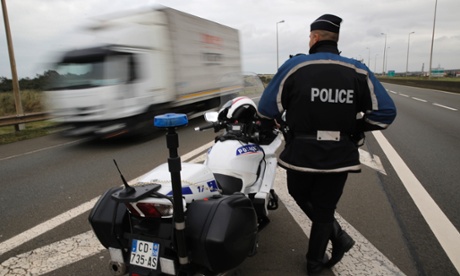
- David Hanson, the shadow immigration minister, is calling on Natacha Bouchart, the mayor of Calais to, to “step up” the town’s efforts to stop people attempting to circumvent border controls. She is appearing before the home affairs select committee this afternoon.
Updated
Despite all the reassurances from National Grid, energy ministers must be biting their nails over all this.
There would be severe political implications for the Conservatives if they were to preside over power-cuts in the winter before an election.
This is what Labour’s Caroline Flint, the shadow energy secretary, has to say:
The security of our energy supply has not been helped by the fall in investment under this Government. With a quarter of our power stations closing this decade it is vital that we bring forward investment in secure and clean energy for the future. That’s why the next Labour Government will prioritise energy saving, set a decarbonisation target to encourage investment in our energy infrastructure and establish a dedicated Energy Security Board to make sure Britain has a long-term plan to strengthen our energy security.
The National Grid report insists there is no risk of power cuts for households.
Ofgem said the company is taking “sensible precautions to take account of market developments including uncertainty over power station availability”. However, it warns there must be “vigilance”:
We are confident that National Grid has the right levers to keep the lights on and maintain a risk of customer disconnections which is better than the reliability standard set by government. However, given the tighter margins there can never be any room for complacency and National Grid and the industry must remain vigilant at all times.
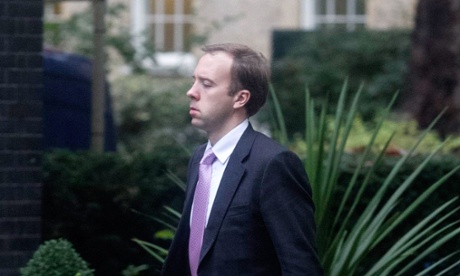
Back on Britain’s shores, Matthew Hancock, the energy minister, has been denying that households will suffer black-outs as a result of electricity shortages this winter. He told BBC Radio 4’s Today programme:
We are exactly taking that action precisely to ensure that there will be secure energy supplies this winter. There will be no power cuts to householders. Of course there may be bad weather, and we’ve taken measures to ensure that the distribution networks are stronger than they were last winter. But in terms of energy supply, and the power stations that we have operating around the country, we are taking action today to ensure there will be no power cuts to households.
National Grid is producing its outlook for the winter this morning, warning that the UK is at greater risk than usual of running short of electricity. Businesses will be paid to undergo rolling power-cuts at peak times because of a series of power plant breakdowns and closures in recent months.
You have to wonder if those words about “no power cuts to householders” might come back to haunt Hancock if there is just one more outage of a power station this winter.
Of course, industry experts, including the former head of Ofgem, have been warning about this “tightness” or “crunch point” looming by 2015 for years. I remember writing this almost three years ago.
Updated
The BBC’s Chris Mason has looked into the issue of what Europe should do about migrants trying to enter the continent. It’s well worth a listen.
400 migrants are rescued from the Med every day. 3,000 have died this year. What should Europe do? https://t.co/VOwuslo19s via @audioBoom
— Chris Mason (@ChrisMasonBBC) October 28, 2014
Here is the written answer quietly slipped out by Baroness Anelay of St Johns on what Britain is doing to help stop migrants drowning.
Mediterranean Sea
Question
Asked by Lord Hylton
To ask Her Majesty’s Government what naval or air-sea rescue contribution they will make to prevent refugees and migrants drowning in the Mediterranean. [HL1977]
The Minister of State, Foreign and Commonwealth Office (Baroness Anelay of St Johns) (Con): We do not support planned search and rescue operations in the Mediterranean. We believe that they create an unintended “pull factor”, encouraging more migrants to attempt the dangerous sea crossing and thereby leading to more tragic and unnecessary deaths. The Government believes the most effective way to prevent refugees and migrants attempting this dangerous crossing is to focus our attention on countries of origin and transit, as well as taking steps to fight the people smugglers who wilfully put lives at risk by packing migrants into unseaworthy boats.
Michael Diedring, the secretary general of the European Council on Refugees, has cast doubt on the UK’s reasoning for deciding not to help rescue migrants from the Med.
He told BBC Radio 4’s Today programme that it would not discourage people from making these journeys, which they only do because there are almost no safe, legal ways to access Europe.
The BBC said both the Foreign Office and Home Office declined to put up a minister for interview.
Welcome to the politics live blog on Tuesday 28 October. This is Rowena Mason standing in for Andy Sparrow, who I can report is enjoying his well-deserved half-term break.
Politics is still dominated by Tory wrangling over Europe and Labour’s strife in Scotland as it searches for a new leader.
However, there will also be political ramifications from two business stories today: National Grid warning there is a greater risk of electricity shortages and Lloyds Banking Group unveiling plans to cut 9,000 jobs.
I will also be covering the fall-out from our story that the UK government has stopped contributing to efforts to rescue refugees from the Mediterranean.
Here is today’s schedule:
9.30am: National Grid to unveil measures to deal with electricity shortages this winter
9.45am: Boris Johnson is giving a speech on investing in infrastructure and Crossrail 2.
11.30pm: Foreign Office questions with Philip Hammond
After that: Labour will lead a House of Commons debate on the impact of welfare reforms, including a motion of no confidence in Lord Freud, the minister who said disabled people were worth less than the minimum wage
2.30pm: Simon Stevens, chief executive of NHS England, will appear at the House of Commons health select committee session
2.45pm: The home affairs select committee will take evidence from the mayor of Calais on immigration
Tweet me @rowenamason or email rowena.mason@guardian.co.uk
Updated