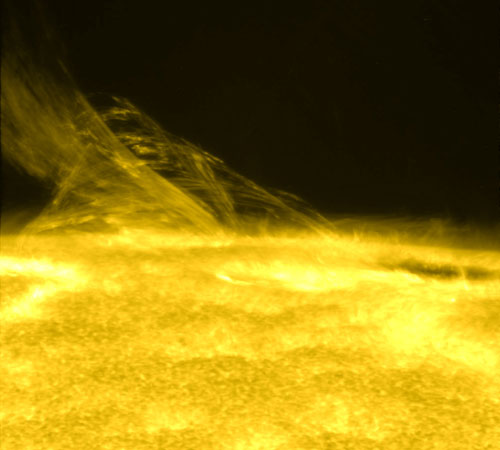
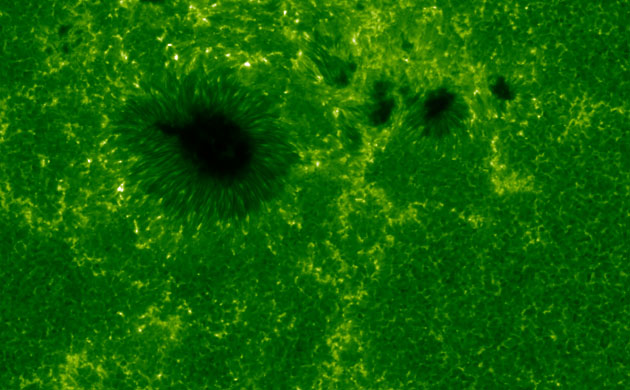
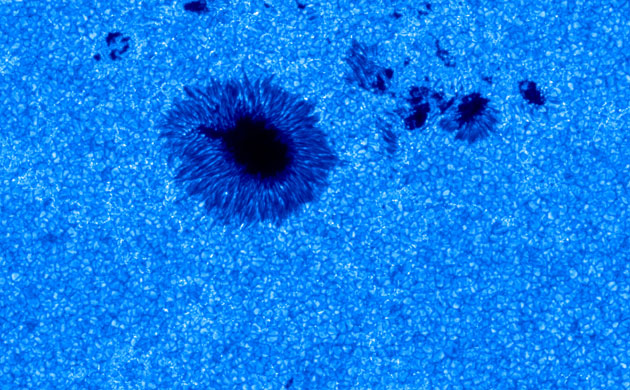
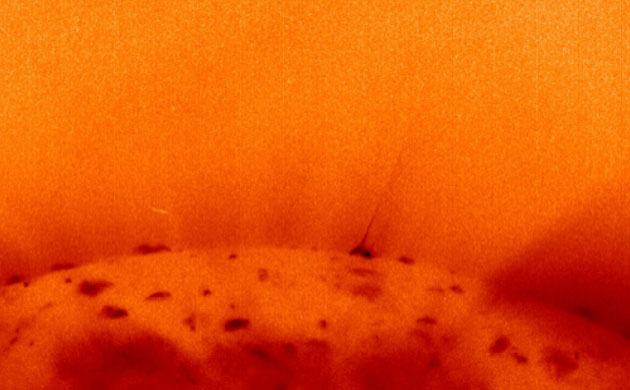
The edge of the sun’s visible surface, captured by Hinode's Solar Optical Telescope, showing the bright surface or "photosphere" and matter being ejected into the sun's atmospherePhotograph: ScienceA sunspot surrounded by the "chromosphere" - a thin, almost transparent layer of the sun's atmosphere roughly 10,000 kilometers deep (about the diameter of the Earth)Photograph: ScienceThis is the same region as the previous image, but shows the photosphere that lies immediately beneath the chromosphere. The photosphere is the layer where visible sunlight comes from and is composed of convection cells called granules - cells of gas each around 1000 kilometres in diameter. Each granule has a lifespan of about eight minutes, resulting in the photosphere's continually shifting "boiling" appearancePhotograph: Science
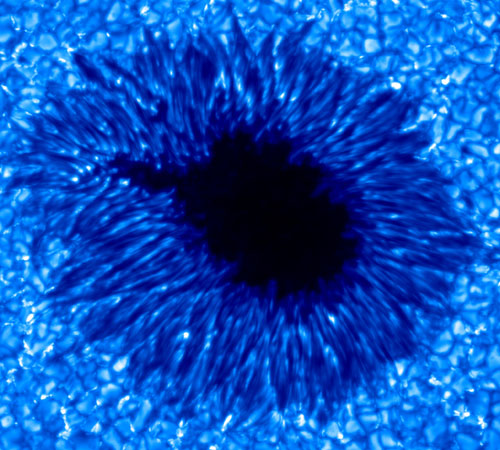
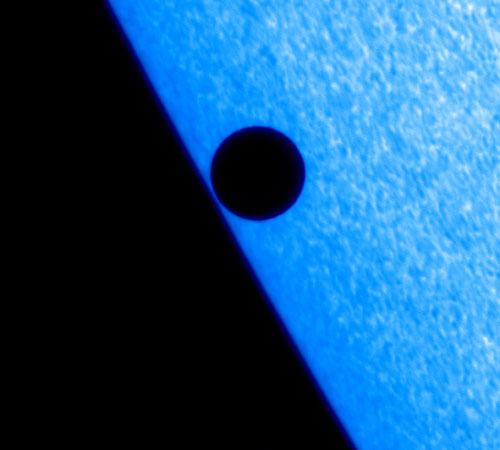
Close-up of a sunspotPhotograph: ScienceThe north pole of the sun. The black streak (just right of centre) is a solar jet: a spurt of matter shooting upwards from the photosphere at 20 kilometres per second. Jets are about 500 kilometres across and reach several thousand kilometres highPhotograph: ScienceThe planet Mercury passing across the face of the sun on November 8 2006Photograph: Science
Sign up to read this article
Read news from 100’s of titles, curated specifically for you.