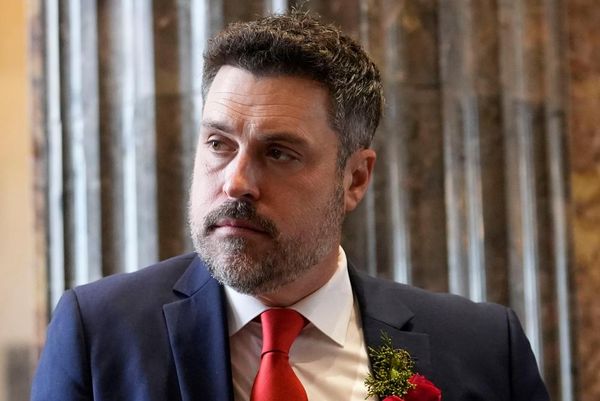
Vicky Pryce, chief economic adviser, Centre for Economics and Business Research
The prime minister could not have given a clearer message. But a departure from the single market is a defeat for businesses that have been lobbying for as free and easy an access to the single market as possible.
SMEs have always complained about some of the regulations imposed from Brussels and the bureaucracy sometimes involved in selling to Europe. But much of this regulation is unlikely to disappear, especially if we want to continue to trade with Europe. It is often forgotten that despite our membership of the single market, the UK has managed to remain one of the least product regulated countries in the developed world, and has attracted one the highest levels of foreign direct investment. Countless small firms here have benefited from European grants and from easy access to much needed migrant skills from the EU.
As Theresa May herself said in her speech, trade is essential for growth and less trade results in less growth. Smaller firms in general lack the capacity to explore markets which are far away. Replacing parts of an open market of 500 million people with unknown future deals with other countries cannot be done without some cost. And that may fall on SMEs harder than on other parts of the economy.
So, what is there to compensate? Just the hope by some market participants that now that it has been conceded there will be a final vote on the new arrangements with the EU in both the House of Commons and the House of Lords. This might derail or at least weaken the “hardness” of the Brexit being contemplated by Theresa May.
Steve McCabe, economist, Birmingham City University’s Business School
For businesses, there are a number of complex discussions to come about how it will be possible for firms to maintain trade with the EU while trying to gain access to new markets. Every organisation, every business, no matter how big or small will need to embrace upheaval and change.
I’m afraid that the idea that there are a plethora of markets that will magically open up once we are free from the shackles of EU bureaucracy is not at all certain. The goods that are demanded by overseas buyers have cachet for being high quality and stylish; not because they are cheap. This is where investment is needed. Look at what Jaguar Land Rover has achieved under Indian ownership.
The prospect of a good deal is entirely possible if all sides see value in maintaining good relationships for the benefit of business. However, if May allows the process to be hijacked by the headbangers’ agenda of “out and bugger the consequences”, we can hardly expect to be given any goodwill by the EU. Besides, if the UK gets a good deal other countries may be emboldened and decide there is no disadvantage in also deciding to leave the EU.
The transitional arrangement is good news. Business needs time to adjust. Undoubtedly there will be continued uncertainty. However, I suspect many in business would prefer that either this hadn’t occurred or that we leave immediately. The reality is that this will be such a complicated and protracted process that no one really knows how it will end.
Angela McGowan, Northern Ireland regional director for the Confederation of British Industry (CBI)
The business community in Northern Ireland welcomes the greater clarity and the ambition to create a more prosperous, open and global United Kingdom, with the freest possible trade between the UK and the EU. However, ruling out membership of the single market has reduced options for maintaining barrier-free and tariff-free trading relationship between the UK and the EU.
Given the importance of the EU to Northern Irish exports, leaving the single market is a significant issue for the local economy. While local businesses want to make a success of Brexit, there are undoubtedly concerns about falling back on damaging World Trade Organisation rules.
However, the CBI notes and welcomes the prime minister’s commitment to maintaining the “family ties and bonds of affection between the UK and the Republic of Ireland” and maintaining the common travel area. Close cooperation and partnership between the two countries will be essential if the Northern Ireland economy is to succeed.
Russ Shaw, founder of Tech London Advocates
Theresa May’s decision to pursue a “clean and hard Brexit” that sacrifices access to the single market is putting our economic growth at stake to advance short-term political motives. The strategy of seeking deals for pet industries such as car making and pharmaceuticals shows an administration that is out of touch with the UK’s future growth prospects.
Technology is the country’s fastest growing sector, and industry leaders agree that we must continue to attract the best talent to the UK in order to compete with the US. Research from the Human Capital Leadership Institute shows the UK remains attractive for these professionals, but we are jeopardising this opportunity due to our government’s vague and regressive immigration commitments along with its lack of investment in digital skills for home-grown talent.
A weaker pound, along with international commitment to protecting the City, can allow our export economy of services and software to prosper, but only if a hard Brexit does not compound our immigration problems.
Lesley Batchelor, director general of the Institute of Export
Being out of the single market brings a lot of uncertainty for all businesses. We’re starting negotiations for trade agreements on a completely blank piece of paper. It’s common knowledge that if someone else knows you’re on a deadline in negotiations, as we are with Brexit, it puts you on a distinct disadvantage.
The Department for International Trade is doing great job in putting together a register of companies that want to trade internationally. But I can’t say what trade is going to look like.
We need some scope on how export and import tariffs are going to work. This speech has addressed nothing on small business concerns. Trade post-Brexit is not going to be one simple cure all. It’s going to be lots of attempts at getting it right.
Sign up to become a member of the Guardian Small Business Network here for more advice, insight and best practice direct to your inbox.