1) Bradley Wiggins on Desert Island Discs
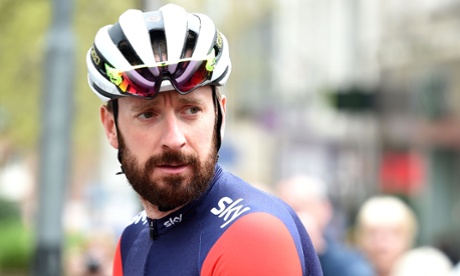
Bradley Wiggins’ recent talk of “hating being the winner of the Tour de France, hating cycling, hating the media for asking me questions about Lance Armstrong and hating Lance Armstrong for giving Oprah that interview” may have been delivered in a spirit of refreshing honesty but, when it’s recast as a headline, it can make him sound surly and ungrateful. Thankfully, Wiggins’ personality is given room to breathe in this 45-minute Desert Island Discs episode, and he is an absolute joy.
The programme has a habit of throwing up personal and original interviews that would be missed by specialist journalists – try Jack Dee, Nick Clegg, Tony Adams or Daniel Kahneman for starters – and a lot of the credit for that has to go to Kirsty Young, whose lack of sporting expertise benefits her hugely when speaking to Wiggins. Most people don’t care for the particulars of cycling; they want to know where Wiggins found his talent and drive, why he has dedicated so much of his time to his craft, how his career has affected the rest of his life and why he struggled to process his monumental success. A sports journalist might have been too interested in the pursuit of details to ask the deceptively simple questions that Young delivers and Wiggins responds to so frankly.
Wiggins does not baulk at any of her enquiries and he needs no invitation to explore his own weaknesses. He speaks fluently about his childhood, his complex relationship with fame, fatherhood and knighthood, and his “weirdness”. It’s a wonderful piece of radio. If you’re a fan of Wiggins, you’ll love this, and if you’re not a fan, you will be by the end of the show. It’s also a must-listen for all Chas and Dave fans.
2) If the NBA had helmets
James Politi is an “unemployed graphic designer who misses the NFL and has to watch basketball with his friends”. While waiting for the return of the football season, he designed these helmets for NBA teams. Basketball players have no need for his inventions, but let’s hope his originality earns him a job.

3) New York City’s first boxing club for gay men
This is good news.
4) Gary Neville analyses punditry
Graham Hunter’s new podcast is quickly becoming essential listening. In the most recent episode Graham spoke to Gordon Strachan, one of his heroes, about life in Aberdeen, the excessive coaching of young footballers and why the Scotland manager can no longer wear a tracksuit. In the first episode he chatted to Gary Neville, who is typically insightful. Incidentally, Gary Neville’s own podcast is also worth your while.
5) Artist-based football shirts
What if Vincent van Gogh had painted the Holland shirt, Joan Miró had looked after Barcelona’s design and Benito Quinquela Martín had been employed by Boca Juniors. You might not have asked those questions before. La Casaca have.
Nuestra #ArtistBasedShirt de #BocaJuniors Basada en las pinturas de Quinquela, que era de #RiverPlate #Superclasico pic.twitter.com/wENplJtEoW
— LaCasaca (@LaCasacaBlog) May 14, 2015
6) Is England falling out of love with cricket?
The cricket sage that is Jon Hotten has been mulling over England’s relationship with the sport. At the minute, that bond is weathering an ebb rather than enjoying the flow but, as Jon argues, the connection between cricket and the green land on which it was first played is ingrained deeply:
I can offer only anecdotal evidence of its health, but I have played hundreds of matches against thousands of people since I was 11 years old, and apart from the natural passing of time, it feels the same as it ever did. Amateur captains are still filling teams at the last minute (one of my team-mates, who skippers his own occasional side, is not averse to approaching strangers in supermarkets a few hours before the game if he’s desperate enough, and sometimes it works too) but even on lazy Sundays we face many a hard-hitting young batter and hot-headed opening bowler. They attack the game madly. The single biggest change I have seen since I started playing is in how hard the ball is hit. Young guys just want to smack it, far and often.
7) A conversation with golf’s most interesting man
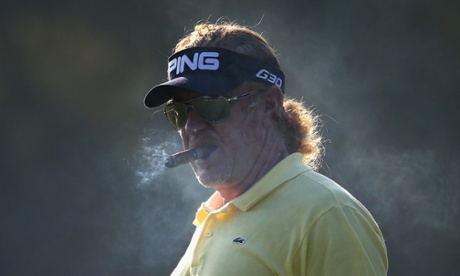
Alan Shipnuck of Golf.com met Miguel Ángel Jiménez. Here’s how the conversation began:
“My friend, water is for fish.”
He pours himself a tall glass of 10-year-old Bushmills whiskey.
“Don’t forget—your tee time is in 18 hours.”
Jiménez, 51, arches an eyebrow but says nothing. He opens a small metal case and produces a Cuban cigar, which he fires up with gusto.
8) Turton FC push for promotion
More than 2,500 people have signed a petition urging the West Lancashire League to grant Turton FC promotion to their Premier Division. Turton finished second in Division One, which would be enough to earn their promotion, but their ground is not fit for the higher league and any new building work had to be complete by 31 March to make them eligible for a promotion.
The club’s chairman, Peter Gray, insists they have the funds to do the work but could not have carried it out during the season as it would have led to games being called off. The club and league are currently involved in a standoff, but the tide of public opinion seems to be swaying with the Turton. A petition set up to give the club the “promotion they deserve” has over 2,500 signatures. Here’s their case:
Turton FC won promotion by finishing second in Division One of West Lancs League. The League committee have decided not to allow them promotion and not relegated anyone as they say the ground improvements should have been done by 31st March. The club have secured £87,000 of funding and all improvements that will achieve step 7 criteria will be done before the start of the season. The club feel that the hard work and success achieved is being ignored and a bit of flexibility and support from the league was all that was needed.
9) Where Roy Keane and Bobby Moore intersect
If you haven’t read Roy Keane’s latest autobiography or Matt Dickinson’s book about Bobby Moore, fret not. Seamus O’Mahony of the Dublin Review of Books is here to explain what you missed. O’Mahony provides a wonderful, scything summary of Keane’e book in the first section of this essay. He spends 3,000 words describing Keane’s book, cutting down its author with winning sarcasm throughout. The approach works perfectly; those of us who bothered to read the book should have waited for O’Mahony’s review, which cuts out the context we knew already and distills the writing to the four things Keane does best: contradictions, put-downs, humour and anger.
When it comes to Moore, O’Mahony does not roll out the red carpet of forgiveness that usually buttresses the sporting heroes of yesteryear. Instead, he tells a rather sad story about a man who was more bland than most of us would like to admit. The inscription on the giant statue of Moore that stands outside Wembey reads “Immaculate footballer. Imperial defender. Immortal hero of 1966. First Englishman to raise the World Cup aloft. Favourite son of London’s East End. Finest legend of West Ham United. National Treasure. Master of Wembley. Lord of the game. Captain extraordinary. Gentleman of all time.” But, when all the patriotic bluster is stripped away, Moore was really a quiet, unconfrontational and detached man who finished his career playing in the Danish Third Division, squandered a lot of his money in failed businesses and ended up offering anodyne punditry on the radio.
The game was only good to him for so long and the same may yet be said for Keane, who admitted in his book that nothing he will ever do again come close to the experiences he enjoyed as a younger man. Keane and Moore are proper football men, but their books have not inspired in O’Mahony a great deal of confidence in the sport:
Children are constantly told that playing competitive sports builds character and teaches valuable life lesions. I wonder. Many great athletes are one-trick ponies (or hedgehogs, to use Isaiah Berlin’s classification), and the character traits that made them successful in professional sport are often a handicap in retirement. Bobby Moore’s calmness and air of detachment served him well at Wembley in 1966, but during the wet Sunday afternoons of the rest of his life this reserve gave an impression of a Chauncey Gardner-like emptiness. Roy Keane’s anger was, as he freely admits, a “useful tool” during his years as a midfield enforcer, but it often backfired on him during his managerial career.
10) Why do footballers nearly all vote Tory?
Writer, illustrator, cartoonist, artist, acoustic guitar dabbler and stick whittler Tim Bradford has the answer in this short song: