1) Iain Macintosh interviews Brian Glanville
Not many football writers dictate their match reports to their grandsons, but Brian Glanville is unlike any other journalist in the business. He has been covering the game for 66 years, doesn’t bother with Twitter and can remember the days when he travelled to England matches with Sir Alf Ramsey and his players. In this interview on the setpieces website – a new venture from Iain Macintosh – Glanville recounts a story from the 1954 World Cup, explains why Bobby Robson was a “grotesquely over-rated manager” and calls Ramsey a “very strange man”. Glanville has always been worth reading and his unwillingness to push advice upon young writers is typical of his quest for independent thought:
When young people ask for your advice on becoming a football writer, what can you tell them?
Very, very little. I’m 83 years old and I started off at the age of 17 and things have changed so absolutely radically, not least in the last few years. My experiences are simply irrelevant. It’s very difficult now to get in. Everything is changing, papers are shutting down. There are simply fewer papers there to work on. The internet is becoming more powerful. My advice is irrelevant, futile and useless.
2) Rival colour schemes
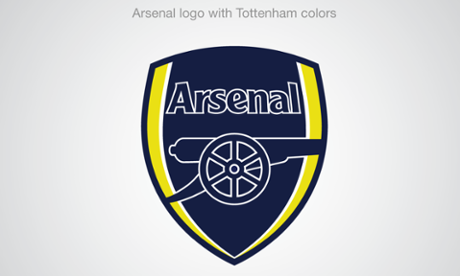
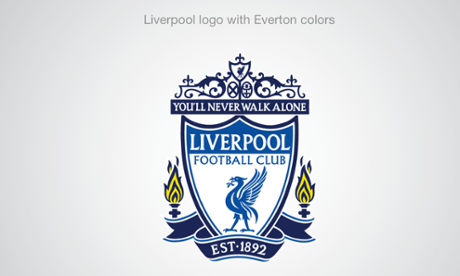
There is something strangle unsettling about these designs of Chelsea in red, Liverpool in blue, and Arsenal in Spurs’ colours.
3) A racer who is far ahead of the curve
Rashid al-Dhaheri could be the future of Formula One. Over the last few years he has been winning competitions, picking up sponsors and testing himself against the best young drivers in the world. He is only six years old. “He doesn’t care about any of the bigger-picture stuff,” said his dad in this profile in the New York Times. “He’s just a kid who likes to drive.” Good luck to him.
4) Tennis has an income problem
Carl Bialik makes an intriguing observation in this article form the ever-intriguing FiveThirtyEight website:
Tennis is played and followed in most nations worldwide. But professional players aren’t making much money. Fewer than 1,000 pro players break even at the sport. Far fewer make a decent living.
While Roger Federer and Andy Murray are working out ways to top up their already considerable earnings, many of their opponents are struggling to make any money at all. The 4,978 men who won some prize money last year but weren’t in the top 1% earned, on average, a little over $13,000. In tennis, as in life, it does not pay to be in the 99%.
5) Lionel Messi and Cristiano Ronaldo Junior enjoy a moment
And in other news of charming children, here is Tim Cahill’s son being rewarded for his persistence:
6) The World Cup makes way for white elephants
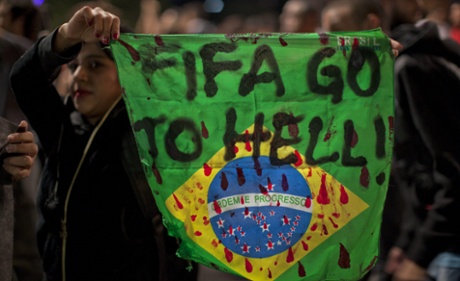
We read the same story every two years. And it is always as predictable as it is depressing. This time round Ewan MacKenna has done the reporting for the Independent:
“Six months on from the Brazil World Cup, football wastelands pockmark the country, each with empty cathedrals to excess and greed. If only it hadn’t all been so predictable. When it was all over back in July, there was a warm glow emanating from a tournament that was by and large seen as a success. There were few dissenting voices. But that’s the problem with judging a World Cup in its immediate aftermath. It’s like the queen thinking the world smells of paint because every room she walks into has been given a fresh lick. But the effects of the event last far longer than a month and now the glitz and glamour are done, there’s a lot of rubbish piled high awaiting a costly clean-up”
7) ‘All I wanted was five minutes and a bit of loyalty’
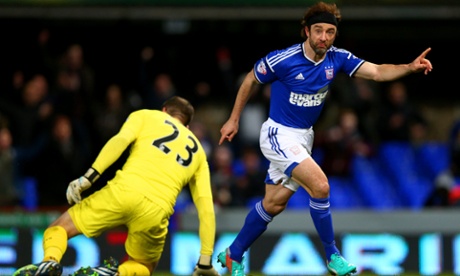
Stephen Hunt has started to write for the Irish Independent and he does not hold back. Hunt has discussed his friendship with John O’Shea and the level of dedication required to be a Premier League footballer in previous columns, but his best article so far is this brutally honest recollection of life with the Republic of Ireland squad under Giovanni Trapattoni.
He begins the piece on a winter’s night in Dublin, where Hunt and his team-mates are celebrating. The Republic of Ireland have just qualified for Euro 2012, their first major tournament in a decade. The nightclub is buzzing with jubilation and excitement. Boisterous fans are making merry in the bar downstairs but the players are enjoying the privacy of the VIP lounge. Shane Long is on lead vocals, with the rest of the gang joining him for the choruses.
Hunt pauses to reflect on how far he has come and how far he could go at the following summer’s competition. He wasn’t to know it then, in that moment of hopeful contemplation, but he was about to embark on a long and difficult year with Ireland:
Everyone is lost in the euphoria. There were men I trusted with everything and men I considered rivals. At that moment we were all united, joined together by one common bond, belting out the words as if nothing else mattered, believing this was just the beginning. In that nightclub, I felt it was more than the culmination of something, I felt it was a sign that our unity and our team spirit would help us overcome whatever we encountered in the European Championships. I didn’t know that would be as good as it got. That I would never feel this happy about qualification again and that the summer to come would be a story of frustration, humiliation and bafflement.
8) The pitch: seven games, 10 days, two countries
Most of us will never travel halfway around the world to attend seven football matches in 10 days, so we might as well read about the experience in David McIntire’s article for the Classical. Be warned: you will struggle to get through this without feelings of jealousy.
9) A trip to the 12th annual Homeless World Cup
There is something truly special about the Homeless World Cup. Almost every media organisation has covered the tournament over the past 12 years but it continues to be one of sport’s greatest events. Martin Fritz Huber travelled to Santiago in Chile to attend the 2014 edition for Roads and Kingdoms. As always, he found a tournament that is full of stories of hope.
10) Is computer gaming really sport?
Carlos Rodriguez is in his early 20s. He earns upwards of £1m a year for playing in front of huge crowds for a team that competes in a regional league. He trains diligently, studying strategy, technique and spends up to 14 hours a day planning how he can outmanoeuvre the opposition in his chosen discipline. His reflexes are highly tuned and he can excel under tremendous pressure. He plays esports. Is he a sportsman? The BBC have the answer.