The stories leaving no one behind
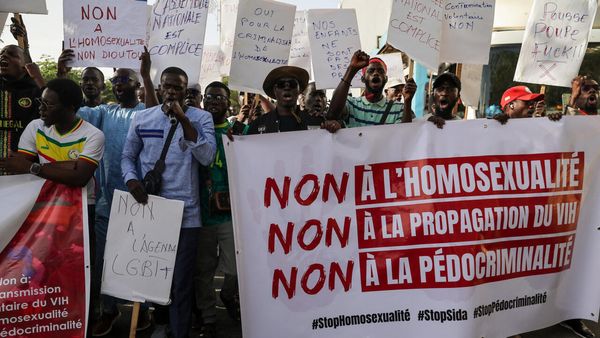
This year, we wanted to use our site as a platform for campaigners whose voices are rarely heard in mainstream media. In February, for our #LGBTChange series, we asked you to nominate your LGBT heroes and we looked at the developing countries making the most progress on LGBT issues. These stories inspired other members of our network to share their own experiences, including the vast differences in protection available to international and national aid workers in countries where homosexuals are persecuted. “I regret not speaking out for my LGBT colleagues,” said one writer.
In June, we focused on disability rights around the world and spoke to 10 leading disability activists about the challenges they face. We learned that Russia and the US have the worst employment gaps for disabled people. Our interactive timeline of global disability rights from 1944 to present day marked the big achievements for this community, but showed that the world has a long way to go. Out of sight: the orphanages where disabled children are abandoned is a case in point.

Both these topics reflect the sustainable development goals’ promise to be fully inclusive. The jury may still be out on the feasibility of “leaving no one behind”, but we still talked about inclusivity a great deal this year, asking experts about supporting the rights of indigenous people and following one of our readers as he decided to be a woman for a week to raise awareness of what life is like for women in Uganda. In a year when Donald Trump was elected US president, Leyla Hussein’s letter to my daughter: what is it like to be a girl in 2016? from February feels poignant.
No one type of refugee

Syrian refugees continued to be the big story of this year, and we tried to highlight stories that showed different perspectives to the crisis and that portrayed refugees’ resilience. One of our favourite stories was how art is helping Syrian refugees keep their culture alive. Another was a piece by Kujiek Ruot Kuajien, a refugee turned Oxfam aid worker who told us about returning home to South Sudan: “I want to see opportunities for all,” he said.
When one secret aid worker wrote to tell us about how Greece has exposed the aid community’s failures to adequately respond to the refugee crisis, your letters started pouring in. You told us how aid agencies had taken an out-of-sight, out-of-mind approach to housing refugees; about a weak local government; and how accountability is absent at every level. You sent your drawings too.

With so much focus on how the Syrian refugee crisis was affecting Europe, it’s easy for many other vulnerable people to be overlooked. Melissa Fleming of UNHCR wrote about the women on the run from Central America and we looked at Dadaab: the city you cannot leave.
On the former, reader Cathy Rozel wrote:
Thanks for this excellent article. It’s vital to pull out the distinctively gendered aspects of refugee crises everywhere in the world, whether in Central America Syria, and the receiving countries – whether Germany or the USA. There is almost no coverage of this: what drives women to leave, what forces them to stay in conditions men may be able to flee from, what life is like on their long journeys on the road, and the reception they get in their host countries.
NGOs – should they exist?
How aid should be delivered around the world was a popular topical of discussion this year, particularly with the World Humanitarian Summit in May. Aid consultant Deborah Doane said it was time for international NGOs to ask some difficult questions about what power they need to devolve, and we published five ways to make aid locally sourced.
We also analysed the UN’s $8bn peacekeeping budget while Ben Jackson, responded to tabloid headlines calling for cuts to aid by listing six reasons taxpayers can be proud of UK aid. And, individual aid workers continued to inspire us as nominations for NGO heroes filled our inbox for a second year in a row.
One Zimbabwean aid worker, however, offered up a more pessimistic take on the sector in his poem, Aid work: an insult to the poor
Decades ago, I heard life was simple and it was so
Where there was need, a hand would help
Where there was a tear, a heart would ache
Willing hands and hearts would meet the lack
Charity they called it, for it was so
Now an industry of sorts – an insult to the poor
Now in my day I see things do change
Experts have risen who have not been poor
Whose studies and surveys bring no change
Whose experiments and pilots insult the poor
Whose terms and concepts, tools always change
An industry of sorts – an insult to the poor
What greater insult could there be
When a fellow man calls me just a beneficiary
When our pictures of desperation are used for marketing
When our dignity is insulted just for fundraising
When trainings and awareness are imposed on us
When the life of another is planned by another
When the gift we got is never disclosed
When overheads are deducted before we know
When we smile for pictures we never see
When our children seek to change our ways
When we waste our lives responding to assessments
Indeed an industry sorts – an insult to the poor
Aid worker wellbeing
Following on from our stories on aid worker mental health and sexual harassment in 2015, we continued to raise the issue of how employers can better support their staff, some who work in incredibly dangerous contexts. ICRC surgeon Nick Kling wrote about his experiences of delivering healthcare in Afghanistan: Doctors are threatened at gunpoint, even by civilians.
The aid community was particularly shaken in July when the Terrain compound in South Sudan was stormed by soldiers; NGO staff were assaulted and raped and one local journalist was killed. We looked at the implications of the attack for the aid sector, accused of “systematic failures” for not rescuing the aid workers. One survivor wrote an incredibly moving account about their fears of what would happen to the perpetrators if caught, saying “causing suffering in others does not alleviate my suffering”.
A different topic in our secret aid worker series also struck a chord with humanitarians worldwide, when a national aid worker in an east African country wrote in to ask “Why do expats earn more than the rest of us?” The piece was shared by more than 28,000 people and here are just a few of the responses we received.

Pieces to make you think
The topics you wanted to write about this year were diverse and fascinating. Jason Hickel, an anthropologist at the London School of Economics, declared that “our best shot at cooling the planet might be right under our feet”, describing how we need to turn away from industrial farming to beat climate change. Meanwhile, Bisola Onajin-Obembe, an anaesthesiologist in Nigeria, tackled a major global health issue – access to drugs – in her comment piece: Not just a party drug: no ketamine means no surgery in some developing countries.
Reader Chris the Gasman responded to the article:
This is not just a phenomenon in developing countries. As a UK intensive care and air ambulance doctor, I use Ketamine every day. It is the safest option for the care of the sickest patients. If we lose it, more people will die in every country on earth, including yours.
Galleries to make you gawp


Articles to impress at work
-
The top 10 sources of data for international development research
- ‘It’s like trying to hit a football field from the top of Everest’ – why aid airdrops just don’t work
- Six of the best sex education programmes around the world
- How to ensure NGO staff feel safe during an evacuation
And finally...
-
Eleven rules to live by if you want to make it to the top at the UN
-
Five things every aid worker can learn from Game of Thrones
- 29 tips on how to be a horrible boss
The stories above are only from our site but what was your favourite development story this year? And what would you like to see us write about in 2017? Comment below.
Join our community of development professionals and humanitarians. Follow @GuardianGDP on Twitter.