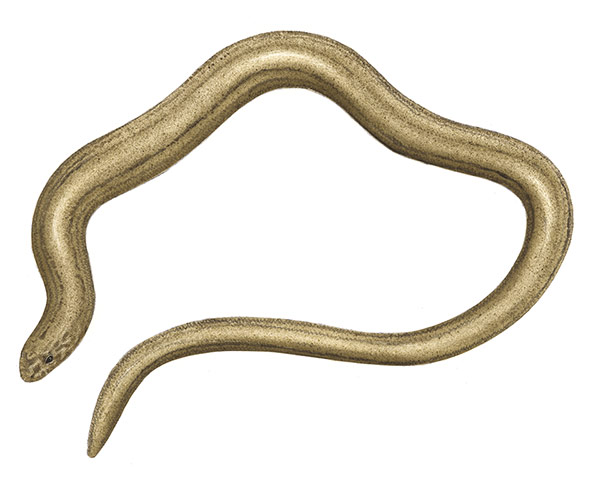
One of our most misnamed creatures, the slow worm is neither slow nor, of course, a worm, but a legless lizard. It is one of three species of lizard native to the UK (sand and common lizards are the others). The slow worm superficially resembles a small, slender snake, but can be told apart by its ability to blink. It is usually a warm golden-brown colour, with stripes running the length of its body. Slow worms often hide away (and breed) in rockeries or compost heaps. Beware if you pick one up – like other lizards they can shed their tails when they are attacked.
Illustration: Alan Baker
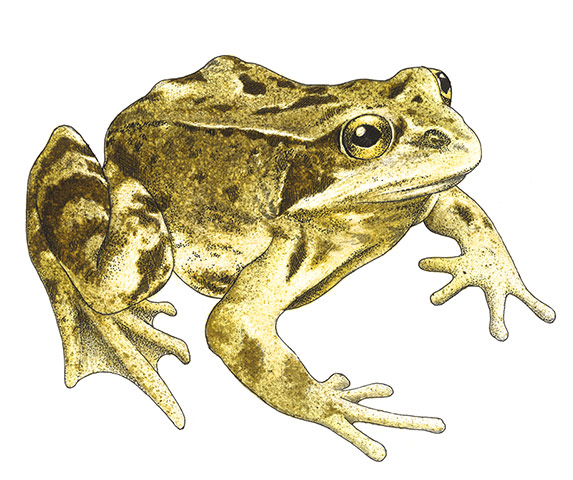
They may be called “common”, but our best-known amphibian has become increasingly scarce in recent years, mainly because so many farm ponds have been drained and other wetland habitats destroyed. Fortunately, like many other countryside creatures, the frog has found a refuge in our towns and cities, especially in garden ponds – though it remains vulnerable to predators, especially domestic cats. Frogs can easily be told apart from toads by their more varied colouring and smoother skin. They lay vast numbers of eggs (frogspawn) in clumps from February onwards.
Illustration: Alan Baker
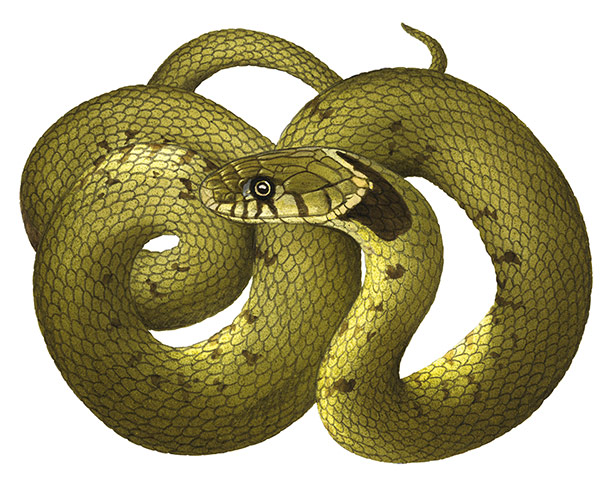
Our commonest and most widespread snake, usually associated with damp or watery habitats, as it is able to swim when pursuing its aquatic prey. Grass snakes are the largest of the three British snakes, growing up to 1.5 metres long, though most specimens are less than a metre. They can be told apart from the adder and the smooth snake by their colour: both the other species are predominantly black and brown, whereas grass snakes are mainly green with a distinctive yellow collar. They are often found in gardens, especially those with ponds, as their prey includes frogs and newts.
Illustration: Alan Baker
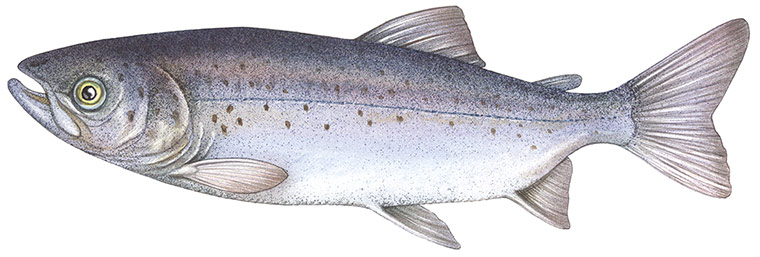
The “king of fish” was almost wiped out from our major rivers after the second world war, due mainly to pollution from industry and sewage. Fortunately, once the clean-up of Britain’s waterways began, the salmon returned. Today, this majestic fish can be found in most major river systems, including the Tyne, Thames, Tees and Severn, all of which flow through urban areas for at least part of their course. Every autumn, adult salmon battle their way upstream to breed and lay their eggs, after which most die. Soon thereafter, the young fish begin the perilous journey downriver and back to the open sea.
Illustration: Alan Baker
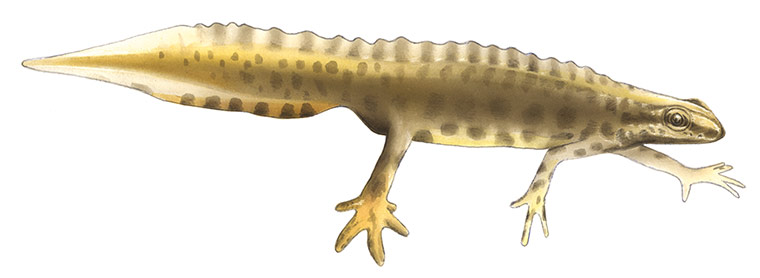
The commonest and most widespread of the three species of newt that breed in Britain (the others being palmate and great crested). Like all amphibians, smooth newts are equally at home on land as in the water and often spend long periods away from ponds – returning mainly to breed. Usually a nondescript brownish colour, but in spring and summer the male has a bright orange belly and crest along its back, which may lead to confusion with the larger and even more colourful great crested newt. Like all newts, smooth newts lay eggs singly rather than in clusters.
Illustration: Alan Baker