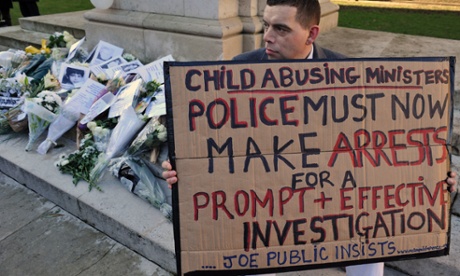
MPs question child abuse panel members - Summary and analysis
Will the child abuse inquiry ever get going properly, with a chair and public trust, or will a new home secretary put it out of its misery after the election and start again?
After today’s hearing, the latter option is starting to look even more likely. Everyone involved in this accepts that public confidence is key, and, with confidence amongst abuse survivors in the inquiry process fragile at best, the suggestion that members of the panel are being gagged or bullied by the full-time officials paid to run it is immensely damaging.
Here are the key points from the hearing.
-
A member of the child abuse inquiry panel has told felt “bullied” and “intimidated” by the QC appointed to act as its legal counsel. Sharon Evans accused Ben Emmerson of “overstepping the mark”, saying that he wanted to rewrite letters from panel members to the home secretary. She said she had complained about him to her MP, and that she had been told not to talk about the outcome of her complaint.
I feel bullied and I have felt intimidated by an advisor to the panel [Emmerson] ... And I made a complaint about the fact that I felt he was overstepping his mark, in terms of that advice and rewriting of letters, because I feel the independence of the panel is important ...
I feel as a survivor I have felt very bullied because I have said that I do not feel it is right for letters to be written. And I have been told by the Home Office about certain information that I may not give today about the outcome of the complaint.
She also complained that Emmerson was “running the show” (in the words of Keith Vaz, the committee chairman). And she said that members of the panel had been told not to speak to the media about their work.
-
Members of the home affairs committee have expressed renewed concerns about the way the inquiry is being conducted. At one point Vaz said:
It all seems rather sad. We have a panel that has no chair, a home secretary writing to the existing panel members syaing there’s a one in three chance you’ll have to go, a consultation meeting that’s been cancelled, members of the panel thinking that they can’t tell the public about process. Is this satisfactory?
- Members of the inquiry panel have said they think the inquiry should have statutory powers. None of the four witnesses from the panel challenged the idea that it should have statutory powers. But none of them called for the panel itself to be disbanded either.
-
Lynne Featherstone, the Lib Dem Home Office minister, said it was unsatisfactory that she was not shown the letter from Theresa May to members of the panel suggesting the panel might be disbanded even though she was the minister responsible for sex offences. Vaz said this was “very unsatisfactory”. (See 4.54pm.)
That’s all from me for today.
Thanks for the comments.
Updated
And here’s my colleague Alan Travis’s summary of the outcome of the home affairs committee hearing.
Listening to the panel members of the child abuse inquiry give evidence today could be summed up as "Headless body found in Commons"
— Alan Travis (@alantravis40) January 20, 2015
Here’s the barrister and legal blogger Matthew Scott on what the home affairs hearing revealed.
However admirable members of the #CSApanel may be, the impression is that it's adrift, leaderless & wasting energy on feuding and arguing.
— Matthew Scott (@Barristerblog) January 20, 2015
Keith Vaz v Lynne Featherstone
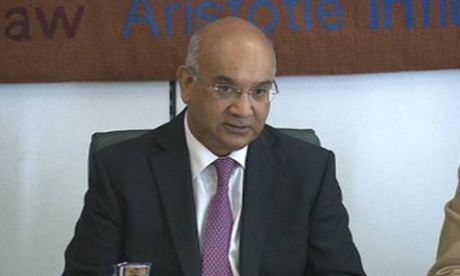
Before the home affairs committee took evidence from members of the child abuse panel, it heard from Lynne Featherstone, the Home Office minister. Mostly she was asked about gangs and youth crime, but towards the end Keith Vaz, the committee chair, asked her about the abuse panel. And he managed to make her look hopeless when he asked about the letter Theresa May sent to members the panel before Christmas. As an exercise in destructive interrogation, it was masterly.
Here’s a flavour of how it went.
KV: Have you seen the letter that the home secretary has sent to panel members?
LF: No.
KV: But you’re the minister responsible?
LF: I am the minister responsible, but the home secretary has taken charge of the panel side of this issue.
KV: But are you not the minister responsible for sexual violence, sex offences, child sex offences, prostitution and lap dancing?
LF: And many other things.
KV: Violence against women and girls. You have not seen this letter that has been sent to every member of the panel?
LF: No, no.
KV: Have you asked to see it?
LF: I didn’t know there was one to ask to see.
KV: But it’s been on the news?
LF: Well, I haven’t seen it. I’ve been in India and Burma last week.
KV: But it’s not last week minister. The home secretary wrote before Christmas ...
LF: I have heard about that letter. I have been briefed about the options.
KV: I, for one, think it is very unsatisfactory that this letter has not come to you.
LF: It is.
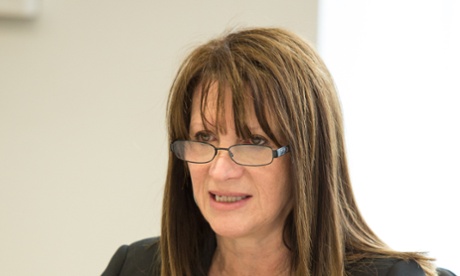
Vaz tells Evans that if she has any more concerns about interference with the work of the committee, she should contact him immediately.
And that’s it. The hearing is over.
I’ll post a summary shortly.
Q: So you just want to get on with the job?
Yes, says Evans.
Evans says the legal adviser seems to be running the show. That should be stopped.
Jay says there needs to be a chair who can lead it effectively. And it should be a statutory inquiry.
There should be a minimisation of distractions, she says.
Q: Do you reject disbanding the panel?
Sharpling says she does not reject that.
It is a matter for the home secretary.
But, of course, she wants the panel to continue.
Q: Would you all reject abandoning the panel and starting again?
Pearce says the work must carry on.
Q: The work of the panel ...
Yes, says Pearce.
Q: Can you give an example of the secretariat standing with you, not the Home Office?
Sharpling says she sees that in the way they deal with calls. The reflect the views of the panel.
Vaz asked how many people sitting in the room are from the secretariat. Several hands in the chairs behind the witnesses go up.
Pearce says they are secondees, from the Home Office and other departments.
Q: Who takes decisions?
Evans says the panel has not decided what constitutes a majority when it takes decisions.
Q: Do you decide who speaks to the press at weekly meetings?
Sharpling says that is not what they decide at their weekly meetings. They focus on methodology.
Q: But you as a panel decide on every response to every media request?
Evans says they have been told not to respond, so that does not take long.
Julian Huppert, the Lib Dem MP, goes next.
Q: Who is in charge of the secretariat?
Sharpling says the secretariat has been very good at keeping the panel involved.
The counsel to the inquiry provides legal advice.
Q: Are you all in favour of a statutory inquiry?
Yes, says Sharpling.
Vaz says the committee also wants a statutory inquiry.
Exaro News, which has been covering the abuse inquiry and the allegations that triggered it extensively, has highlighted this story for background.
This is the story that lies at the base of much of the questioning by @CommonsHomeAffs re #CSAinquiry today: http://t.co/t4X3p3dIIv
— ExaroNews (@ExaroNews) January 20, 2015
Labour’s David Winnick goes next.
Q: The general view is that this is a mess.
Jay says there is a general view that the process is not well supported or well led.
Evans says the panel is working well, but “we have to be very cautious about the role of advisers”.
Q: Would it be better if it had a chair?
Sharpling says a chair would be able to take decisive decisions about process.
Evans says they were told they would be there for the duration. That is why she went on the line.
Pearce says a competent and robust chair could take this forward.
Q: Have any of you been offered the chairmanship of the inquiry?
No one indicates that they have.
Michael Ellis, a Conservative, is asking the questions.
Q: Is the panel working effectively?
Evans says the QC to the inquiry has decided who may or may not speak to the press. How can the public have confidence if they feel the panel is not open?
Q: Has politics clouded this?
Pearce says it is naive to think politics won’t intrude into an event like this.
The Australian child abuse inquiry engaged by the public by taking up case studies.
Q: Do you feel you have been badly treated?
Evans says the panel is working well.
But she want to her MPs because she feels “bullied” and intimidated by an adviser to the panel.
Q: Who?
The QC to the panel.
Q: Ben Emmerson?
Yes, says Evans.
Keith Vaz says the committee will want to hear from Emmerson at a future hearing.
- Sharon Evans says she feels she has been “bullied” by the counsel to the panel, Ben Emmerson QC.
Updated
Tim Loughton, the Conservative former children’s minister, goes next.
Q: Has public confidence taken such a knock that you can’t continue?
Sharpling says it is difficult to go on without a chair. But the panel members decided to carry on. Whether there is sufficient public confidence is not a matter for them, she says.
Q: Do you seriously think you can get back onto an even keel?
Evans says she was appointed as the media person to the panel. They need to be able to speak openly, and have more of a presence, she says.
She says they have not been allowed to speak out.
She says the panel’s listening meetings have gone well.
Jay says the way things have been going is clearly not satisfactory.
Evans says she thinks she should have been consulted about the next chair.
Q: The public are concerned about lack of transparency. Two chairs have gone. None of you were consulted?
None of the four witnesses say they were consulted?
Q: Have any of you been asked who the new chair should be?
None of the four say they have been asked.
Q: You don’t think you should be asked.
Sharpling says that is a matter for the home secretary. Pearce says the same.
Pearce says she does not accept Vaz’s claim that nothing has been done.
Q: How would you describe the state of the panel?
Evans says the panel members are excellent, and its working is excellent.
However, she has concerns about the independence of the inquiry, based on the actions of one adviser.
The adviser told the panel member that letters to the home secretary would have to go through him.
She says people have given them personal information. And, as an abuse survivor, she has shared her experiences too.
She and other members of the panel were worried by reports the panel would be disbanded. They drafted a joint letter. It was not sent, but she decided to send a letter herself.
Q: It’s odd to tell people how they should write their letters.
Pearce says the collective responsibility protocol they have is “terribly important”. The panel has to be accountable for its actions. And it should decide collectively what information it puts into the public arena.
In previous work, they have learnt it is important for people to be able to trust the inquiry.
Keith Vaz, the committee chairman, starts by telling the witnesses that they are protected by privilege. It would be a contempt for anyone to threaten them over their evidence, or for them not to tell the committee the truth.
Prof Pearce says she attended a meeting with the panel secretariat today.
Q: Were you told to stick to a collective line?
Pearce says she has signed the agreement on collective responsibility. The panel’s discussions are protected by confidentiality. But that does not mean they cannot answer questions.
Vaz says he understands Sharon Evans thinks she has been threatened.
Evans says that is right. She was appointed as the media person to the panel. She was told today they had to speak with a collective voice.
I felt that would prevent me answering some of your questions honestly.
Vaz says she should answer the questions freely.
MPs take evidence from the child abuse panel
The Commons home affairs committee is due to take evidence shortly from members of the child abuse panel.
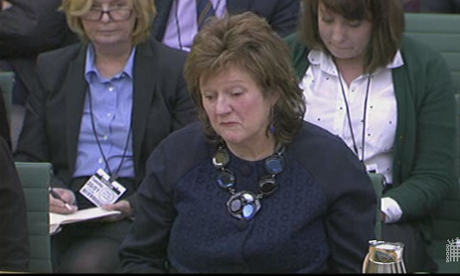
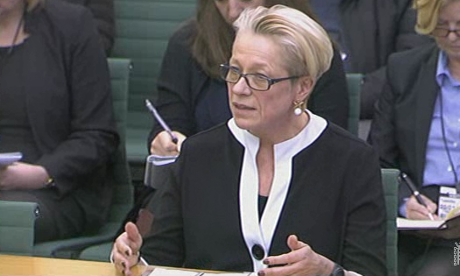
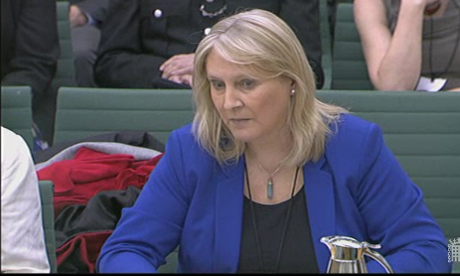
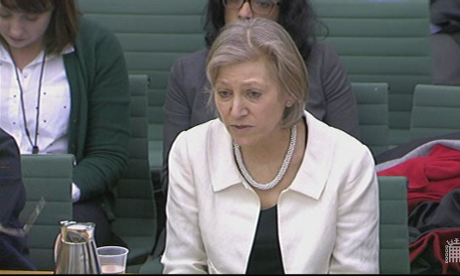
They are: Drusilla Sharpling, Professor Jenny Pearce, Sharon Evans, who are all members of the panel; and Professor Alexis Jay, its expert adviser.
Updated
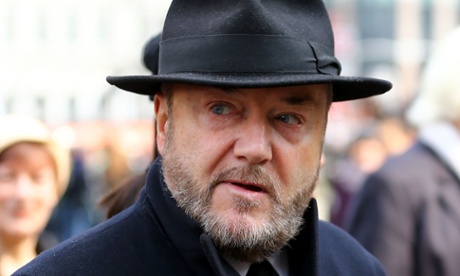
George Galloway denounes Charlie Ebdo as 'racist, Islamophobic rag'
George Galloway n’est pas Charlie. In a speech to a rally in Bradford, the Respect MP denounced Charlie Ebdo as a “racist, Islamophobic, hypcritical rag”.
No person, no human being, should be subjected to violence, still less death for anything that they have said, written or drawn. So we condemn utterly the murder of 17 people in the events in Paris. But we will not allow this Charlie Hebdo magazine to be described as a kind of loveable, anarchic, fun book of cartoons. These are not cartoons, these are not depictions of the Prophet, these are pornographic, obscene insults to the Prophet and by extension, 1.7 billion human beings on this Earth.
How come it’s illegal to hurt and offend Jews in France but it’s some kind of freedom of speech to offend, and obscene pornography be drawn and published now in the millions of copies, against Muslims? That’s hypocrisy, not democracy. Shame on the government of France.
The proper job of a satirist, the proper job of a cartoonist, the proper job of a journalist, is to hold the powerful and the rich to account. Charlie Hebdo’s entire purpose, and for years, has been to further marginalise, further alienate and further endanger exactly those parts of the community who are already alienated, already endangered. It is a racist, Islamophobic, hypocritical rag. Je ne suis pas Charlie Hebdo. We say that the honour of religious people, their prophets, their beliefs, is not fair game for such people.
Andrew Tyrie, the Conservative chair of the Commons Treasury committee, has put out a statement praising George Osborne for the way he interpreted the Smith Commission proposed “no detriment” rule for devolution. (See 1.52pm.)
The Smith Commission proposed a ‘no detriment’ principle, by which the UK and Scottish governments should reimburse each other for the consequences of their policy decisions.
Taken at face value, there appears to be a flat contradiction between that part of Smith and what the chancellor told the Treasury committee in evidence – namely that following devolution the Scottish and UK governments should bear the fiscal and economic consequences of their policy decisions. The first would render devolution meaningless. But the second would give it a good deal of substance.
The chancellor’s interpretation holds out the prospect of meaningful choices and benefits from devolution, missing from the Smith Commission report.
This is the section of the Smith Commission report that Tyrie is referring to.
No detriment as a result of UK Government or Scottish Government policy decisions post-devolution
(a) Where either the UK or the Scottish Governments makes policy decisions that affect the tax receipts or expenditure of the other, the decision-making government will either reimburse the other if there is an additional cost, or receive a transfer from the other if there is a saving. There should be a shared understanding of the evidence to support any adjustments.
(b) Changes to taxes in the rest of the UK, for which responsibility in Scotland has been devolved, should only affect public spending in the rest of the UK. Changes to devolved taxes in Scotland should only affect public spending in Scotland.
Steward Hosie, the SNP’s deputy leader, has condemned George Osborne for what he said at the Treasury committee about wanting to stop Scottish MPs voting on some aspects of income tax. (See 1.52pm.) He said:
It is seems incredible that the Chancellor wants to ban Scottish MPs voting on parts of the entire UK Budget simply because of the incomplete devolution of Income Tax rates and bands.
Until income tax is devolved in full and with it responsibility for savings and investment income, it is illogical and wrong for the Chancellor to carve Scottish MPs out.
The admission from George Osborne today is the strongest argument for full fiscal devolution with home rule, allowing Scotland full responsibility for growing the economy, and not this half way house which offers minimal economic powers while resulting in a loss of voting rights.
Nigel Farage may be the Ukip leader, but that has not stopped the party’s health spokesman, Louise Bours, from issuing a statement slapping him down over his comments about replacing the NHS with an insurance model. She says:
What people have to realise about Ukip is that we are much more democratic than other parties.
Nigel is entitled to his opinion and others are entitled to theirs, we don’t whip people into all thinking the same thing, like the establishment parties.
As he has said before, he raised the idea for discussion a while ago, the party discussed at and rejected it.
I am certain that if the party discuss it again, we will reject it again.
The vast majority of Ukip members, the British public and I will always favour a state funded NHS.
This makes it a good day for Ukip splits. I flagged up two others earlier. (See 11.10am.)
Updated
Lunchtime summary
- George Osborne has confirmed that the Tories want to stop Scottish MPs voting on income tax rates and thresholds. In evidence to the Commons Treasury committee, he also said that he would announce new measures to cut taxes for the North Sea oil and gas industry in his March budget. (See 1.52pm.)
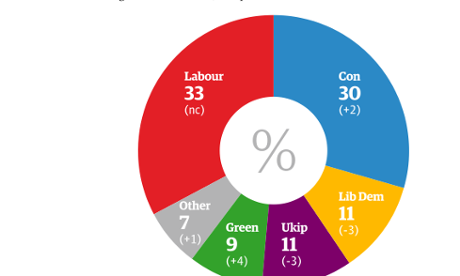
- Labour’s lead is down to three points according to the latest Guardian/ICM poll as data shows that the combined score for the three main parties is at an all-time low. As Tom Clark reports, Ed Miliband’s party is not trusted to run the recovering economy but the modest Tory rise is couched by rising concern about the NHS, seen by voters as the No 1 issue. The Conservatives gain two points to reach 30%, while Labour remains unchanged at 33%. The Liberal Democrats fall back three points to just 11%.
-
Ed Balls, the shadow chancellor, has told the World at One that he will not announce full details of how Labour’s mansion tax plan will work until he is in office.
Ed Balls tells #wato he won't set out full details of #mansiontax until his first budget, if Labour wins the election.
— Andrew Woodcock (@AndyWoodcock) January 20, 2015
-
Philip Hammond, the foreign secretary, has critcised Saudi Arabia’s decision to flog a blogger for insulting Islam and said he will raise the case with the Saudi deputy foreign minister later this week. He told MPs:
We deplore this punishment, we deplore the use of corporal punishment in Saudi Arabia and elsewhere. But we’ve found in the past the best way of influencing Saudi behaviour is to message them privately through the many channels we have available.
The deputy foreign minister of Saudi Arabia - the foreign minister is currently undergoing medical treatment - will be here in London on Thursday and I will be speaking to him directly on this issue. We have already made our views known to Saudi authorities at the highest level.
- Scotland is preparing to back the SNP in large numbers despite a widespread belief that the party did not tell the truth about the economics of independence, a poll has shown. As the Press Association reports, the SNP has the backing of 46% of voters and Nicola Sturgeon remains the most trusted leader at 60%, compared with 26% for Labour and a 40% trust rating for Jim Murphy, and 14% for the Conservatives and 36% for Ruth Davidson, a Survation poll for the Daily Record found. Despite the vote of confidence in the SNP and its leader, more people believe the party generally did not tell the truth on the economics of independence. Some 47% said the SNP did not tell the truth on economics in the referendum campaign compared with 37% who said they did, the poll of 1,006 people between January 12 and 16 suggests.
-
Sir John Sawers, the former head of MI6, has said in a speech that it is impossible to monitor terrorists without invading people’s privacy. He said:
Of course there is a dilemma here because the general public and politicians and the technology companies, to some extent, they want us to be able to monitor the activities of terrorists and other evil doers but they do not want their own activities to be open to any such monitoring.
I think one benefit of the last 18 months’ debate is that people now understand that is simply not possible and there has to be some form of ability to cover communications that are made through modern technology.
The prime minister must have been right when he was saying last week that you cannot afford to have complete no-go areas, we cannot have no-go areas in our communities where the police cannot go, because that just allows space room for the evil doers to ply their trades.
It is the same in the virtual world.
If you allow areas which are completely impenetrable, then, okay, you might feel comfortable that your communications are private and no one else can see them, but so are those who are trying to do you down and undermine your society.
Osborne at the Treasury committee - Summary
George Osborne has plenty to say to the Treasury committee. When it comes to looking for a top line, we were spoilt for choice.
Here are the main points.
-
Osborne confirmed that the Conservatives wanted to stop Scottish MPs voting on income tax rates and thresholds. That is because these matters will be devolved to the Scottish parliament under the Smith Commission plans. But Scottish MPs should be able to vote on income tax matters reserved to the UK, such as allowances, Osborne said. Further details of the Tory plans would be announced shortly, he said.
I don’t want to pre-empt the proposals that we are going to bring forward on English votes for English laws, as it’s commonly known - but of course is English and Welsh votes on English and Welsh matters as well - although I do think that they will have to apply on areas connected with the budget.
I’m a believer that as a result of this further devolution we need to have a settlement that is fair to the rest of the United Kingdom as well and that as part of that MPs from England and Wales should be able to vote exclusively on matters that affect England and Wales. Indeed, as I understood it, the SNP has been an ally of this principle over many years.
He also claimed this was consistent with the line in the Smith Commission report saying all MPs would “continue to decide the UK’s budget, including income tax”. Osborne said:
I take the words in the Smith report as applying to the things that are to do with the elements of income tax that are going to remain UK-wide.
-
He said that he would announce new measures to cut taxes for the North Sea oil and gas industry in his March budget.
I took decision in the autumn statement to reduce taxes on North Sea oil, anticipating the pressures that the fall in the oil price would have on the industry and I’m sure we’re going to have to take further steps in the budget, but we can only do because we’re a United Kingdom and we pool our risks.
- He said that if Labour did not rule out governing with the SNP, voters would not trust it to act in the interests of England when legislating for further Scottish devolution after the election. Although all main parties have backed the devolution plans in the Smith Commission report, Osborne said the details would have to be thrashed out after the election. Labour could not do this fairly if it were reliant on the SNP, he said.
There is going to be a lot of hard negotiation on things like the fiscal framework and I think it would be very unfair to the whole UK if we had a chancellor of the exchequer who was beholden on Scottish nationalist votes in the next parliament.
I think that would not be fair for the rest of the UK and I think those who aspire to hold this office should make it very clear before the election that they would not be beholden on Scottish nationalist votes.
-
Sir Nick Macpherson, the Treasury permanent secretary, said that Scotland would be able to serve as a “laboratory” where alternative tax policies could be tried under devolution. “A bit of tax competition” between parts of the UK would be healthy, he said.
I see this potentially as a laboratory where we can actually learn more about the effectiveness of tax and spending.
This is likely to go down badly in Scotland because, although this was not Macpherson’s intention at all, his phrase will revive memories of the way the Scots were used as “guinea pigs” for the poll tax. Here’s the Scottish journalist James Maxwell on Macpherson’s comment.
Only laboratory here is the nationalist one used to cook up Osborne & Macpherson. Every sentence a gift to the SNP.
— James Maxwell (@jamesmaxwell86) January 20, 2015
-
Osborne said that Scotland would not get compensated if it raised top-rate tax and lost revenue because high earners moved to England. Under the Smith Commission plans, a “no detriment” rule means that no part of the UK should lose out from a decision to devolve power. But that does not mean that Scotland should not gain or lose financially as a consequence of the decisions it takes, Osborne said.
Scotland would live with the consequences of having imposed a punitive rate of income tax, so if it imposed a punitive rate of income tax and as a result people left Scotland, part of the concept of further devolution is that Scotland would live with the consequences of that action, would take responsibility for that action.
-
He said that some form of “balanced budget” rule would have to be introduced to stop the Scottish government misusing its new borrowing powers. But that would not necessarily require the budget to be balanced every year.
Of course we wouldn’t allow Scotland to go bust, but in order for that situation not to arise we would have to agree fiscal rules, independently verified, to make sure that doesn’t happen, so that we never actually reach that situation where the sovereign backstop has to be deployed.
Q: Would the Scottish Crown Estate pay for part of the Sovereign grant?
Osborne says the Sovereign grant comes out of general revenues. He would want to make sure the Queen and her family did not lose out.
Q: So the Queen would not be affected if Scotland did not pay its share?
Osborne says he would make sure the Queen did not lose out.
Andrew Tyrie concludes by thanking Osborne for coming. He says he has shed some light on the Smith Commission report, some of which could mean almost anything, he said.
I’ll post a summary soon.
Sir John Thurso, the Lib Dem, goes next.
Q: Isn’t it clear that Smith means on “no detriment”? And it doesn’t cover VAT?
Osborne says he agrees.
VAT is not devolved. But, if Scotland took planning decisions that led to VAT revenues going up, Scotland would get the benefit.
Andrew Tyrie goes next.
He says the Smith Commission seems a little “vacuous” in what it says about borrowing powers.
Q: Do you agree with Smith that it would be inconceivable for London to allow a Scottish government to go bust?
Yes, says Osborne. The UK stands behind its citizens, wherever they live. Of course we would not allow Scotland to go bust. But we would have to have fiscal rules to ensure that did not happen.
Q: What credible deterrent would there be to ensure that governments did not just ignore its fiscal rules?
Osborne there would have to be some form of balance budget rule, but not applying every year.
Q: Are you drawing on the rules that apply in the US?
Osborne says in theory states are allowed to go bust. But most state legislatures have passed balanced budget rules to avoid this.
Q; Isn’t the problem with paragraph 95 (the “no detriment” part of the Smith Commission) not that it is incomprehensible, although it is, but that it is empty?
Osborne says its good that they have started with an agreement on principle.
Q: So the block grant is supposed to have had deductions under the Scotland Act for stamp duty and landfill tax?
Osborne says he delayed the cut in the block grant that was due because he knew he was going to reform stamp duty.
Norman says Macpherson was in charge of the Barnett formula. “His name will be mud in Herefordshire,” he says, because the Barnett formula is so unpopular there.
Q: How is the Barnett formula fair?
Osborne says all parties have supported it over many decades.
We live in the UK. Money is transferred around the UK.
Q: But that should be on the basis of need. Isn’t there a danger it will now be locked in?
Osborne says Scotland brings great strengths to the UK.
The block grant to Scotland will fall by two thirds. So the Barnett formula will matter less, he says.
Jesse Norman, a Conservative, goes next.
Q: The IFS says Scotland would have lost £7bn from the fall in the oil price? Doesn’t this show the great wisdom of the Scots in rejecting independence?
Osborne says the oil and gas industry is important for the whole of the UK, not just Scotland. He says he cut taxes for the industry in the autumn statement, and he is sure he will go further in the budget.
-
Osborne says the budget will contain further tax cuts for the oil and gas industry.
I can see we are going to have to take further steps to support that industry.
Q: Is the Smith Commission clear enough about how the block grant should be decided?
Osborne says the commission provides a principle - indexation.
The government has accepted that Scotland will need extra borrowing powers, he says.
Q: Can you rule out the English government further subsidising Scotland as a result of volatilities that will arise?
Yes, says Osborne. At the heart of the agreement is the principle that parts of the UK should not be better or worse off as a result of this.
He says the block grant will be cut by two thirds, going down to 35% of Scottish government spending.
Steve Baker, a Conservative, goes next.
Q: Won’t the “no detriment” rule be very hard to police?
Macpherson says he thinks this can be achieved. Under the Scotland Act, government already has to look at this issue.
Q: Won’t it lead to a re-run of the kind of dispute we had over the EU budget contribution?
Osborne says there will be disagreements. But he thinks they have got off to a strong start. The government has negotiated the Smith Commission with the SNP.
The principles for this are in place, he says.
Macpherson says 20 years ago he was in charge of the Barnett formula. There was “endless debate” about how it should be applied. But they always found a solution.
Labour’s Rushanara Ali goes next.
Osborne says the Scottish government’s fiscal commission will have more responsibility. Its oil revenue forecasts were “wildly optimistic - that’s a polite way to put it,” he says. “They don’t have a particularly good track record,” he says.
Q: Are you concerned the Smith Commission does not recommend an independent forecaster for Scotland?
Osborne says Smith makes it clear that Scotland needs a robust forecaster.
Osborne says the Scottish government should make its fiscal commission more independent, and give it responsibility for forecasts.
Macpherson says “a bit of tax competition” is healthy.
But, if Scotland were to cut air passenger duty (APD) hugely, that would cost a lot.
He says he sees this as a bit of a “laboratory” where we can learn more about tax and spending.
-
Macpherson says Scotland could serve as a “laboratory” for tax policy after devolution.
Osborne says the Airports Commission did some work two years ago suggesting Manchester airport could lose 3% of its traffic, and Newcastle 10%, from Scotland cutting air passenger duty.
He says the government should look at what can be done to help those regional airports that do lose out.
But Scotland should not be expected to compensate England for this.
Q: If income tax went down in Scotland, would borrowing projections go up or down?
Macpherson says he does not do the borrowing projections; it’s up to the OBR. And it would depend on the Scottish government’s finances.
Osborne says he thinks higher taxes ultimately lead to slower economic growth, and higher taxation.
Q: Would it be inappropriate for the next government to be beholden to Northern Irish votes?
Osborne says the next government will have to push through the Smith Commission plans. It will have to do that in a way that is fair. And, if the chancellor knew he had to rely on Scottish votes, people would not trust the government to be fair.
Q: Why have the Smith Commission and the Scottish secretary disagreed on the “no detriment” rule?
Osborne say he is not aware that they do disagree.
Labour’s John Mann goes next.
Q: The Smith Commission secretariat and the Scottish secretary have different definitions of the “no detriment” paragraph in the report.
Macpherson says it is intelligible. But the details have to be worked out.
Updated
Osborne says the Commons spends most of its time, when dealing with income tax, looking at definitions and reliefs.
All of those things will remain UK responsibilities. And Scottish MPs will be involved.
Income tax rates and thresholds receive more attention. But they take up less MPs’ time, he says.
Osborne says, with the exception of Canada and Switzerland, the UK will be going further than other countries in devolving tax powers.
Alok Sharma, a Conservative, goes next.
Q: So are you saying that, if Scotland lost revenue from having higher taxes, England would not have to compensate it?
Yes, says Osborne. That’s his view.
Q: What if Scotland were to cut the 45p band? Wouldn’t some English taxpayers move to Scotland, or claim to move to Scotland, as a result?
Osborne says, under this agreement, the Scottish government would have to bear the costs of a tax cut like that. They would lose money at first.
If, over time, they gained money from having a more entrepreneurial society, they should keep the benefits.
Q: Wouldn’t you be relying too much on people to be honest about where they live?
Osborne says he trusts the honesty of taxpayers. But HMRC has powers to check on people if they are not being honest.
Declaring a false residence would be illegal, he says.
Q: But the committee has been told that just having a penalty would not be enough to enforce this?
Osborne says most taxpayers want to obey the law.
Q: Would HMRC get new powers?
Osborne says he thinks HMRC has the powers it needs. It has not asked for new powers.
Q: If HMRC has to undertake a lot more compliance, would the Scottish government have to compensate London?
Osborne says the Smith report is clear that Scotland should pay for the costs of any additional tax collection.
David Ruffley, a Conservative, goes next.
Q: Will the devolution of income tax rates and bands lead to tax competition?
Osborne says that is a matter for the Scottish government.
But, after he announced reforms to stamp duty, the Scottish government announced plans to review its own rules. That is tax competition in action.
Q: Will the Treasury do a study of the impact of fiscal devolution?
Osborne says he wants to wait and see what happens first.
Osborne says the Smith Commission is clear that the Scottish parliament should have the power to create new benefits in areas where power is devolved, but not in other areas.
Q: What would stop the Scottish government using discretionary payments to make pensions in Scotland more generous?
Osborne says if they were discretionary payments, they would be one-off. They would not be a permanent increase.
It would not be within the spirit of the Smith Commission agreement to allow Scotland to create a second, top-up Scottish pension. If the parties had wanted that, they would have agreed that. They did not.
He says the details of the extra powers for Scotland will be published on Thursday.
All the Unionists parties have lived up to the vow that was given before the referendum, he says.
Q: Is there a possibility of benefit tourism taking place within the UK? Would compensatory payments have to be made to Scotland under the “no detriment”principle?
Osborne says if the Scottish government wanted to greatly increase welfare spending, the Scottish taxpayer would have to pay.
At the moment the Scottish parliament takes decision about spending, but not about raising money. As we all know, handing out the money is easier than taking it in, he says.
Andy Love, a Labour MP, goes next.
Q: Aren’t you contradicting what the Smith Commission says?
Osborne says that, as an English MP, Love should support his position.
It would be unfair to have a chancellor beholden to Scottish votes.
Those that seek to hold this position (ie, Ed Balls) should make it clear they will not pass budgets only with the support of Scottish votes.
- Osborne challenges Ed Balls to rule out passing a budget only with the support of Scottish MPs.
Q: Doesn’t this contradict what the Smith Commission report says about all MPs continuing to vote on all aspects of the budget?
Osborne says he thinks that all MPs should vote on those aspects of income tax relevant to the whole UK.
Q: Should MPs representing Scottish MPs continue to vote on income tax rates and bands after these powers have been devolved?
Osborne says he does not want to pre-empt what the government will say on English votes for English laws. But the Evel principle will apply to some elements of income tax.
However, some elements of income tax will remain UK-wide.
It would be wrong to exclude Scottish MPs from those votes, he says.
- Osborne confirms the Tories want to stop Scottish MPs voting on some aspects of income tax.
Q: Can you really take out rates and bands from the budget setting?
Osborne says he believes, as a result of his further devolution, we need a settlement fair to the rest of the UK. English and Welsh MPs should have a vote on matters exclusive to them.
The government will set out proposals on this “in a relatively short period of time”, he says.
Stewart Hosie, the SNP deputy leader, goes next.
Q: If Scotland used its tax or borrowing powers to boost the economy, can you confirm that would not be seen as a risk to the UK?
Osborne says if the Scottish government used its powers to boost the Scottish economy, relative to the rest of the UK, Scotland should benefit.
But the same applies if its decisions were to damage the Scottish economy.
The UK should bear the UK risk, and Scotland the Scottish risks.
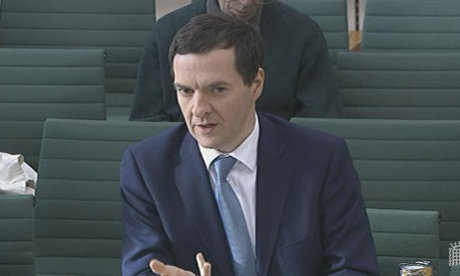
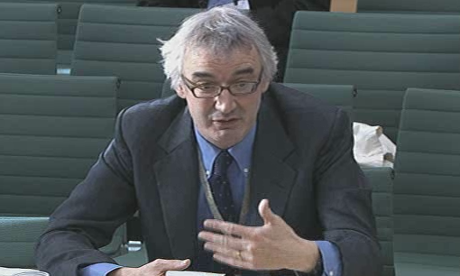
George Osborne is giving evidence alongside Sir Nick Macpherson, the permanent secretary at the Treasury.
Andrew Tyrie, the chair, kicks of the questioning.
Q: The Smith commission says that there should be no detrimental effect to either Scotland or the rest of the UK from further fiscal devolution. Do you agree with that? And what does it mean?
Osborne says he does agree with it.
He says it will have to be decided exactly how the “no detriment” rule works, and whether it takes into account behavioural effects of tax policy.
Q: If the Scottish government decides on a substantial rise in income tax, and top-rate taxpayers move to the rest of the UK, would the “no detriment” rule mean Scotland would have to be compensated for the money it lost?
Osborne says, in that example, Scotland would have to live with the consequence of having a punitive income tax.
The Scottish parliament will have to take responsibility what it does.
- Osborne says Scotland would not get compensated if it raised top-rate tax and lost revenue because high earners moved to England.
This is what the Smith Commission report says about Scotland getting control of most aspects of income tax.
Income Tax will remain a shared tax and both the UK and Scottish Parliaments will share control of Income Tax. MPs representing constituencies across the whole of the UK will continue to decide the UK’s Budget, including Income Tax.
Within this framework, the Scottish Parliament will have the power to set the rates of Income Tax and the thresholds at which these are paid for the non-savings and non-dividend income of Scottish taxpayers (as defined by the Scotland Acts).
As part of this, there will be no restrictions on the thresholds or rates the Scottish Parliament can set. All other aspects of Income Tax will remain reserved to the UK Parliament, including the imposition of the annual charge to Income Tax, the personal allowance, the taxation of savings and dividend income, the ability to introduce and amend tax reliefs and the definition of income.
The Scottish Government will receive all Income Tax paid by Scottish taxpayers on their non-savings and non-dividend income with a corresponding adjustment in the block grant received from the UK Government, in line with the funding principles set out in paragraph 95.
Osborne questioned by the Treasury committee about devolution to Scotland
George Osborne will be giving evidence to the Commons Treasury committee shortly about devolving tax powers to Scotland.
The government is planning to implement the proposals in the Smith Commission report.
You can read all today’s Guardian politics stories here. And all the politics stories filed yesterday, including some in today’s paper, are here.
As for the rest of the papers, here’s the PoliticsHome list of top 10 political must-reads, and here’s the ConservativeHome round-up of the day’s politics stories.
And here are two articles I found particularly interesting.
Tim Aker has been sacked as Ukip’s policy chief after failing to complete the party’s overdue manifesto.
It is understood that Ukip had set the beginning of January as the deadline to agree policies before sending off the manifesto to be checked and costed by an independent think-tank.
Suspicions among senior party figures emerged in recent weeks that Mr Aker was running behind schedule on completing a final draft.
Aker has confirmed that he has given up his policy role on Twitter.
Delighted to have handed over strong policy brief to the excellent @SuzanneEvans1. Now on to winning #Thurrock in May!
— Tim Aker MEP (@Tim_Aker) January 20, 2015
The other propitious circumstance is David Cameron. No prime minister since Harold Macmillan has been so temperamentally geared to campaigning as the “safe” option. When critics say he does not believe in much, they are right. But the burden is on them to explain why this is a bad thing. For a certain kind of swing voter, groping nervously for his wallet as he looks at an unquiet world, Mr Cameron’s beliefs are reassuringly milquetoast. He does not seem like a man who would noticeably improve the country — or trash it.
Whatever his colleagues say, Mr Cameron is a proper Tory. A Tory does not care for ideas or even politics itself. They claim no singular moral insight, unlike Labour, and espouse no mission, unlike the free-marketeers who now pepper the Conservative benches. They often cannot even stand their own party. They are quiet, bland patriots who get involved in public life on the hunch that more excitable types would mess it up. A Tory is a funny compound of civic entitlement and intellectual humility.
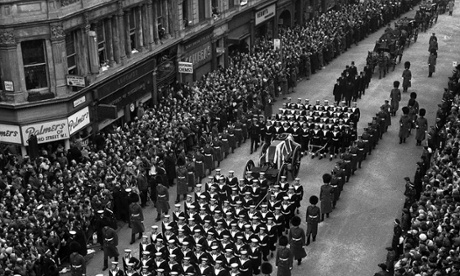
Sir David Cannadine, the historian, hosted a press conference at the Cabinet War Rooms this morning outlining some of the events that will be taking place to mark the 50th anniversary of Churchill’s death.
Here are some of the events taking place next Friday, the anniversary of Churchill’s state funeral.
In the morning, the Houses of Parliament will host a remembrance service and wreath laying ceremony, in recognition of Churchill’s outstanding contribution to Parliament. Speeches will be delivered by Mr Speaker, accompanied by a reading by Nathania Ewruje, Best Speaker in the English-Speaking Union’s National Public Speaking Competition for Schools 2014 and subsequent winner of the ESU’s inaugural Winston Churchill Cup for Public Speaking.
The Havengore vessel, which carried the coffin of Sir Winston, will retrace its journey down the Thames, taking the same route at the same time of day as 50 years previously. Forming part of a small flotilla, the Havengore will pass under Tower Bridge, which will be raised in honour of Sir Winston at 12.45, continuing its journey past HMS Belfast, under Blackfriars Bridge and Waterloo Bridge, passing the London Eye and culminating in a special service and wreath laying in the waters directly opposite the Palace of Westminster at 13.15. In echoes of the original river procession, the Havengore will feature crew in ceremonial bright blue and red uniforms and two Scottish pipers standing in the bows to play the pipes. The on-board party will include members of the Churchill family and others who were closely connected with the State Funeral and the event provides a fitting yet highly visible public tribute to Winston Churchill.
There are more details here, on the Churchill Central website, and here, in the press release (pdf).
Apparently the Cannadine briefing was quite lively.
On Paxman calling Churchill an egotist and charlatan, David Cannadine: "Well, it's interesting for Jeremy to criticise someone for that."
— Robert Hutton (@RobDotHutton) January 20, 2015
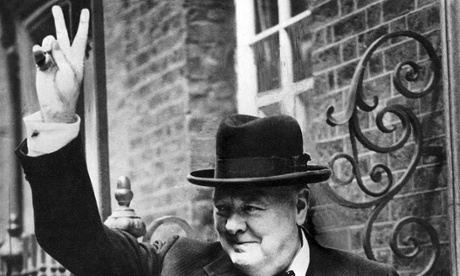
UPDATE AT 11.15AM: Martin McDonald on Twitter points out that there is some good footage of Churchill’s funeral on YouTube.
Updated
For the record, here are today’s YouGov GB polling figures.
Labour: 32%
Conservatives: 32%
Ukip: 15%
Lib Dems: 8%
Greens: 7%
Government approval: -20
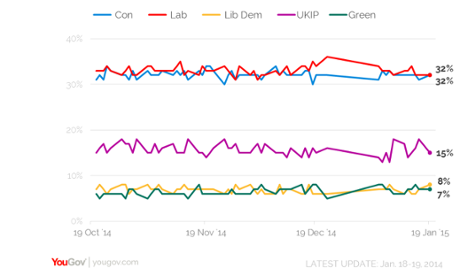
And here are election predictions from a variety of organisations.
Elections Etc: Conservatives 283, Labour 281, SNP 36, Lib Dems 26, Ukip 3
Election Forecast: Labour 285, Conservatives 281, SNP 32, Lib Dems 27, Ukip 3
Polling Observatory: Conservatives 33.8%, Labour 33.4%, Lib Dems 9.2%
(These are all academic forecasts, based on models that using current polling data and make allowance for how polls shift in the run up to an election.)
May 2015: Labour 288, Conservatives 270, SNP 38, Lib Dems 25, Ukip 6
(This is based on current polling, taking into account Lord Ashcroft’s seat by seat polling.)
Electoral Calculus: Labour 321, Conservatives 242, Lib Dems 19, Ukip 0, Nationalists 49
(This is just based on current polling.)
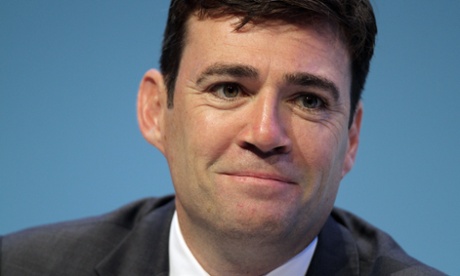
Here’s Andy Burnham, the shadow health secretary, on Nigel Farage’s comment about wanting to reopen the debate about replacing the NHS with an insurance-based system.
Nigel Farage has confirmed that a vote for UKIP is a vote for the privatisation of the NHS and for a full American healthcare system.
Farage admits he says one thing in public about the NHS but another behind closed doors. He has shown UKIP’s statements on protecting the NHS to be hollow.
Ukip claim to stand up for working people, but in reality they are more Tory than the Tories. Farage will never be able to distance himself from his real views. He should be honest with the public.
For more on the de Montfort parliament, this post by Dr Sophie Ambler for the History of Parliament website is useful.
On Twitter MPs and MSPs have been celebrating the demise of the Sun’s Page 3.
Most of the comments I’ve seen have come from Labour politicians. I haven’t seen any Conservative MPs celebrating the move, although Andrew Cooper, David Cameron’s former pollster, has welcomed it.
From Harriet Harman, Labour’s deputy leader
Glad that @TheSunNewspaper p3 gone. Women expect to be equal in C21. Not posing half naked. Well done Clare Short & 1000s of women campaign
— Harriet Harman (@HarrietHarman) January 20, 2015
From Kezia Dugdale, Labour’s deputy Scottish leader
At long last - boobs are not news! Well done everyone at and with @NoMorePage3 - huge victory for people power
— Kezia Dugdale (@kdugdalemsp) January 20, 2015
From Sadiq Khan, the shadow justice secretary
Proud to have supported the @nomorepage3 campaign - brilliant result on the #page3takedown pic.twitter.com/AJcSbI2nNi
— Sadiq Khan MP (@SadiqKhan) January 20, 2015
From Stella Creasy, the shadow Home Office minister
Those attacking the @NoMorePage3 campaign as ‘not much progress’ miss point that any progress is forward movement … #notperfectjustgood!
— stellacreasy (@stellacreasy) January 20, 2015
From Emma Reynolds, the shadow Europe minister
Delighted the the Sun has dropped #page3 - shame it took so long but nevertheless good news.
— Emma Reynolds (@EmmaReynoldsMP) January 20, 2015
From Diane Abbott, the Labour MP
Let's not forget Clare Short. In 1986 she was 1st MP to speak out against Page 3 was attacked by other MPs, vilified & threatened with rape
— Diane Abbott MP (@HackneyAbbott) January 20, 2015
From John Woodcock, the Labour MP
Great that Sun been persuaded #page3 just not right for a family newspaper. Huge admiration for @NoMorePage3 campaign. #NoMorePage3
— John Woodcock (@JWoodcockMP) January 20, 2015
From Caroline Lucas, the Green MP
Huge congratulations & thanks to @LucyAnneHolmes & all @NoMorePage3 for such an amazing & inspiring campaign! #peoplepower
— Caroline Lucas (@CarolineLucas) January 20, 2015
From Mark McDonald, the SNP MSP
Glad that Page 3 is no more. Now let's get media to stop the relentless 'she's too fat/thin' gossip and perving after underage girls too?
— Mark McDonald (@markmcdsnp) January 20, 2015
From Andrew Cooper, a Tory peer and Cameron’s former pollster
If page3 toplessness really has gone, tribute due the early fighters, not least (though I think she's wrong about most else), Clare Short
— Andrew Cooper (@AndrewCooper__) January 20, 2015
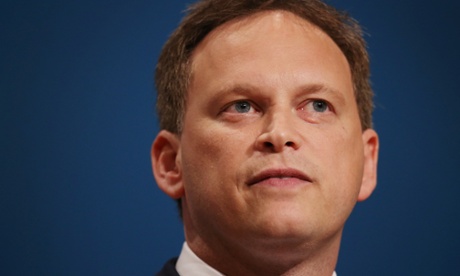
Grant Shapps, the Conservative chairman, has leapt on the Mandelson bandwagon, and used it has a chance to take a hit at Ed Miliband. He’s put out this statement:
With Mandelson joining the chorus of Labour voices opposed to Labour’s homes tax, it is clearer than ever that Ed Miliband is a weak leader peddling a bad policy. It is yet more proof that he simply isn’t up to the job of running the country.
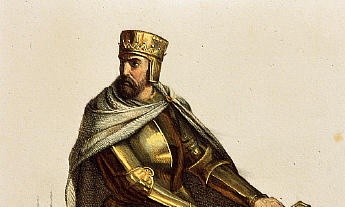
It’s always good to celebrate a birthday and today, on one measure, it’s parliament’s 750th. On 20 January 1265 the de Montfort parliament met, and it is seen as a precursor of the modern House of Commons. Simon de Montfort was a French warlord, to use modern terminology, but never mind; it’s nice to know our European roots run deep.
Seven hundred and fifty years on, democracy can still throw up surprises. There are two this morning.
- Lord Mandelson, the Labour former business secretary, has attacked his party’s plans for a mansion tax - and backed the Lib Dem alternative. Mandelson told Newsnight:
I don’t happen to think that the mansion tax is the right policy response to that. I think it’s sort of crude, it’s sort of short-termist. What we need is what I think the Liberal Democrats are proposing and that is the introduction of further bands that relate to different values of property within the council tax system. That’s what I would like to see. It will take longer to introduce, that’s true, but it will be more effective and efficient in the longer term than simply clobbering people with a rather sort of crude short term mansion tax.
-
Nigel Farage, the Ukip leader, has renewed his suggestion that the NHS may have to to replaced by an insurance-based system. In some respects, what he is saying about the problems facing the NHS in the future are echoed by what Prof Sir Bruce Keogh, the NHS’s medical director, has told the Guardian in an interview today.
It’s a busy day. Here’s the agenda.
10.15am: Kris Hopkins, the communities minister, speaks at a summit on child sexual exploitation.
11.30am: George Osborne, the chancellor, gives evidence to the Commons Treasury committee about Scotland getting more powers over tax.
11.30am: Sajid Javid, the culture secretary, gives evidence to the Commons culture committee.
Around 12.40pm: MPs begin a debate on a motion tabled by the SNP, Plaid Cymru and the Greens calling for Trident to be scrapped.
12pm: Ed Balls, the shadow chancellor, and Jim Murphy, the Scottish Labour leader, hold a meeting with oil industry executives in Aberdeen.
3.30pm: Philip Hammond, the foreign secretary, gives evidence to the Commons European scrutiny committee.
3.30pm: Sir Alan Moses, chairman of the Independent Press Standards Organisation, and Matt Tee, its chief executive, give evidence to the Lords communications committee. At 4.30pm Alan Rusbridger, the Guardian editor, and Bob Satchwell, the Society of Editors executive director, give evidence.
3.30pm: Members of the child abuse panel give evidence to the Commons home affairw committee.
As usual, I will be also covering all the breaking political news from Westminster, as well as bringing you the most interesting political comment and analysis from the web and from Twitter. I will post a summary at lunchtime and another in the afternoon.
If you want to follow me on Twitter, I’m on @AndrewSparrow.
Updated