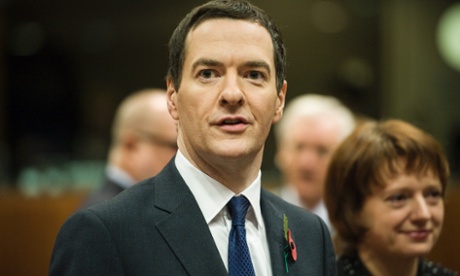
Aviva confirms plan to buy Friends Life for £5.6bn
A late breaking story (originally revealed by Sky): Aviva has confirmed that it has reached agreement for an all share deal to acquire Friends Life.
Aviva would offer 0.74 of its own shares for each Friends Life share.This values Friends’ shares at 398.9p each and the whole business at around £5.6bn.
Confirmation of the deal came after the stock market closed, but Friends ended the day 4.4p higher at 347.7p. Aviva had added 6.5p to 539p.
The combination of the two FTSE 100 companies would create the UK’s leading insurance and savings business with 16m customers, and would represent a turnaround for Aviva after its troubles a couple of years ago which led to the departure of Andrew Moss as chief executive to be replaced by Mark Wilson.
On that note, it’s time to close the blog up for the evening. Thanks for all your comments, have a good weekend, and we’ll be back on Monday.
Updated
European markets surge after China boost
Investors were in a positive mood from the start of trading after ECB president Mario Draghi dropped yet more hints about the central bank’s willingness to take stimulus measures to lift the flagging eurozone economy, writes Nick Fletcher. But that was reinforced when the People’s Bank of China unexpectedly cut interest rates in the wake of the country’s recent underwhelming economic data. Despite the US Federal Reserve having ending its own bond buying programme, it seems the market is still fuelled by the prospect of cheap money from other central banks. So the final scores heading into the weekend showed:
- The FTSE 100 finished 71.86 points or 1.08% higher at 6750.76
- Germany’s Dax has jumped 2.62% to 9732.55
- France’s Cac closed 2.67% better at 4347.23
- Italy’s FTSE MIB is up 3.88% at 19,954.51
- Spain’s Ibex ended 3.05% better at 10,520.8
On Wall Street, the Dow Jones Industrial Average is currently 95 points or 0.53% higher.
Ireland continues to make progress in its economic recovery, but challenges still remain, according to the latest European Commission and European Central Bank visit to the country.
After a “surveillance mission” this week, the EC and ECB reported:
The economic situation has continued to improve in Ireland since the end of the EU/IMF-financial assistance programme, with the recovery broadening. Economic growth strongly picked up in the first half of 2014, with the national accounts having reconciled with the previous positive flow of high-frequency indicators, particularly in the labor market. While exports rebounded markedly in the first half of this year, there is still some uncertainty as to whether this strength is sustainable... The main downside risks to the short-term outlook are linked to a weakening in economic momentum in the euro area and the sustainability of high export growth.
Latest indications are that the general government deficit in 2014 is likely to turn out slightly above the authorities’ most recent budgetary forecast of 3.7% of GDP, which is well within the original ceiling of 5.1%, and down from 5.7% of GDP in 2013.... More ambitious deficit targets for 2015 and 2016 would help to bring the still very high government debt-to-GDP ratio firmly on a downward path. The government needs to stand ready to adopt additional measures to address potential future fiscal risks.
They concluded:
Despite significant progress, the macroeconomic adjustment process needs to continue and important challenges remain. Unemployment – particularly long-term and youth unemployment – remains high. Deleveraging of public and private debt is progressing, but the debt overhang remains a significant challenge to the economy, calling for sustained fiscal consolidation and financial repair. The recovery in the banking sector is still on-going.
Full statement here.
Royal Bank of Scotland reveals stress test error
Oops. Royal Bank of Scotland has admitted an error in one of the key ratios relating to the European banking stress tests released on 26 October.
The bank said it made a mistake on tax credits, which means its Common Equity Tier 1 ratio was 5.7% compared to 6.7% previously reported.
This was barely above the minimum requirement of 5.5%.
The news has sent its shares down nearly 1.5%.
So let me get this straight - all the banks conduct their own stress tests and then we take their word for it? Does anyone check it?? $RBS
— Michael Hewson (@mhewson_CMC) November 21, 2014
Updated
Chinese rate cuts explained
To recap: stock markets are powering ahead around the world after China cut interest rates for the first time in over two year in a surprise move, to lift an economy that is sliding to its slowest growth in 24 years. Its central bank also signalled that financial reforms were still on the cards by further freeing up the rates market.
Below are excerpts from a Q&A statement released by the People’s Bank of China to explain why it cut interest rates and lifted the ceiling for deposit rates, courtesy of Reuters.
WHICH PROBLEMS WERE THE POLICY CHANGES ADDRESSING?
The problem of difficult financing, costly financing, remains glaring in the real economy.
To solve the problem of expensive financing for companies, especially small companies, is ... meaningful for stabilising economic growth, promoting employment and benefiting people’s livelihoods.
DOES THE RATE ADJUSTMENT MEAN THAT MONETARY POLICY HAS CHANGED?
The rate adjustment was a neutral operation and did not mean that monetary policy has changed.
Currently, our economic activity is within a reasonable range, and overall inflation is in a down trend.
Based on the trend in economic fundamentals, the central bank needs to make flexible use of interest rate instruments to conduct fine-tuning.
WHAT WERE THE NEW INITIATIVES IN THE COMBINATION OF RATE CUT AND REFORMS?
The reduction in the lending rate was bigger than that for the deposit rate, which is an improvement from traditional rate adjustments, and reflects a more targeted approach to guiding market interest rates and social financing costs lower.
The combination of a small reduction in deposit rates and the expansion in its floating range is beneficial for keeping real rates at an appropriate level.
If commercial banks make full use of the floating range, the rise in the new floating deposit rate would correspond to that before the rate adjustment.
The different types of maturities for benchmark lending and deposit rates were merged or simplified this time.
Fixed benchmark five-year deposit rates are no longer announced. Maturities for benchmark lending rates were simplified and combined into three types: within a year, one to five years and over years.
This would expand the scope for independent pricing by financial institutions.
WHAT IS THE NEXT STEP TO PROMOTE REFORMS IN THE INTEREST RATE MARKET?
(We will) continue to promote liberalisation of the interest rate market via promoting negotiable certificates of deposits with companies and individuals.
Wall Street rises at open
Wall Street has also opened with strong gains. The Dow Jones is nearly 1% ahead at 17,887.19 after just 10 minutes of trading, while the Nadaq has gained 0.8% to 4739.7. The S&P 500 has climbed 0.7% to 2066.78.
Updated
European stock markets power ahead
European stocks are surging ahead: the Dax in Frankfurt is up 2.5% at 9717.99 while the CAC in Paris has leapt 2.9% to 4356.11, after China’s central bank cut interest rates and ECB chief Mario Draghi dropped more hints that the central bank could act soon . The Ibex in Madrid has jumped 3% to 10,515.4 and the FTSE MiB in Milan is 2.8% ahead. The FTSE 100 index in London has gained more than 80 points, or 1.2%, to 6761.70.
Updated
It emerged in 2010 that HSBC was being investigated by Swiss banking regulators, after a former employee stole data on some clients of its elite private bank. Here’s the story we wrote at the time.
Then in 2012 we reported that the tax evasion could exceed £200m.
Updated
HSBC said, in a statement emailed to Reuters:
We confirm that HSBC Private Bank (Suisse) has been placed under formal investigation by French magistrates who are examining whether the bank acted appropriately between 2006-07 in relation to certain clients of the bank who had French tax reporting requirements, as well as in relation to the way the bank offered its services in the country.
We will continue to cooperate with the French authorities to the fullest extent possible.
HSBC's Swiss private banking arm under formal investigation in France
The Swiss private banking arm of HSBC has been placed under formal investigation by French magistrates. They are examining whether the bank helped some clients avoid paying taxes. The bank said it had been asked to deposit a bail bond of €50m.
The news comes just days after HSBC’s Swiss private banking arm was charged by a Belgian judge with tax fraud and money laundering, accusing the UK bank of helping diamond dealers (based in Antwerp) and other wealthy clients to dodge tax. This could have cost Belgium “hundreds of millions of euros” in lost tax receipts, the Belgian authorities said on Monday.
China’s decision to cut their one-year lending rate by 40 points and deposits rate by 25 points has sprung a rare surprise on the market today, writes Edward Knox, currency analyst for Caxton FX.
The world’s second-largest economy has been facing some tough economic headwinds of recent times, and is currently facing its slowest growth in almost a quarter of a century. It appears that this, coupled with an increasingly dire outlook in global growth has induced the Peoples Bank of China to act.
Given that Chinas economy is still expected to grow by over 7% this year, traders are unlikely to now all rush to push the sell button on the Renminbi, however analysts will now cast a cautious eye over to China to see the results of what is proving to be a very changeable period for the central bank as they look to balance and reform the economy.
Brent crude climbs to near $81 a barrel; stock markets extend gains
Brent crude oil climbed to near $81 a barrel after China’s central bank cut interest rates, and amid continued speculation that OPEC could agree production cuts next Thursday. Brent is up 2% at $80.92 a barrel, while light crude in New York has advanced 1.6% to $77.07 a barrel.
European stock markets are enjoying a day of gains – with the FTSE 100 in London 1% ahead, or 66.44 points at 6745.1. Germany’s Dax has gained 1.85%, and France’s CAC is up 1.9%.
The timing of China’s interest rate cuts looks to be as much about the sharp appreciation of the renminbi versus the yen as the fact China’s economy is experiencing a “period of pain” (as per the vice Finance Minister last weekend), and the fact that both Chinese consumer and producer prices remain very benign, writes Marc Ostwald, strategist at ADM Investor Services International.
One can certainly also expect a response from South Korea and others in SE Asia (with the exception of Indonesia, given that the rupiah has only just started to appreciate vs. the yen), and a rate cut from India’s rupee (with the wholesale price index falling sharply on the back of the falling crude prices) also seems likely.
While the 1997-1998 period is the obvious precedent, the major difference is that Asian / EM central banks had only a very limited arsenal of FX reserves - total world FX reserves were less than $2 trillion and are now in excess of $13 trillion, much of which is an Asia. But this sort of currency war is really not at all helpful, and it is all the more ironic given that it follows Draghi’s comments earlier that “Draghi: QE in U.S.A, Japan has led to significant FX depreciation”, which is about as explicit as he can be in saying that he is pursuing a weaker euro.
George Osborne’s deficit reduction plan has gone into reverse, writes our economics editor Larry Elliott. You can read his analysis in full here.
Senior government ministers have been making it clear for weeks that the autumn statement on 3 December is going to be a frugal affair. The message has gone out to voters that they should not expect the giveaways customary for this stage of the electoral cycle.
The state of the public finances explains why that is. After seven months of the 2014-15 financial year, borrowing is more than 6% higher than it was in the same period of 2013-14, despite being slightly lower this October than last.
Whoops! Things are not going quite as scripted. At the time of the Budget, George Osborne was expecting the deficit to decline by 12% this year, to a little over £80bn. Technically, it is possible for that target to be achieved, but it will require the deficit to be some 40% lower in the last five months of the financial year than it was in the same period of 2013-14 for this to happen.
And the ECB is also gearing up for further easing, writes Nick Kounis, head of macro & financial markets research at ABN-Amro. More here.
ECB President Mario Draghi all but announced that the central bank will step up monetary easing soon. Mr Maybe has become Mr Definitely. Striking an even more dovish tone than at the press conference earlier in the month, Mr Draghi sounded as if he and his colleagues are now ready to do more to prevent inflation from settling at uncomfortably low levels. He asserted that “we will do what we must to raise inflation and inflation expectations as fast as possible”. He added that if current measures were not enough or further risks to the inflation outlook materialise then the Governing Council would ‘broaden even more the channels through which we intervene, by altering accordingly the size, pace and composition of our purchases’.
Updated
China’s economy is on track to record its slowest annual growth in 24 years for 2014.
The Chinese interest rate reductions reflect deeper concerns over the economic slowdown, Reuters writes.
This is significant and heralds a shift from the targeted easing that we have been seeing and likely reflects more deep rooted concerns over the economic slowdown and the difficulties of meeting the growth target. The cut suggests that while growth expectations have been massaged lower, policy makers are no longer comfortable with allowing growth to dip below 75%.
China's central bank cuts interest rates
Meanwhile, China’s central bank has cut interest rates for the first time in over two years. The People’s Bank of China has reduced its one-year benchmark lending rate by 40 basis points to 5.6% and its one-year benchmark deposit rate by 25 bps, effective from tomorrow.
Updated
The chancellor’s plan to cut the deficit this year still looks out of reach as he prepares to deliver the autumn statment next month, despite a surprise improvement in the public finances in October, writes my colleague Angela Monaghan. You can read the story in full here.
Osborne's £15bn headache. Tax rises rather than tax cuts may be the more likely prospect http://t.co/8XKFUeaeh5 pic.twitter.com/NTc2al1jSw
— Berenberg Economics (@Berenberg_Econ) November 21, 2014
Here is Labour’s response to the public borrowing figures. Chris Leslie, Labour’s Shadow Chief Secretary to the Treasury, said:
These figures are yet another damaging setback for George Osborne.
Borrowing so far this year is now £3.7 billion higher than the same period last year. George Osborne’s promise to balance the books by next year lies in tatters. As the OBR has said, stagnating wages and too many people in low-paid jobs are leading to more borrowing.
Labour will balance the books and get the national debt falling as soon as possible in the next Parliament, but we will do so in a fairer way.
Our economic plan will reverse the £3bn tax cut for the top one per cent of earners and stop paying the winter fuel allowance to the richest pensioners. We will raise child benefit by just one per cent for two years and cut ministers’ pay by five per cent. And our plan will deliver a recovery for the many not just a few, with the rising living standards and more good jobs we need to get the deficit down.
Draghi: ECB ready to act if inflation stays low
Let’s return to ECB chief Mario Draghi. Here are his comments in full, courtesy of Reuters.
The European Central Bank stands ready to act in a timely manner if low inflation persists, Draghi said in a speech at an annual banking congress.
We will continue to meet our responsibility – we will do what we must to raise inflation and inflation expectations as fast as possible, as our price stability mandate requires of us.
If on its current trajectory our policy is not effective enough to achieve this, or further risks to the inflation outlook materialise, we would step up the pressure and broaden even more the channels through which we intervene, by altering accordingly the size, pace and composition of our purchases.
Over shorter horizons, however, indicators have been declining to levels that I would deem excessively low.
Survey-based measures of inflation expectations have generally been more stable, but the latest Survey of Professional Forecasters also indicates some decline – and at all horizons.
Rob Wood, chief UK economist at Berenberg Bank, concurs.
To make up the £17bn hole in the government’s plans, borrowing over the final five months of the year would need to be 40% lower than last year. The implausibility of that means Osborne faces a testing time in a week and a half, when he updates the country on how the austerity drive is going in his Autumn Statement. Back in 2010 the government had expected to be finished with austerity now and perhaps looking forward to granting tax cuts. As it is, tax rises to plug a deficit hole are beginning to look a more likely prospect.
The latest UK public borrowing figures continue to show that the economic recovery is not bringing about the expected improvement in the public finances and the chancellor is likely to miss his target, says Samuel Tombs, senior UK economist at Capital Economics.
In order for borrowing to be 12% lower this year as set out in the March budget, it would have to be a whopping 40% lower than last year in the remaining five months of the fiscal year. Even though there should be a bumper batch of self-assessment tax receipts in January and government departments are reportedly being ordered to underspend relative to their budgets, a reduction of this scale now looks impossible to achieve.
Let’s not forget that October is a major month for corporation tax receipts.
At £7.7bn, October's public sector net borrowing is better than last year but not great. Corporation tax receipts not rolling in as hoped
— Andrew Verity (@andyverity) November 21, 2014
'A taxless recovery'
A debt-fuelled Christmas splurge? asks independent City analyst Louise Cooper. To recap, this morning’s figures show the government borrowed £7.7bn more than it received in revenue in October. So far this year the government has racked up £64.1bn of debt, up £3.7bn from last year. And yet the economy has grown around 3%. Cooper says:
This makes any Christmas giveaways in the chancellor’s autumn statement on 3rd December difficult. Like many families across the UK, Osborne will need to rely on debt if he wants to be generous. But markets are not expecting such behaviour especially after Cameron’s warning earlier this week about a slowing economy and a possible resurgent of the Eurozone crisis. Bizarrely we may have to wait until the March budget before Osborne is let loose with Christmas benevolence. Voters have short memories and the election is in May.
Updated
As usual, the government was quick to claim that its economic plan is working, while there’s more to do. An HM Treasury spokesperson said:
The government’s long term economic plan is working: delivering the fastest growing economy in the G7, putting more people into work than ever before, and reducing the deficit by more than a third. While today’s public finance figures show borrowing is down this month compared to last year, the impact of the great recession is still being felt in our economy and the public finances.
At the same time, we have to recognise that the UK is not immune to the problems being experienced in Europe and other parts of the world economy. That’s why we will continue working through the plan that is building a resilient British economy.
Even though the UK economy has been picking up, wage growth has been slow to catch up. This has weighed on the Treasury’s income tax take.
Receipts from income tax and national insurance contributions rose 1.5% in October, today’s figures showed. They were only 0.6% higher in the first seven months of the fiscal year from the year-earlier period – despite economic growth of more than 3%.
However, borrowing for the fiscal year so far now totals £64.1bn – 6.1% (or £3.7bn) higher than in 2013. That gives the chancellor little room for sweeteners ahead of next May’s election.
Note that this is the last set of public finance figures ahead of the autumn statement on 3 December. You can view them here.
Updated
Public borrowing falls to £7.7bn
And the public borrowing figures are out. Public borrowing, excluding state-controlled banks, fell to £7.7bn in October from £7.9bn a year earlier.
Updated
A flash on Reuters: George Osborne said there’s more concern about the state of the global economy than a few months ago.
The euro has fallen sharply versus the dollar and the yen, after European Central Bank chief Mario Draghi said inflation expectations were declining to levels that could be regarded as excessively low, leaving the door open for further policy easing. He added that the bank stands ready to act in a timely manner if inflation stays low.
The Russian energy minister has waded into the oil debate. Asked whether Russia was ready to cut production, Alexander Novak said:
This issue requires careful consideration... But on the whole, this question is being discussed but there are no final decisions on it.
He added that it would be tricky for Russia, because its budget relied on revenues from oil exports and the country lacked the “technology” to change supplies quickly.
Brent crude pushes towards $80 a barrel
Brent crude is pushing towards $80 a barrel amid growing calls on OPEC to cut output at the oil cartel’s meeting next Thursday. Venezuela’s foreign minister Rafael Ramirez said the country is willing to reduce its own production if OPEC decides to do the same. Libya and Ecuador have also called for OPEC to curb output, along with Iran. Oil prices have slid 30% since June as new supplies from North America outstripped demand at a time of lacklustre economic growth.
FTSE heads for fifth week of gains, led by energy stocks
Back in London, the FTSE is heading for a fifth consecutive week of gains, led by energy stocks. There is speculation that OPEC could cut output at its meeting next week, boosting oil prices. Brent crude is up nearly 0.5% (or 32 cents) at $79.70 a barrel after jumping $1.23 yesterday, with Venezuela pushing for production cuts. Strong US data yesterday also underpinned oil prices.
The UK oil and gas index climbed 1.1%. Tullow Oil is the biggest gainer on the FTSE 100 index, up 3.2% to 492.8p. Royal Dutch Shell has advanced 1% to £22.79 while BG Group is 1.2% ahead at £10.59.
The rouble strengthened earlier today, building on yesterday’s gains which were underpinned by a recovery in oil prices, and ahead of tax payments falling due at the end of the month. It rose 1% against the dollar and the euro, but has now fallen back to trade 0.9% lower against the dollar. One currency dealer at a large Russian bank told Reuters: “Miserly volumes continue to move a thin market.”
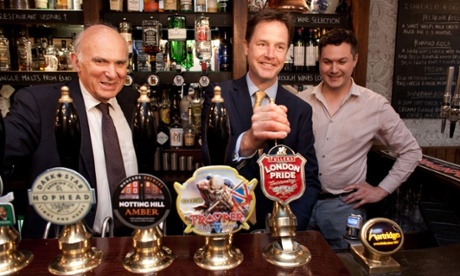
Pub group Fuller, Smith & Turner, which brews ales including London Pride has enjoyed an 8% rise in first-half adjusted pretax profits to £19.6m, after selling more food. People are eating out again. The London-based company’s revenues climbed 10% to £161.6m, after it opened its first airport pub at Heathrow Terminal 2 (called London Pride) along with a new flagship site, The Admiralty, at Trafalgar Square.
Updated
Rolls-Royce wins $5bn contract from Delta; Hornby's turnaround continues
On the corporate front, Britain’s Rolls-Royce won a $5bn contract from Delta Air Lines to supply engines to power 50 new Airbus planes after much speculation. Rolls shares are up 0.5% to 848.5p on the news.
Toy maker Hornby, whose brands include Scalextric, Airfix and Humbrol paints, saw first-half sales rise 8% to £24.2m, taking it back into the black. It made an underlying profit of £250,000 in the six months to 30 September, compared with a £850,000 loss the year before. Statutory losses halved to £520,000. Hornby shares gained 1.7% in early trading.
Hornby boss Richard Ames says:
We are encouraged with the advances that the Group is making. During the first half of the year, the team has made material progress in organising the turnaround of the company
Looking ahead, the results for the full year will depend on the success of the Christmas trading season. Current indications are that it will meet our expectations.

San Francisco Fed chief talks about low global growth
Meanwhile, San Francisco Fed president John Williams was less upbeat. He expressed concern about low global growth leading to an extended period of very low interest rates at a conference on global imbalances in Seoul. Williams said, according to Bloomberg:
What is driving that is global growth which is likely to be slower in the next decade or so.
US productivity trend growth is still positive but not as strong as in the past.
Williams also said unconventional policies such as QE were important in supporting a US economy that is now moving back closer to full strength.
One of the goals of policies of taking extraordinary actions was so that we avoided long-term deflation so that we can normalize monetary policy sooner. Hopefully that’s what we’ll be able to do if things continue.
Williams, who was speaking at a panel discussion at the Bank of Korea, has been a staunch supporter of Fed policy that has held interest rates near zero since December 2008 and embarked on a two-year bond buying programme to expand its balance sheet to a record $4.49 trillion before ending QE last month.
US markets have continued to go from strength to strength this week, closing again at record levels yesterday. Michael Hewson of CMC Markets says:
Once again some encouraging economic data has kept investors viewing the US economy through the prism of a glass half full.
Even European markets look set for a positive week despite some pretty disappointing economic data at the back end of the week, though they are still underperforming relative to US markets.
Yesterday’s disappointing flash PMI numbers for Germany and France point to an economy that is stuck in neutral at best, while both Japanese and Chinese manufacturing PMI also came in shy of expectations reinforcing the former’s decision to boost its QE program a few weeks ago.
Updated
European stock markets open higher
European stock markets have opened higher. The FTSE 100 index in London has climbed nearly 20 points, or 0.2%, to 6697.94 at the start of trading. France’s CAC and Italy’s FTSE MiB are also 0.2% ahead while Spain’s Ibex has gained 0.1%.
Michael Hewson, chief market analyst at CMC Markets UK, says:
The UK economy continues to blow a little hot and cold.
Retail sales were strong in October, rising 0.8%, well above expectations of 0.3%, data showed yesterday. These gains were helped by discounting and lower prices on food and fuel as supermarkets continued to slash margins in an attempt to maintain market share.
Updated
Good morning, and welcome to our rolling coverage of the world economy, the financial market, the eurozone and business.
We are getting UK public finance figures for October at 9.30am GMT. October is a major month for corporation tax payments. City economists are expecting a deficit of £7.7bn, which would be a slight improvement on last October’s £7.9bn and give the chancellor a little boost ahead of the autumn statement. However, he is still likely to miss his target for the fiscal year.
In September, borrowing jumped to £11.8bn,£1.6bn above the September 2013 figure, which left borrowing for the year so far running £5.4bn above the previous year. Shaw points to “low pay growth, a concentration of job creation in lower paid occupations and weak oil and gas revenues. This is despite likely GDP growth slightly in excess of 3% this year.”
Today’s public finance data will be the last figures ahead of the autumn statement on 3 December.
Shaw says this
is likely to act as a reminder of the need for continued public expenditure restraint, not just because of a lack of progress in fiscal consolidation this year, but also that the deficit remains high at around 5.5% of GDP.