MATSUBARA, Osaka -- Many people from across the country visit Nunose Shrine with the aim of obtaining fortune slips (omikuji) with unique phrases. "Koimikuji," or love fortune slips, sold at the shrine in Matsubara, Osaka Prefecture, are especially popular among visitors who believe they contain emotionally resonating phrases related not only to love or romance, but also to family bonds and business careers.
It is not known exactly when the shrine was first built, but there is a document that says the shrine existed as a tutelary deity of the Yokoji temple, which is said to have been built in 1089.
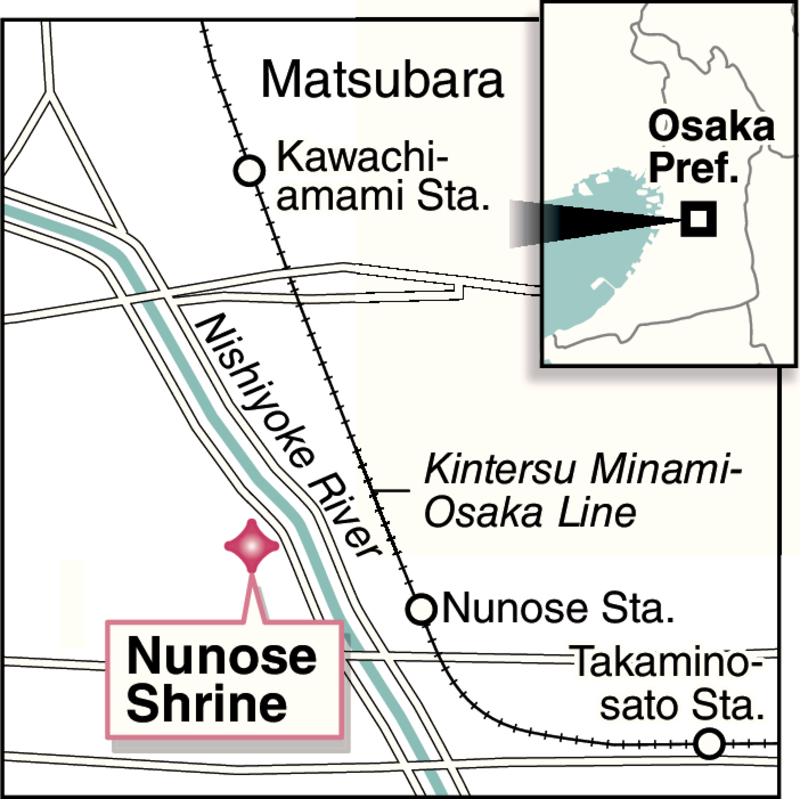
Surrounded by woods, Nunose Shrine is located along the Nishiyoke River that runs through the prefecture. The shrine's omikuji offering office was temporarily closed to prevent the spread of the novel coronavirus, but it reopened after the Osaka prefectural government's state of emergency was lifted.
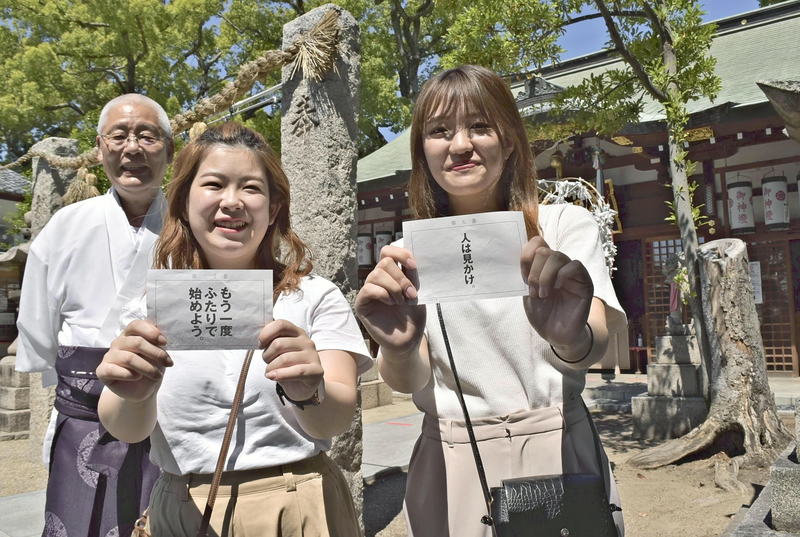
On an early afternoon in late May, cheerful voices of young women echoed throughout the shrine's grounds. Ayaka Kubo, 19, a university student from Nara Prefecture, and her friend Hanaka Yoshikawa, 21, a restaurant employee, each drew a love fortune slip.
The one drawn by Kubo contained the phrase "Hito wa Mikake" (Appearance is everything) and Yoshikawa drew one with the phrase "Moichido Futari de Hajimeyo" (Let's start over together).
Kubo gave a small chuckle as she read the phrase. In contrast, Yoshikawa looked somewhat pleased. In fact, she had recently parted with her boyfriend, but still had a desire to get back together with him. "I feel like I'm being encouraged," she said. "I'll go ahead and get in touch with him."
Koimikuji have been provided on the shrine's premises since Sept. 24, 1999, at the suggestion of the shrine's chief priest, Narihito Terauchi.
"Omikuji fortune slips are gifts from the gods, so to speak," the 71-year-old Terauchi said. "I want those who obtain omikuji to read and understand the real meanings of phrases written therein, but it is too difficult for them to do so. They may only waver between hope and despair with the usual omikuji messages of good or bad luck, so I thought it would be all right if there were other omikuji that provided them with chances to find answers through their own interpretations."
Terauchi, who is also an artist, held exhibitions of unique ema -- votive pictures drawn on wooden tablets -- at the shrine for 12 years starting in 1988. He met with contemporary artist Hiroko Ichihara during an exhibition and asked her to produce koimikuji. Based on the theme of "Love and Smile," Ichihara created works featuring humorous phrases that overlapped with the image of koimikuji.
Some of the messages read: "Tesshu" (Retreat), "Dotanba Setogiwa Gakeppuchi" (At the eleventh hour, on the brink and on the edge of a cliff), "Jibun Yokereba Subete Yoshi" (All is well that I am well), "Wakareso" (Breakup likely) and "Sono Ai de Iinoka?" (Is that love enough?).
These startling oracular messages, which greatly differed from the standard, were written in stark bold fonts on paper as big as a postcard. Numbered 1 to 36, the love fortune slips spread via social media, mainly among young people. The contents of koimikuji have hardly changed since their creation, but many people have repeatedly visited the shrine to collect their own prophetic message.
Terauchi has witnessed various koimikuji episodes over the past 20 years.
A woman once drew a koimikuji that read "Ai wa Sokko" (Swift action gets you love) and then actively pursued a man she liked and they ended up getting married.
In the case of another woman, she had continued isolating herself from society, but she became interested in koimikuji after hearing about love fortune slips from her younger sister and visited the shrine with her family.
"It's the first time in years we've heard her [elder daughter] laughing," Terauchi quoted her parents as saying.
He said the scene of the parents tearing up during their remarks "remains firmly imprinted in my memory."
When the shrine was featured in a Google advertisement about three years ago, more than 1,000 people flocked to the shrine in a single day.
"I was really stunned at the time," Terauchi said. "Depending on how it is interpreted, koimikuji can have different implications. This is an interesting point of koimikuji. I want to help propagate that aspect."
Whether you can get lucky may depend on how you look at things.
When you want to extend your trip, a tour of six shrines is recommendable.
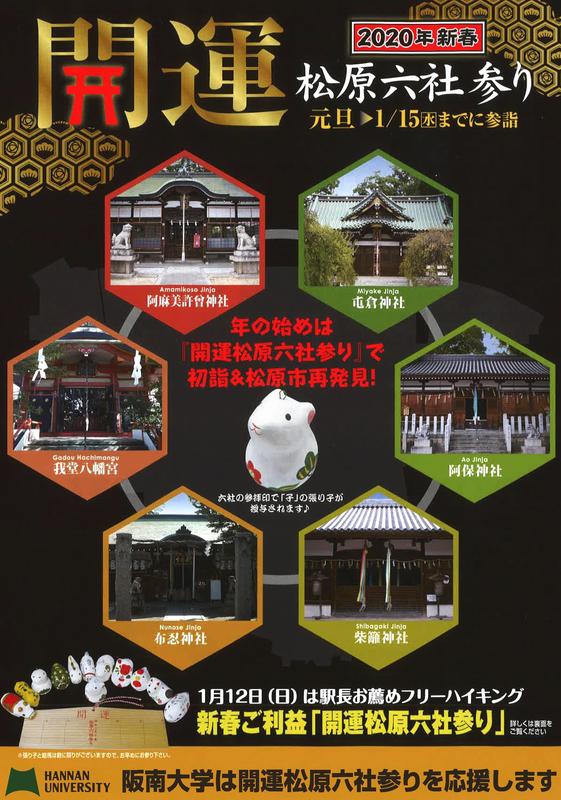
A New Year's program for visits to six shrines mostly in the city of Matsubara, including Nunose Shrine and Ao Shrine, started in 2004 at the suggestion of Terauchi.
If you visit the six shrines within the Jan. 1-15 period and collect a stamp from each shrine on a wooden votive picture tablet, you will be able to receive a papier-mache animal associated with the Chinese zodiac calendar for that year.
The program is designed so local residents can get to know more about the area as well as to confirm evacuation places in times of emergency.
Read more from The Japan News at https://japannews.yomiuri.co.jp/