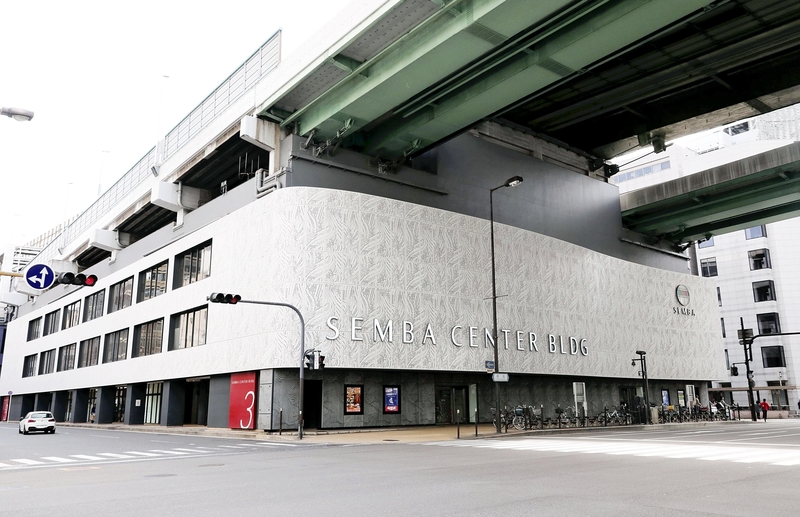
OSAKA CITY -- Located under an elevated road in the center of Osaka City is the Semba Center Building, a huge shopping complex stretching about one kilometer east to west. The Semba Center Building is a symbol of the Semba district, which has long been home to wholesalers of clothing and other items.
Inside the complex you will find wholesale and retail shops selling a wide variety of goods, including Western and Japanese clothing, towels, and every kind of fabric, including scraps.
The Semba area is known as the "city of textiles" and you can feel that energy here.
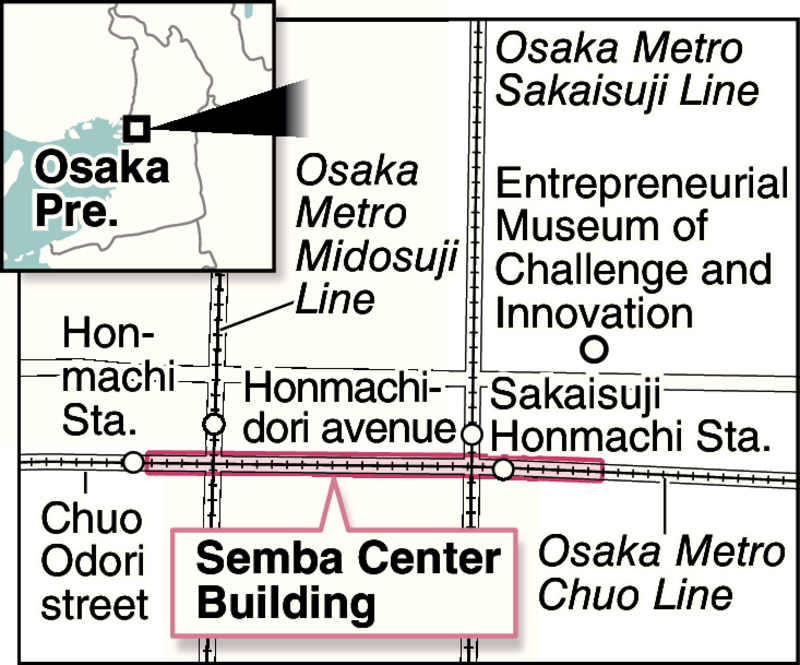
From the No. 1 building in the east to the No. 10 building in the west, there are as many as 800 shops, offices and other businesses in the long complex, which straddle a number of streets. Of these, more than 70% are related to textiles.
The variety is endless. A store selling ladies' spring clothing will face another across a narrow passageway that is selling fabric for kimono and another with colorful dresses lined up in its display window.
"If it's related to textiles, it's here," said Koji Kawaguchi of Osakashi Kaihatsu Kosha, which manages the Semba Center Building. "This area can be called a sacred ground of the textile industry."
This was originally a wholesale district, and there are still shops today with signs proclaiming, "We do not sell retail." However, in recent years the number of shops that sell to ordinary customers has increased.
Discounts of 30% to 50% off the market price are not unusual, and shoppers including young people and foreign nationals can be seen earnestly assessing the wares.
A 65-year-old woman who has shopped at Semba Center Building regularly for more than 30 years said with a smile: "I only buy clothes here. It's inexpensive and there's a good selection."
The unusual structure of the Semba Center Building, with an elevated road placed over the complex, was a result of the 1970 Osaka Expo.
To help eliminate traffic congestion, work had been underway to construct the Chuo Odori street stretching east to west from Higashi-Osaka to Osaka Port. However, there were more than 1,000 wholesalers, retailers and other textile-related businesses in the Semba district, which had been a commercial center since the days of warlord Toyotomi Hideyoshi (1537-98). Attempts to buy the land ran into difficulty.
In order to finish work in time for the expo, the unusual method was devised of constructing 10 low-rise buildings and building the road over them. The landowners obtained sectional ownership of the buildings and the concentration of textile businesses in the area was preserved. When the Semba Center Building opened in 1970, customers visited from all over Japan, and clothing from Semba went on sale at numerous stores and other outlets.
Yasuyuki Kumata has run a men's clothing shop in the complex since it opened. "It was rare at the time to have a facility where you wouldn't get wet from the rain and there was air conditioning. The turnout was huge," Kumata said.
"There were even customers who came from Shikoku by boat to purchase stock," he recalled.
With the weakening of the textile industry and the emergence of companies like Uniqlo that are involved in everything from the production to the retailing of clothes, wholesale companies have faced a succession of headwinds. Large companies with a deep connection to textiles, including Itochu Corp. and Teijin Ltd., used to have their headquarters close to the Semba Center Building but have moved elsewhere in recent years. The bustle of past days has lessened.
However, there are still many shops in regional areas and elsewhere that depend on the Semba district as a supplier of goods.
"We mustn't put out [this area's] historical light as a fashion area," said Katsuhiro Miyamoto, head of the building's sectional ownership association.
With this year marking the 50th anniversary of the opening of the Semba Center Building, Miyamoto vows to revive the shopping complex, saying, "We want to create 50 new years of history."
Semba Center Building: The building is directly connected to Honmachi and Sakaisuji Honmachi stations on Osaka Metro's Chuo, Sakaisuji and Midosuji lines.
Read more from The Japan News at https://japannews.yomiuri.co.jp/