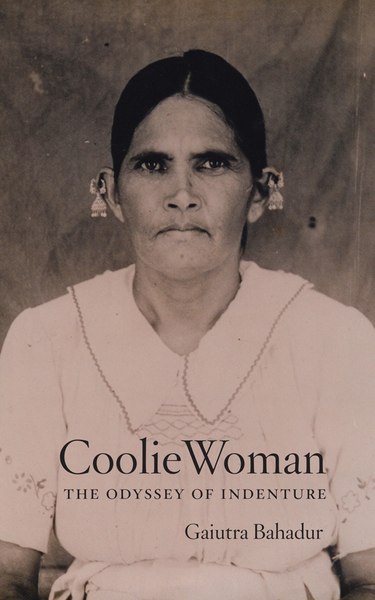
Why would a single, pregnant young woman sign up for a perilous three-month ocean-crossing and a new life as a bonded labourer on a sugar plantation in British Guiana? This is the mystery at the heart of a new book by American journalist Gaiutra Bahadur about her own great-grandmother, Sujaria, and the million other indentured labourers recruited for sugar plantations at the turn of the last century, after slavery ended. [The book] is a genealogical page-turner interwoven with a compelling, radical history of empire told from the perspective of indentured women – or "coolie", as they were known by the British. The collective voice of the "jehaji behen" (ship sisters) has been barely audible across the centuries, until now.
• Read the full review here Photograph: PR
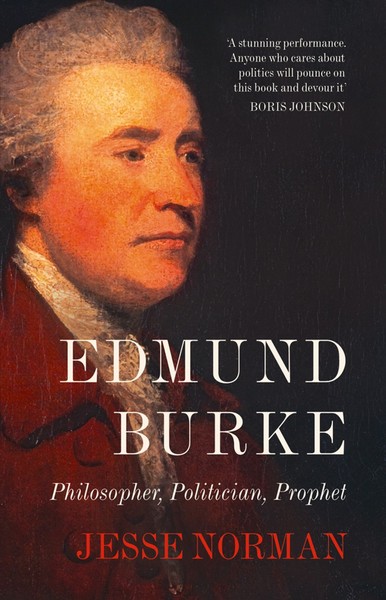
Burke is the role model for Norman and for his breed of conservatism. It is not dissimilar to Cam's big society – the vaguely formulated idea that communities would be enhanced by more volunteering and genteel social responsibility ... This absorbing book gathers pace, and relevance, as it goes along – an important contribution to the annals of conservative thought ... Norman insists that Burke's stock has soared so much that he is a valuable point of reference for Team Cam ... He may wish it to be so. I am not convinced that 18th-century noblesse oblige – or Dave's Old Etonian chums – provide the best route out of the mire.
• Read the full review here Photograph: PR

Jay Griffiths's question is simple: why do our children feel so unhappy? Her main answer lies in the title of her new book, Kith. Now used only in the phrase "kith and kin", the word has come to mean something like "extended family" or "circle of friends". But it originally referred to a person's "home territory", the country or region where they lived. For Griffiths, our children have been cooped up indoors, imprisoned in front of their screens (whether television or computer), and they have lost all contact with their kith – with the woods and the wilds, the mountains and moors, the rivers and streams. That, she argues, is the heart of the problem.
• Read the full review here Photograph: PR
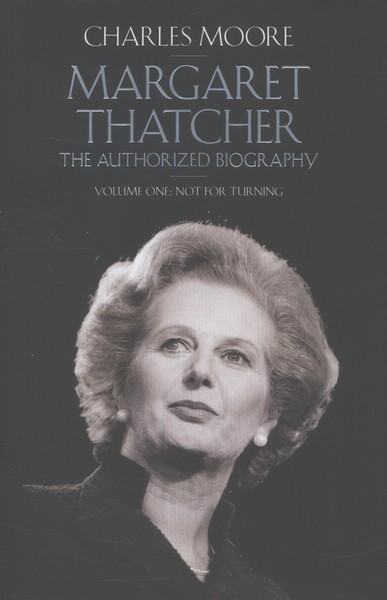
Moore was chosen by Thatcher to be her official biographer in 1997. It was the year her party finally lost power: her reputation, it was reasonable to assume, was going to need some protecting. "The arrangement that Lady Thatcher offered me," writes Moore, "was that I would have full access to herself … and to her papers." Moore has exploited this unique access with thoroughness and skill; but a sense of the British establishment granting favours to one of its own hangs over this book, and is never quite dispelled.
• Read the full review here Photograph: PR
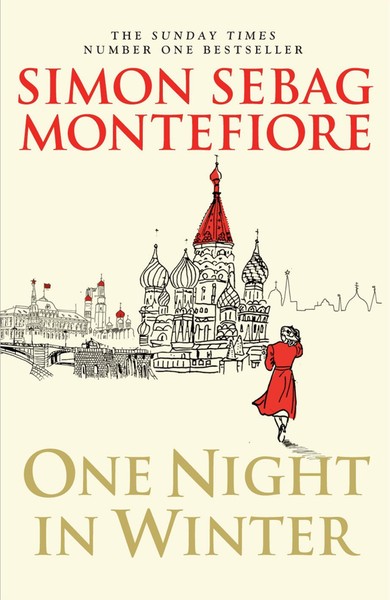
In the historical note that concludes this gripping page-turner, Simon Sebag Montefiore insists that it is "not a novel about power, but about private life – above all, love". But he has set it in the last decade of Stalin's rule, its characters are members of the Soviet elite, and more than half of the action takes place in the shadow of the Lubyanka. We are in a world that Sebag Montefiore, the author of an award-winning history of Stalin's court, knows intimately, a world where private life is treated as a privilege. Romantic love is feasible (and there is lots of sex), but none of the main characters manages to evade the monstrous clutches of the state. Redemption was not really what Stalin's Moscow was all about.
• Read the full review here Photograph: PR
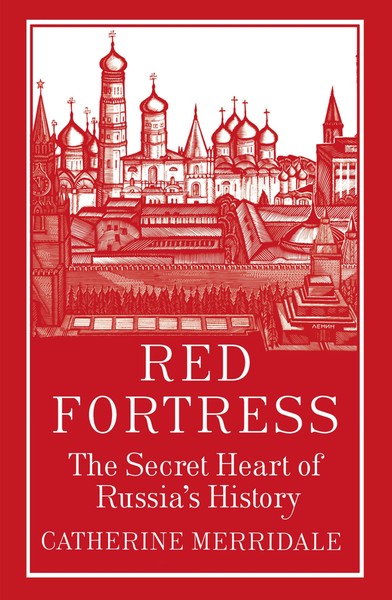
There are two "hearts" to Merridale's narrative: the astonishing construction campaign in the 16th and 17th centuries, launched by Ivan III...and the life of the Kremlin in the Soviet period. Merridale is, fortunately, far too sophisticated a writer to suggest any direct continuity between the two. But in evoking Ryszard Kapuściński's concept of the wall as "a shield and a trap", she suggests that the fortress mentality has endured: "The Kremlin stood above the confusion of real life, cut off from its messy hubbub, defended, certainly, but also locked in. It was a metaphor for a good deal of Russia's subsequent history."
• Read the full review here Photograph: PR
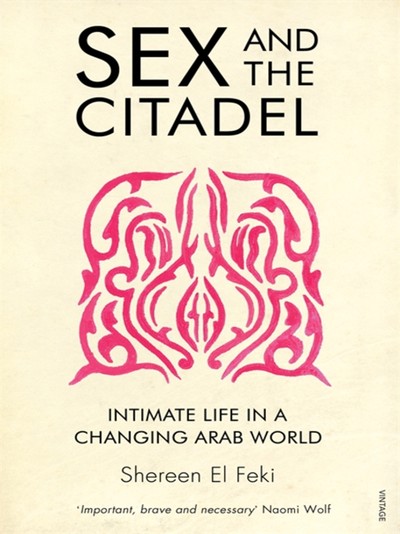
Will the Arab spring precipitate a sexual as well as a political revolution? It is an intriguing question, which the award-winning Cairo-based journalist Shereen El Feki explores in this account of a highly sensitive and still mainly hidden facet of the Arab world.The book blends interviews, statistics, opinion polls, journalism and personal reminiscence. The author's grandmother pops up in most chapters, dispensing jaunty proverbial wisdom: "So long as it's away from my own ass, I don't mind," begins the chapter on homosexuality ... Above all [El Feki] seeks out the men and women on the ground who are trying to create a more equal and tolerant sexual culture, for unmarried couples, battered wives, prostitutes, and homosexuals.
• Read the full review here Photograph: PR
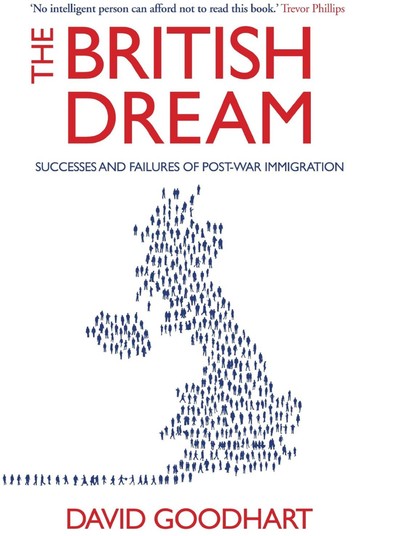
Goodhart's battle against the liberal establishment goes back at least to 2004, when he wrote a piece for Prospect magazine inspired by David Willetts's theory that welfare states only work in culturally homogenous societies ("to put it bluntly", Goodhart wrote, "most of us prefer our own kind") ... Now Goodhart has expanded his arguments for less immigration and more nationalism into The British Dream... David Goodhart is not exceptional in these views, and some of his ideas – like free English lessons for newcomers – are excellent. But The British Dream raises the question as to whether someone who believes in quite so much exclusion and compulsion is any kind of liberal. Not so much "post", you might say, as "anti".
• Read the full review here Photograph: Picasa/PR
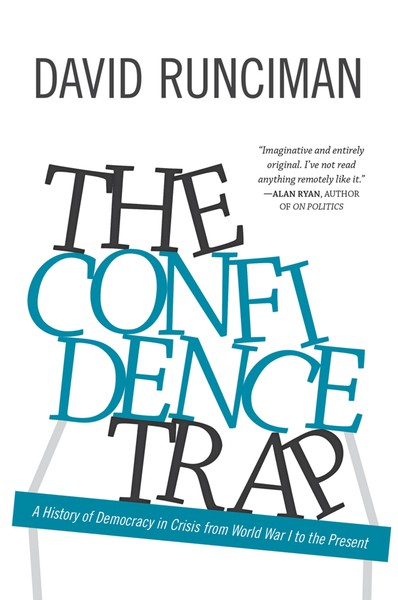
Democracies develop confidence in their long-term resilience, based in part on their ability to adapt (in contrast with rigid autocracy). This confidence that all will end well leads democratic states to be complacent, allowing problems to fester, safe in the knowledge that, when it really counts, they'll solve them. Those problems eventually come to a head in the form of a grave crisis. But confronted with such a crisis, democracies usually do adapt just enough to survive. Confidence returns, which eventually turns into complacency and so it begins again. This is the confidence trap. Democracy, says Runciman, can never escape it.
• Read the full review here Photograph: PR
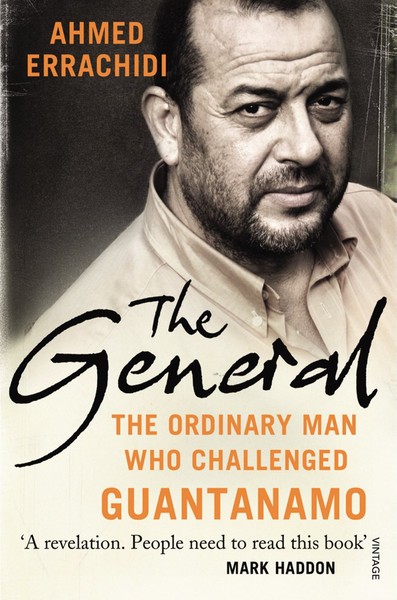
There are two stories that are impossible to make proper sense of in Ahmed Errachidi's graphic and powerful memoir of his five years of illegal detainment and torture in Guantánamo Bay. The first, overriding one, is the cruel insanity of the regime of interrogation that he suffered, a never-ending nightmare of sleep deprivation and beatings and solitary confinement, which he endured with defiance and stubborn courage. The second, which nags just slightly throughout, is Errachidi's account of the bizarre personal decisions that led him to being incarcerated in the first place ... You are left feeling that there is no such thing as an "ordinary man", as the book's subtitle wants to describe him; another is that his extraordinary story, with all its surreal and brutal twists, needed telling.
• Read the full review here Photograph: PR
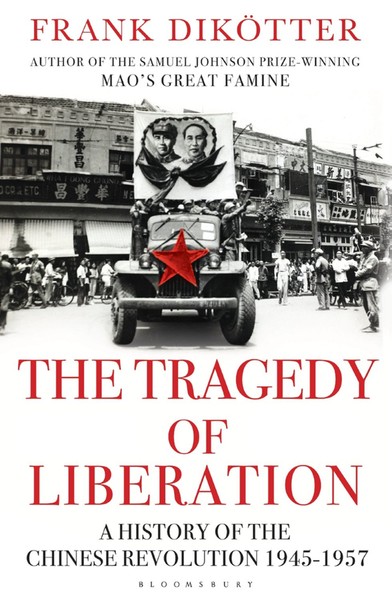
For many years, historians tended to argue that the first decade or so of [Mao's] rule was generally benevolent and productive, with the rot setting in during the Great Leap Forward and the Cultural Revolution. Dikötter takes a significantly different stance: the state was from its foundation shaped by violence and used coercion, both psychological and physical, to exert its will on the population. This version of the People's Republic of China is not a paradise lost: it was always hell.
• Read the full review here Photograph: PR
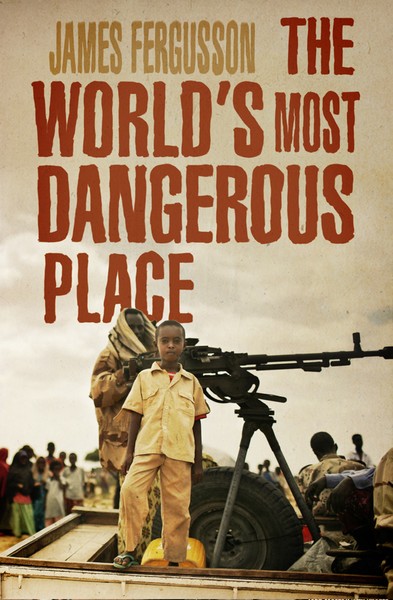
James Fergusson, freelance journalist and author of several books on the Taliban, has a talent for shedding light in dark places. None is darker, or more dangerous, in his view, than Somalia, the "outlaw state". While most reporters – and some two million Somalis – have opted to stay away, Fergusson has risked his life to cover the ground and, an even greater achievement, succeeded in making the Somali mess understandable and relevant.
• Read the full review here Photograph: PR
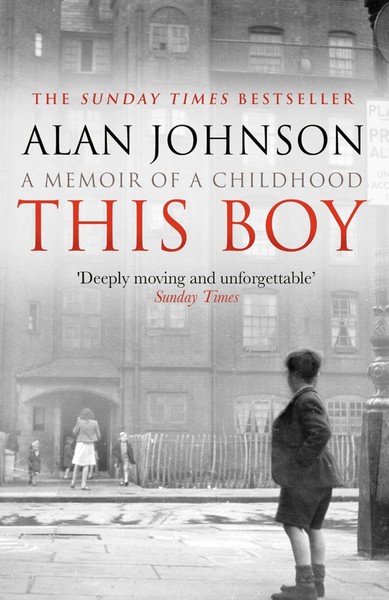
Johnson, who was to hold five Cabinet posts including that of home secretary, was born five years after the war at the wrong end of pre-gentrification Notting Hill. It was a world of slum landlords, gang warfare, race riots and, it must be said, a strong sense of community ... This is the biography of a politician like no other. From time to time one has to pinch oneself to recall that this is not an account of childhood in Victorian England but of life in the England of the 1950s and 60s, the era when many of us had never had it so good. Far from being a misery memoir, however, it is beautifully observed, humorous, moving, uplifting; told with a dry, self-deprecating wit and not a trace of self-pity.
• Read the full review here Photograph: PR

Wolf has discovered, "the labour markets of egalitarian welfare-state Scandinavia" display yawning gaps between higher paid and lower paid women, not to mention "the highest levels of gender segregation anywhere in the developed world". In top jobs – law, finance, homicide detection – gender segregation, right across the rich world, has more or less disappeared; but in low-paid jobs, such as care work, it mostly hasn't. So the more women you have out there smashing the glass ceiling, the more nursery nurses, cleaners and care-home assistants those women need to – as Wolf puts it – free them up at home.
• Read the full review here Photograph: PR