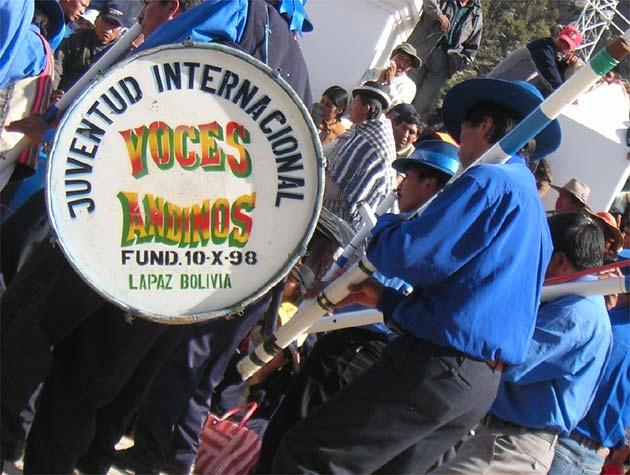
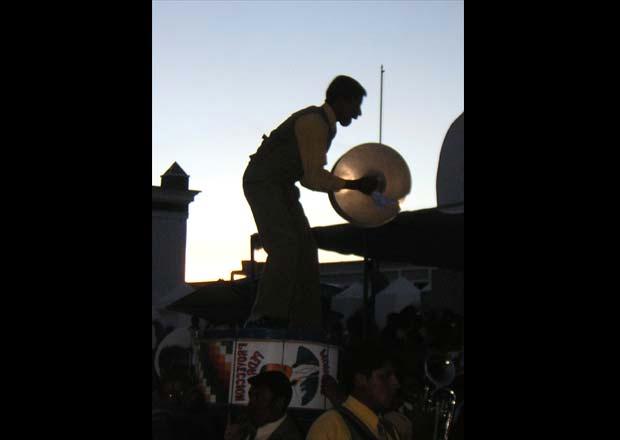
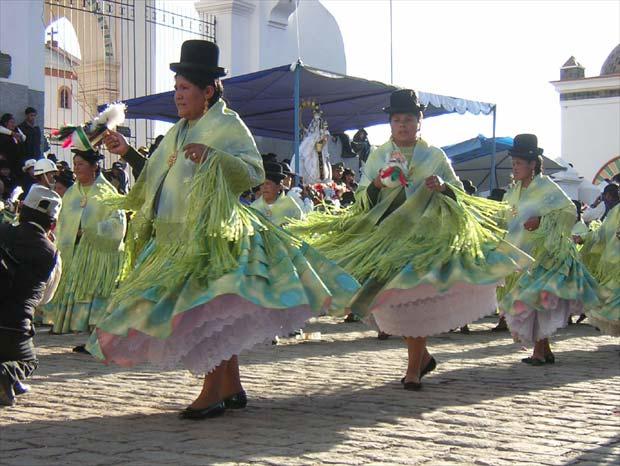
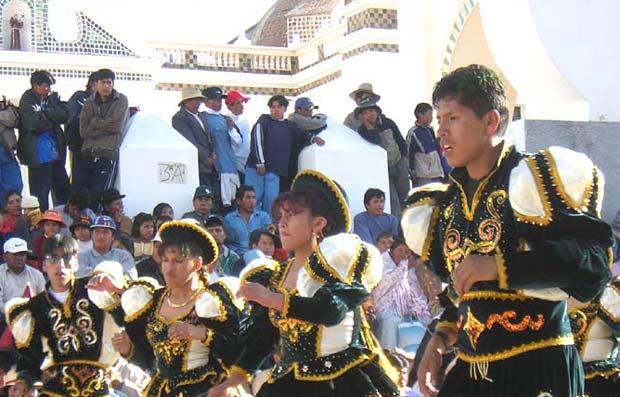
Each town in Bolivia has many marching bands competing at the carnival.Photograph: Gina PerryAt the end of the procession, the bands join together and play through the night. Photograph: Gina PerryWomen in typical Bolivian-style clothing at the Copacabana carnival. Photograph: Gina Perry
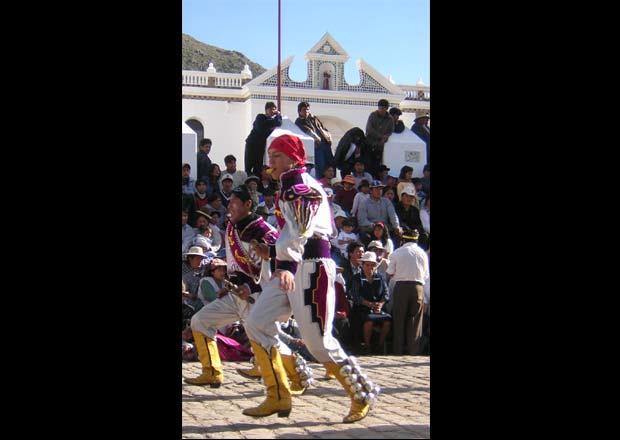
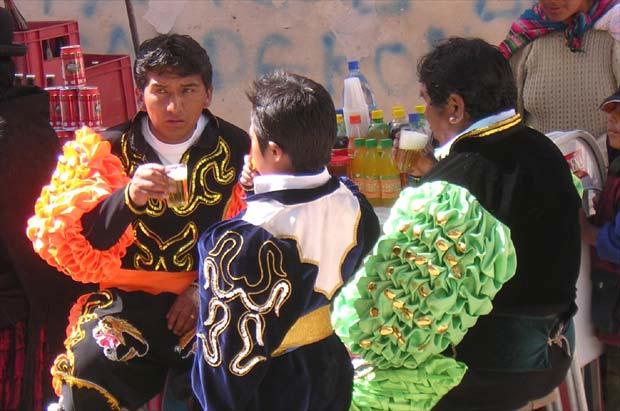
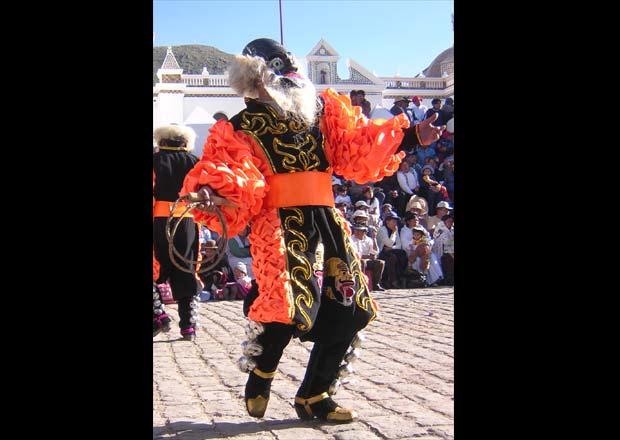
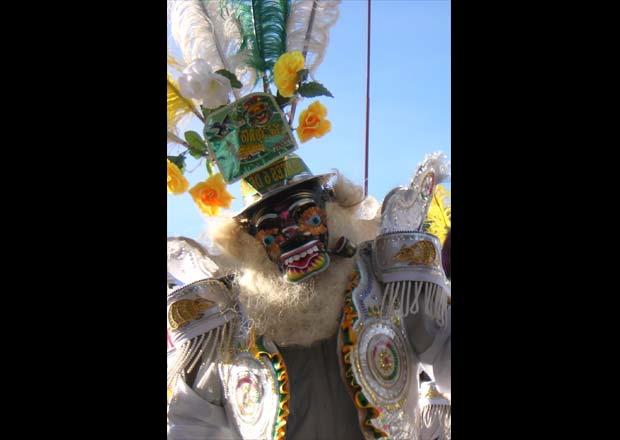
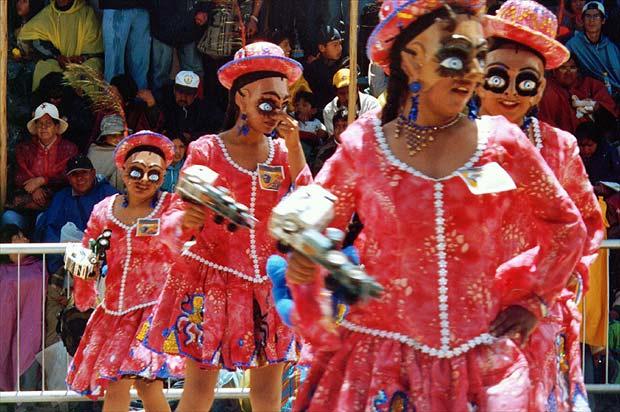
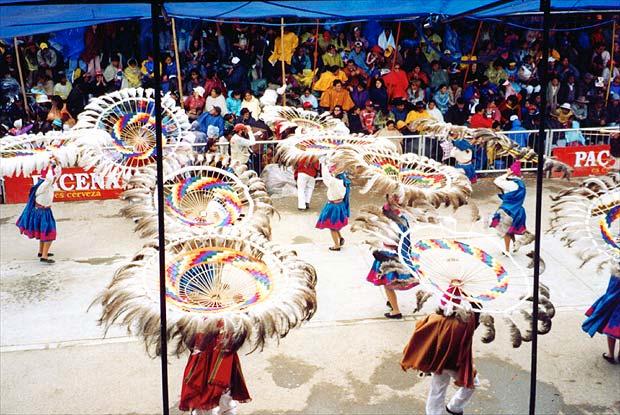
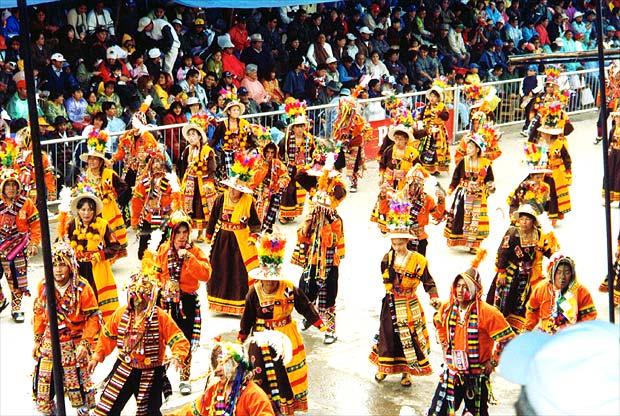
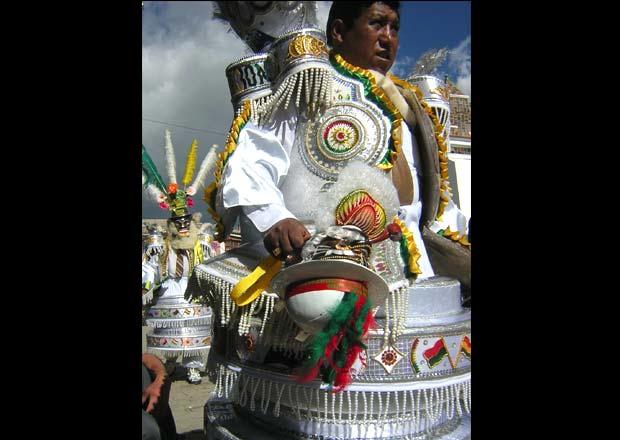
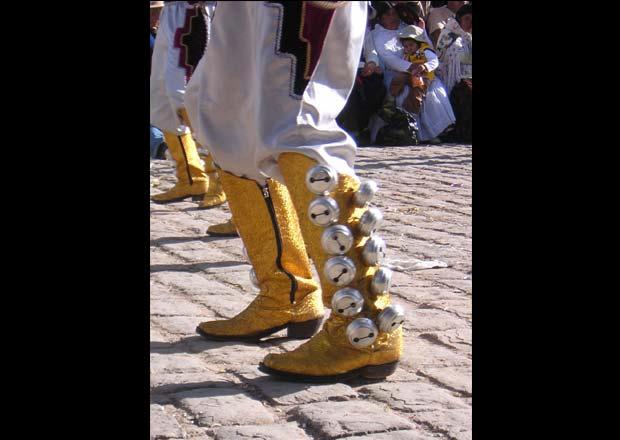
Caporales dancers force the route to widen as they dance (Copacabana).Photograph: Gina PerryCaporales is a popular dance for young people in Bolivia. Photograph: Gina PerryDancers resting at one of the numerous drink stands along the 4km procession route.Photograph: Gina PerryThe slaves turn slave-drivers using the whips to control the other dancers.Photograph: Gina PerryThe bulging eyes of the morenada mask represents the slaves' struggle to work at high altitude.Photograph: Gina PerryThe rattles in the dancers' hands represent the importance of buses in Bolivia.Photograph: Mel JewellSiku sikuri is a harvest dance dating to 800 BC. Headdresses are made from ostrich feathers.Photograph: Mel JewellLos Tinkus a traditional dance from the countryside.Photograph: Mel JewellA morenada takes a rest from the procession - their costume weighs up to 50kgPhotograph: Gina PerryThe caporales dance is distinctive from the sound of the bells on their boots.Photograph: Gina Perry
Sign up to read this article
Read news from 100’s of titles, curated specifically for you.