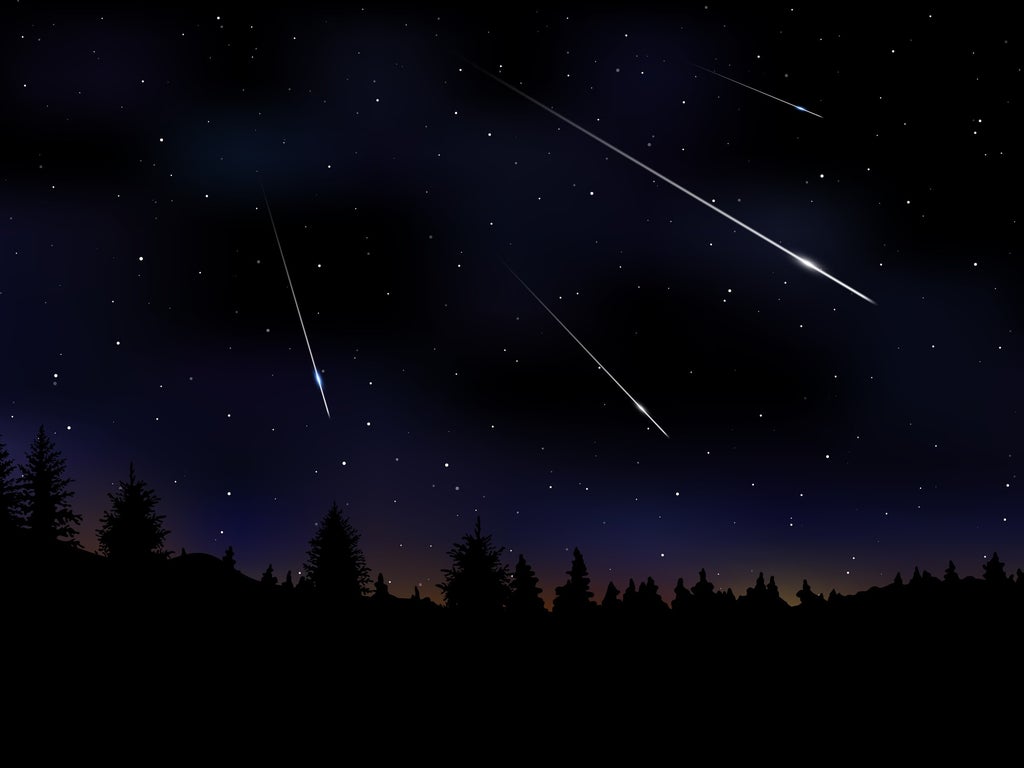
The annual Orionid meteor shower is set to peak this week, giving sky gazers in the UK an opportunity to watch the celestial spectacle throughout the week.
The event will bring “prolonged explosions of light”, according to Nasa, with up to 20 “shooting stars” illuminating the sky each hour.
The best way to view them is to look up to an area of the sky near the upraised club of the Orion constellation, which is best observed just before dawn.
Meteors will shoot out in all directions but will emanate from just above Orion – best known for its three-star belt.
Named after a hunter from Greek mythology, Orion is one of the most prominent and recognizable constellations, and is located in the southwestern sky in the Northern Hemisphere.
There are various free and premium smartphone apps for both Android and iOS devices that can be used to locate Orion using a phone’s in-built gyroscope.

Useful astronomy apps include SkyView Lite, SkySafari and Sky Map.
When looking at the night sky, Nasa advises allowing up to 45 minutes to allow your eyes to adjust to the darkness. During this time, people are encouraged to not look at phone screens or other light sources.
Once adjusted, it should be possible to see light trails from the meteors with the naked eye, lasting anywhere from a few seconds to minutes.
A recent blog post on Nasa’s website stated: “Fast meteors can also sometimes become fireballs: Look for prolonged explosions of light when viewing the Orionid meteor shower."
The US space agency also said that hopeful viewers should head to an area that is as far away as possible from urban light pollution.
Occurring when Earth passes through the trail of Halley’s Comet, the Orionids can produce up to 70 meteors per hour in a good year.
This article was originally published in 2020. It has been updated for 2021’s meteor shower.