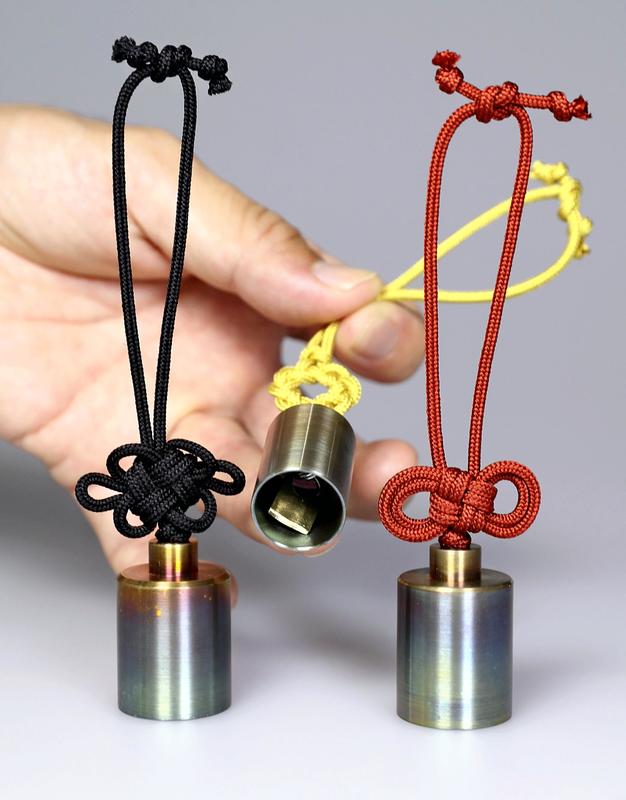
I believe Japanese people have a particular ability to appreciate sound -- we sense coolness in the ringing of wind chimes, while the songs of crickets evoke the arrival of autumn. I would like to introduce chimes named "LinNe Chibi" that fit in your palm.
They're made by the Nanjokobo workshop, established more than 180 years ago. The workshop produces gongs and bells used in the Gion Festival and across the nation, in addition to the orin singing bowls used on Buddhist altars at temples and homes.
Nanjokobo uses an alloy called Sahari, which is a mixture of copper and a lot of tin, in all its products. Because the casting and processing of Sahari requires traditional techniques, only a few domestic manufacturers remain that use it. Now that fewer and fewer houses have Buddhist altars, LinNe chimes are designed and developed to let people feel closer to the chimes and enjoy their sound.
People differ in their responses to the chimes, with some feeling nostalgic while others say it touches the heart or refreshes their mind. The charm of LinNe chimes is their clear sound and beautiful resonance.
"This is a new type of orin, produced through a traditional method passed down in Kyoto for a long time. Craftsmen make each one by hand, so you may have to wait depending on how many orders we've gotten. Small and light, you can take it anywhere you like," said Kazuya Nanjo, a craftsman at Nanjokobo.
You can enjoy the sound of the chime in a variety of ways in your daily life: Regularly pray to the deceased, or ring it when you drink tea to relax yourself. Refresh your mind with the bell, or use it as a netsuke fastener to hang a drawstring bag on an obi belt in traditional Japanese attire.
The beautiful sound can be appreciated in a variety of settings.
-- Kimino is a writer.
A small LinNe Chibi costs 14,580, yen while a medium-sized chime is 16,200 yen. The strings come in black, red, yellow and pink.
Produced by Nanjokobo (http://linne-orin.com/)
Read more from The Japan News at https://japannews.yomiuri.co.jp/