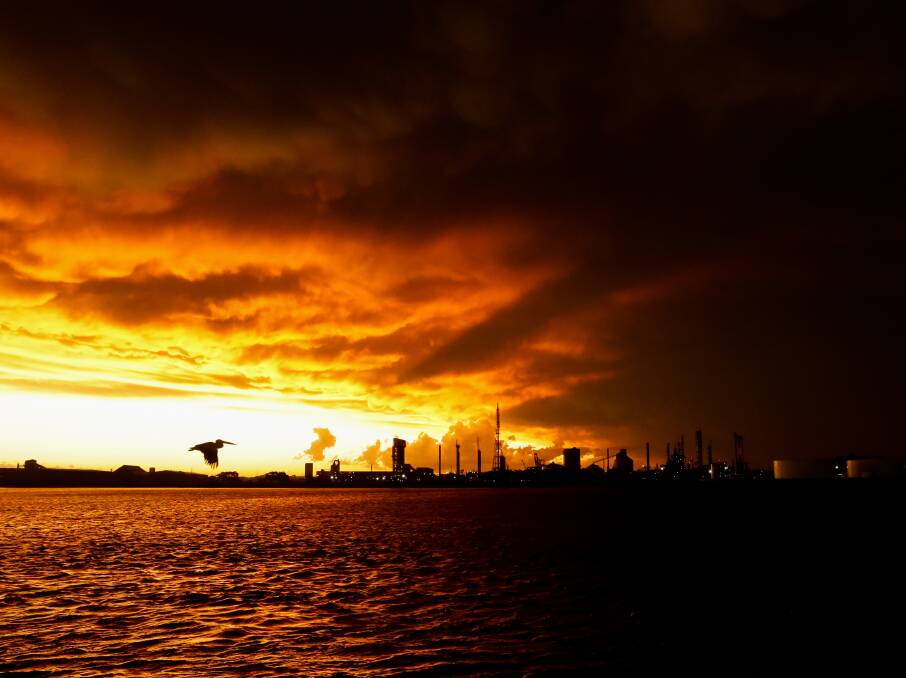
Orica will spend $39 million upgrading its Kooragang Island prill tower as part of a drive to reduce air pollution.
The upgrade is expected to reduce PM2.5 (fine particle) ammonium nitrate emissions by 99 per cent.
A 2014 Lower Hunter air particle characterisation study found that ammonium nitrate emissions from the plant contributed up to 40 per cent of fine particle air pollution in Stockton.
A significant proportion of the emissions came from the 50-year-old prill tower.
Despite efforts in recent years to drive down emissions, the company and the Environment Protection Authority agreed that "fibre-bed scrubbing" technology was the most suitable method to reduce tower emissions.
The scrubber will capture ammonium nitrate particles produced during the manufacturing process.
"We understand and share the community's desire for lower emissions in general and we have taken significant steps to play our part in this," plant manager Paul Hastie said.
"When the Lower Hunter Particle Characterisation Study identified our facility as a contributor to fine particle matter, we made assurances to address the issue in line with community and regulatory expectations."
Geotechnical and structural engineering investigations for the project are currently underway.
Installation of the scrubber is expected to be completed by November 2023.
Stockton resident Keith Craig said residents had been complaining about the prill tower for two decades.
"It's a good outcome but it would not have happened without a lot of community pressure," he said.
The prill tower upgrade is the latest in a series of investments to improve the plant's sustainability.
The plant has switched to recycled water, an initiative that saved up to 2.9 billion litres of drinking water a year.
Orica also invested $90 million on the installation of three flaring systems to significantly reduce the risk of ammonia emissions and their associated odour.
Orica announced late last year that it was seeking to renew its licence to store ammonium nitrate at Kooragang Island.
The plant is classified as a major hazard facility because it stores on average between 6000 and 12,000 tonnes of ammonium nitrate.
In response to community concern about the safety of a large ammonium nitrate stockpile, the company said it followed world's best practice regarding the storage and handling of the material.
A SafeWork NSW spokesperson said the state had a "robust and comprehensive" licensing system for the importation, export and manufacture of ammonium nitrate.
"To operate in NSW, storage facilities must demonstrate they can ensure the safety of the community and local environment, comply with NSW's legislation, and prepare a comprehensive risk, emergency and safety management plan before a license is issued," he said.