Get all your news in one place.
100’s of premium titles.
One app.
Start reading
The Guardian - UK
The Guardian - UK
Science

Organic fingerprints, a ghostly green blob and a stellar bullet – a month in space, January 2011

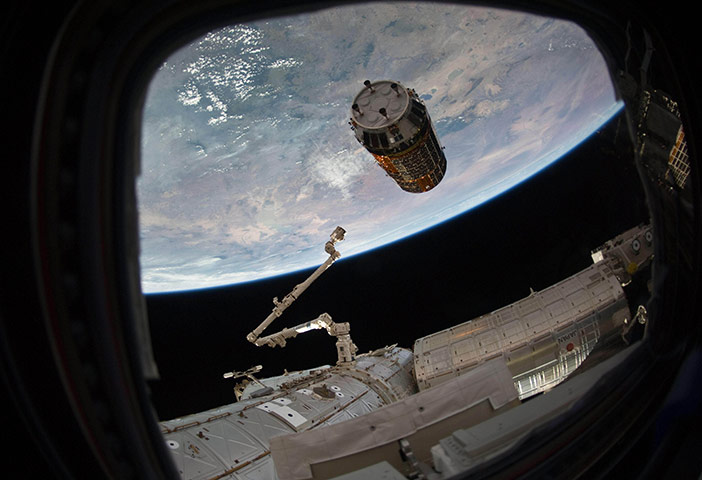
Social Forum: Kounotori2 H-II Transfer Vehicle (HTV2) approaches the ISS
The unpiloted Japanese Kounotori2 H-II Transfer Vehicle approaches the international space station with a delivery of more than four tonnes of food and supplies. Astronauts used one of the station's two robotic arms to attach it to the Harmony node
Photograph: ISS/Nasa
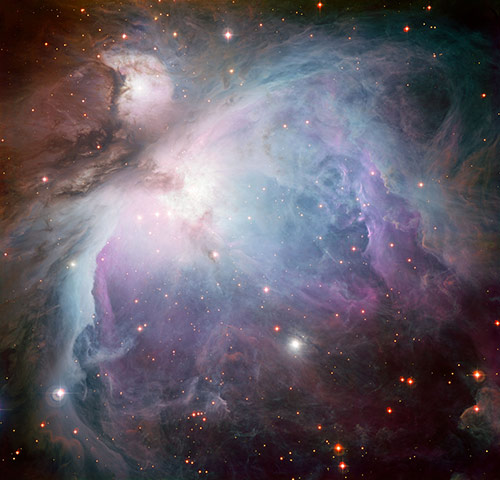
Social Forum: Orion Nebula
This image of the Orion Nebula was captured using the Wide Field Imager on the MPG/ESO 2.2-metre telescope at the La Silla Observatory, Chile. As the closest star-forming region to Earth, the nebula offers astronomers an insight into the birth and life of stars. The data used for this image were selected by Igor Chekalin (Russia) as part of ESO's Hidden Treasures 2010 astrophotography competition
Photograph: Igor Chekalin /ESO
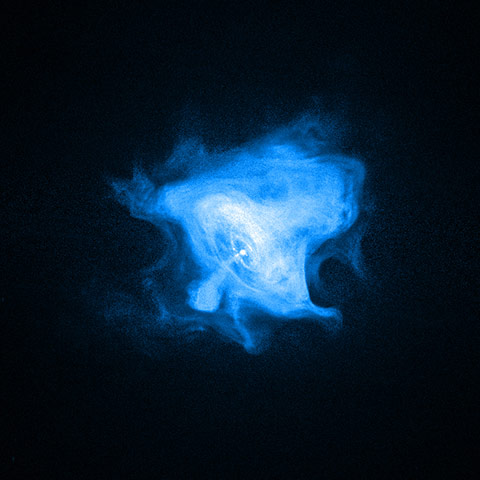
Social Forum: 'Constant' Crab Nebula
The Crab Nebula is the wreckage of an exploded star. At the heart of an expanding gas cloud lies what's left of the original star's core, a superdense neutron star spinning 30 times a second. For decades, astronomers regarded its X-ray emissions as so stable they've used them to calibrate space-borne instruments, but new results suggest its output has declined by 7% in the past 2 years. This picture of the central region was taken by Nasa's Chandra X-ray Observatory Photograph: F. Seward et al./SAO/CXC/Nasa
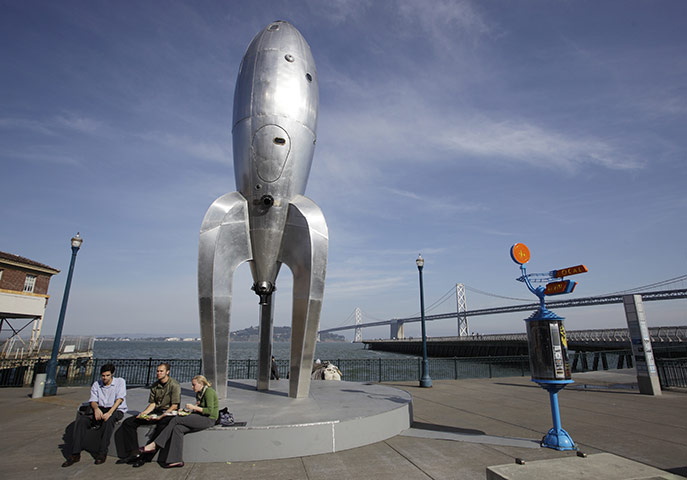
Social Forum: The Raygun Gothic Rocketship
Office workers have their lunch beneath the 'Raygun Gothic Rocketship' on the Embarcadero in San Francisco last month Photograph: Eric Risberg/AP
Social Forum: Cat's Eye Nebula
This image of the Cat's Eye Nebula was shot using the Wide Field Camera on the Isaac Newton Telescope. NGC 6543 (its formal name) is one of the most complex of the planetary class nebulas – stars that eject spheres of gas at the end of their lives
Photograph: A. Oscoz, D. Lopez, P. Rodriguez-Gil and L. Chinarro)
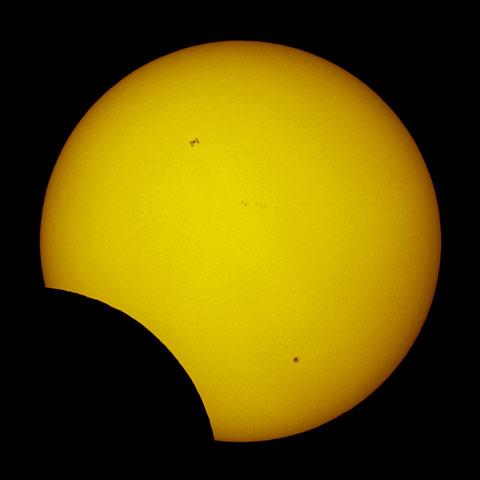
Social Forum: first eclipse of 2011
While the moon was passing between the Sun and Earth on 4 January in the first eclipse of 2011, the International Space Station got in on the picture Photograph: ISS/Nasa
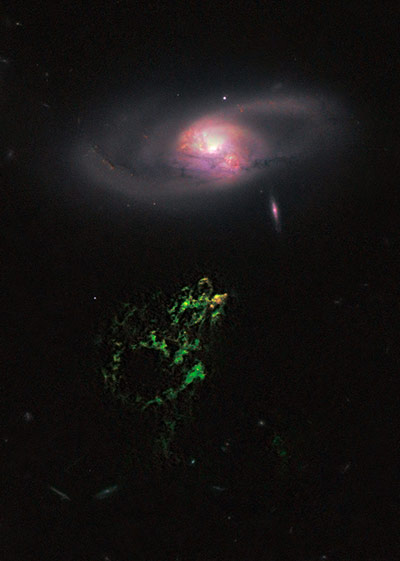
Social Forum: Space Oddity
This ghostly green blob of gas was spotted in 2007 by Dutch school teacher Hanny van Arkel and has mystified astronomers ever since. Hanny's Voorwerp (Hanny's object in Dutch) is the only visible part of a gaseous streamer 300 light years long stretching around the spiral galaxy IC 2497. Last month Nasa released this Hubble image, which reveals young star clusters (yellow) at the tip of the blob Photograph: Hubble Space Telescope/Esa/Nasa
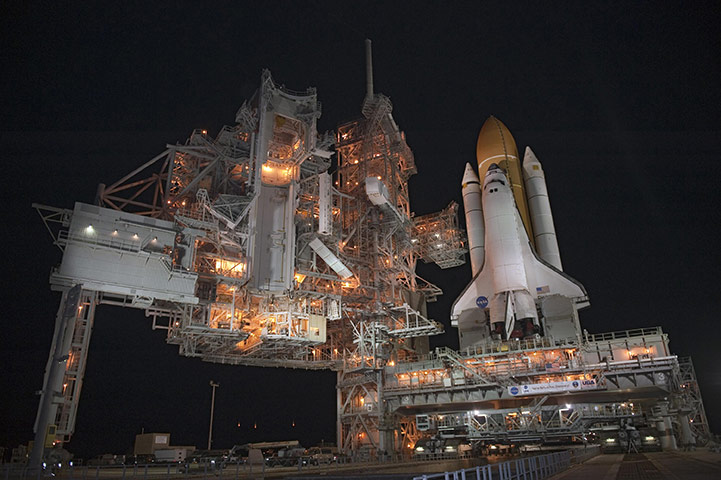
Social Forum: Space shuttle Discovery arrives at Launch Pad 39A
The space shuttle Discovery arrives at Launch Pad 39A of Nasa's Kennedy Space Centre in Florida on 1 February. This is the second time it has rolled out to the pad for its final mission, STS-133, and comes after modifications to its external tank. Launch was postponed late last year after cracks were found in 'stringers' for one of the tanks. Discovery is now scheduled for launch on on 24 February
Photograph: Kim Shiflett/Nasa
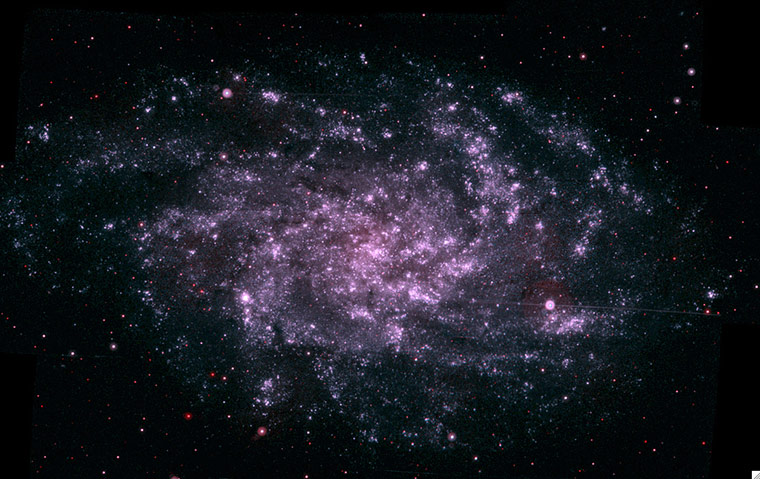
Social Forum: The Triangulum
The Triangulum, situated nearly 3m light years from Earth, is one of just a few galaxies where researchers have found 'diffuse interstellar bands' – the molecular fingerprints of large organic molecules, whose identity is a long-standing mystery
Photograph: Nasa/Swift Science Team/Stefan Immler
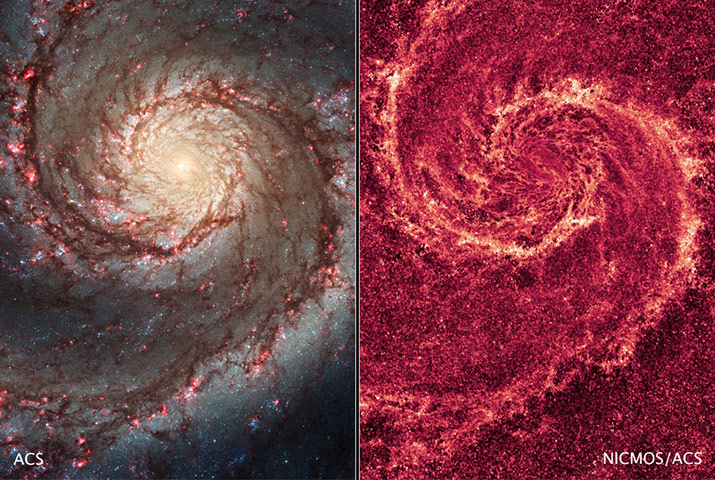
Social Forum: Whirlpool Galaxy
These images from the Hubble Space Telescope showcase two dramatically different views of the spiral galaxy M51, nicknamed the Whirlpool Galaxy. The image on the left, recorded in visible light, reveals the curving arms, pink star-forming regions and blue strands of star clusters of a typical spiral galaxy. On the right, most of the starlight has been removed to reveal the Whirlpool's dusty skeleton glowing with near-infrared light
Photograph: Hubble Space Telescope/Esa/Nasa
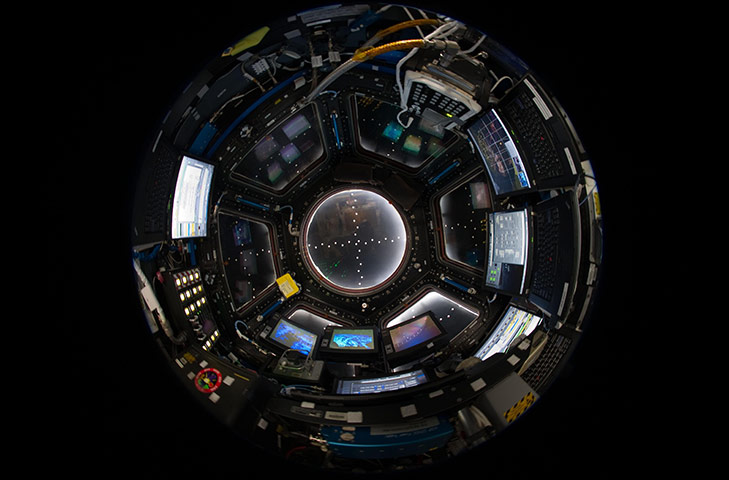
Social Forum: the Cupola of the International Space Station
A member of the International Space Station crew used a fish-eye lens to capture this image of the Cupola observatory on the ISS Photograph: ISS/Nasa
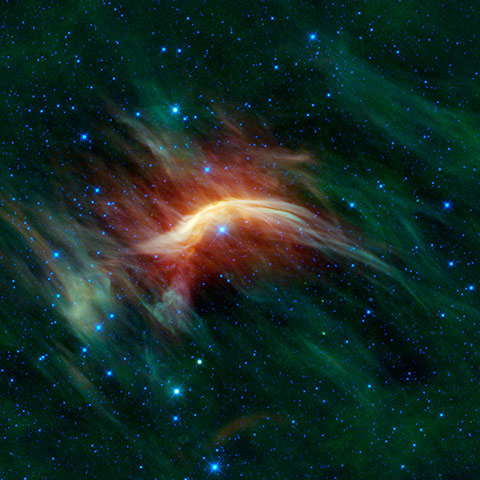
Social Forum: Zeta Ophiuchi
The massive star in the centre of this image is ploughing through space dust (yellow), creating a bow shock wave. The infrared image – here translated into visible colours – was captured by Nasa's Wide-field Infrared Survey Explorer (Wise). The star, Zeta Ophiuchi, has a mass about 20 times that of our sun. It once orbited an even larger star which exploded in a supernova, shooting it away like a bullet. It is travelling at 24 kilometres per second and heading toward the upper left of the picture
Photograph: UCLA/JPL-Caltech/Nasa
Sign up to read this article
Read news from 100’s of titles, curated specifically for you.
Already a member? Sign in here
Related Stories
Top stories on inkl right now
One subscription that gives you access to news from hundreds of sites
Already a member? Sign in here
Our Picks
Fourteen days free
Download the app
One app. One membership.
100+ trusted global sources.