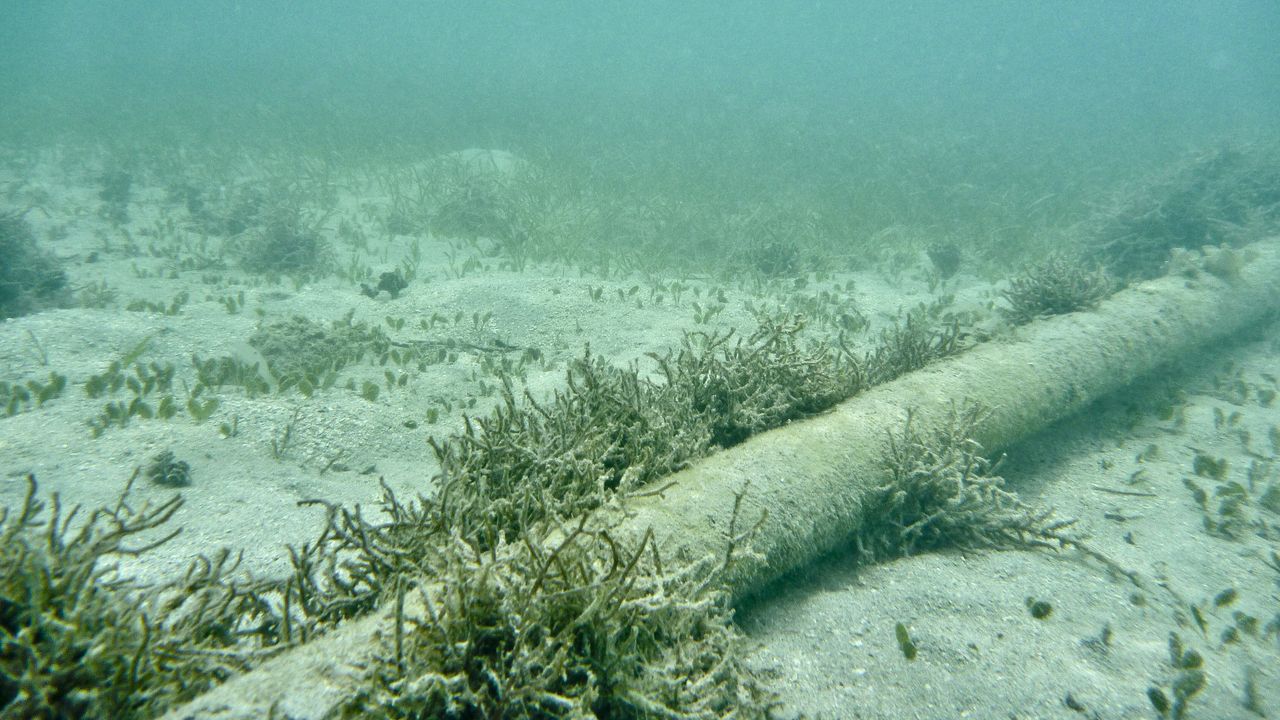
After decades of charging only a one-time fee for undersea cables along its coast, Oregon's lawmakers have recently been discussing a missed opportunity for tax revenue. The state is set to charge cable operators a one-time fee for cable installations within three miles of its coastline, and will be funneling that money into its Common School Fund.
The currently existing fee structure dates back to 2001 (25 years ago), and is simply a $5,000 application fee. The new pricing is still undergoing discussion, but the simplified version is $3 per linear foot of cable, plus $7 per each section of bore pipe — the protective structure that covers the portion closest to shore. Oregon's Department of State Lands (DSL) estimates that on a 20-year lease, this would bring in millions per undersea cable over that time span. The DSL did some rough math with Amazon's Bitfrost cable, and came up with a grand total of $1,450,380 for two decades, paid in one lump sum.
Go deeper with TH Premium: AI shortages
- AI data centers are swallowing the world's memory and storage supply
- Chip scarcity assaults auto industry amid the worsening Nexperia and DRAM crisis
- Samsung and SK hynix shorten memory contracts as pricing power shifts back to suppliers
- Memory makers are set to earn $551 billion from the AI boom
It's worth noting that the aforementioned rates were revised from an earlier, more expensive proposal that would take bore cross-section into account (a calculation that was dismissed as too complicated and, presumably, too onerous). The state wants to continue attracting investment to its tech sector, which includes around 140 datacenters and 16 undersea cables of various types. Oregon also doesn't have sales tax, and its enterprise zoning incentives has made it an attractive location for players like Amazon, Microsoft, and Google.
The DSL calls the revised rate "competitive-to-low," reinforcing the notion that Oregon is trying to stay competitive with its southern neighbor, California, which charges an estimated $5 per cable foot on an annual basis.
It's worth noting that spending a million or two over two decades is peanuts compared to the initial outlay required to put an undersea cable down in the first place, especially one coming from across the world. These reportedly ring in at around $250 million for a transatlantic connector — and a whopping $400 million to cross the Pacific.
Although it's not set in stone, it seems that already-approved cables might be almost entirely exempt from the new fees. Some recent contracts, such as the one for Amazon Bifrost, did include a clause that said that any fees applied by new state laws must be paid for. However, the contract also included a specific $300,000 "out" for this clause — which Amazon paid at the time.