In 1933, a spark from one log dragging over another set off one of the worst wildfires in American history. According to the Oregon Encyclopedia entry on the Tillamook Burn, written by historian Doug Decker for the Oregon Historical Society, that single fire, and three more that followed over the next 18 years, tore through 355,000 acres, or 554 square miles, of forest in Oregon's Coast Range, just 50 miles from Portland. For readers watching wildfire seasons grow longer and more severe each year, Oregon’s response is worth knowing.
Get breaking news anytime, anywhere. Download the TOI app now!
A fire nobody could stop
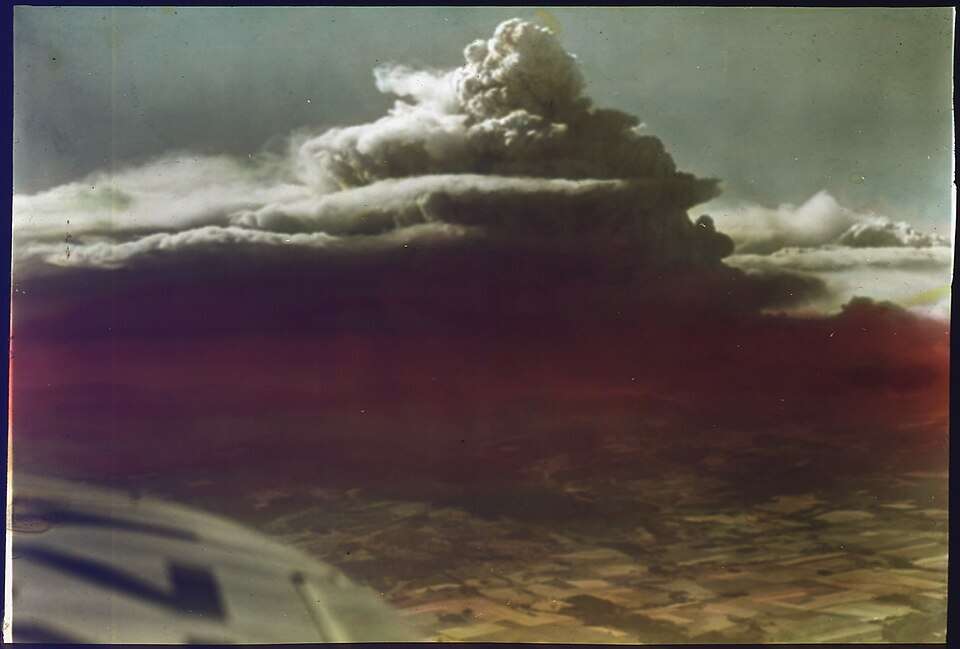
The fire began in a pile of logging debris, and within an hour, 60 acres were already ablaze. Within ten days, it had burned 40,000 acres. Then, on the evening of 24 August, strong east winds turned it into a monster. The Oregon Encyclopedia says the blaze grew to 240,000 acres in just 20 hours, making it one of the fastest-growing forest fires recorded in the 20th century. Thousands of firefighters, loggers and volunteers could do little but stay clear of it.
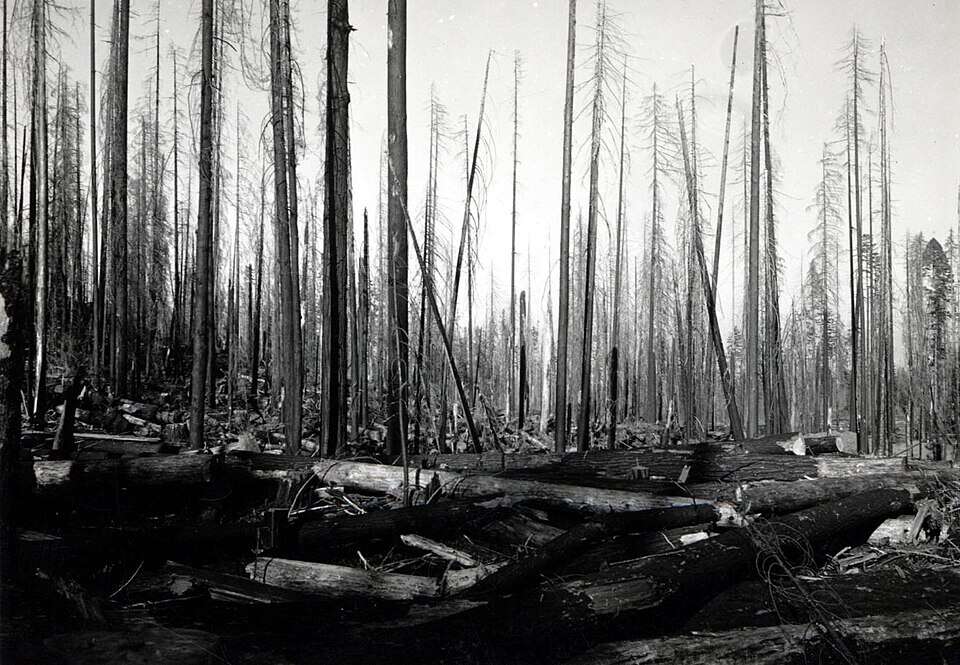
That wasn't the end of it, either. The scorched, dead trees left behind became fuel for three more major fires, in 1939, 1945 and 1951. Every one of them started in a logging operation. By the early 1950s, the region locals simply called "The Burn" looked less like a forest and more like a graveyard of grey snags.
A vote that barely passed
Rebuilding the forest wasn't some easy, popular decision. A 2001 research paper by Ray Hoadley, The Tillamook Burn: Separating Fact from Legend , hosted by the US Forest Service, notes that in 1948, Oregon voters were asked to approve a bond to pay for reforesting the land. Of the 420,000 votes cast, the measure passed by just 1,875 votes. It didn't even pass in Tillamook County itself, the place that stood to gain the most. The margin was thin enough that the entire reforestation plan could easily have failed at the ballot box.
Kids and helicopters
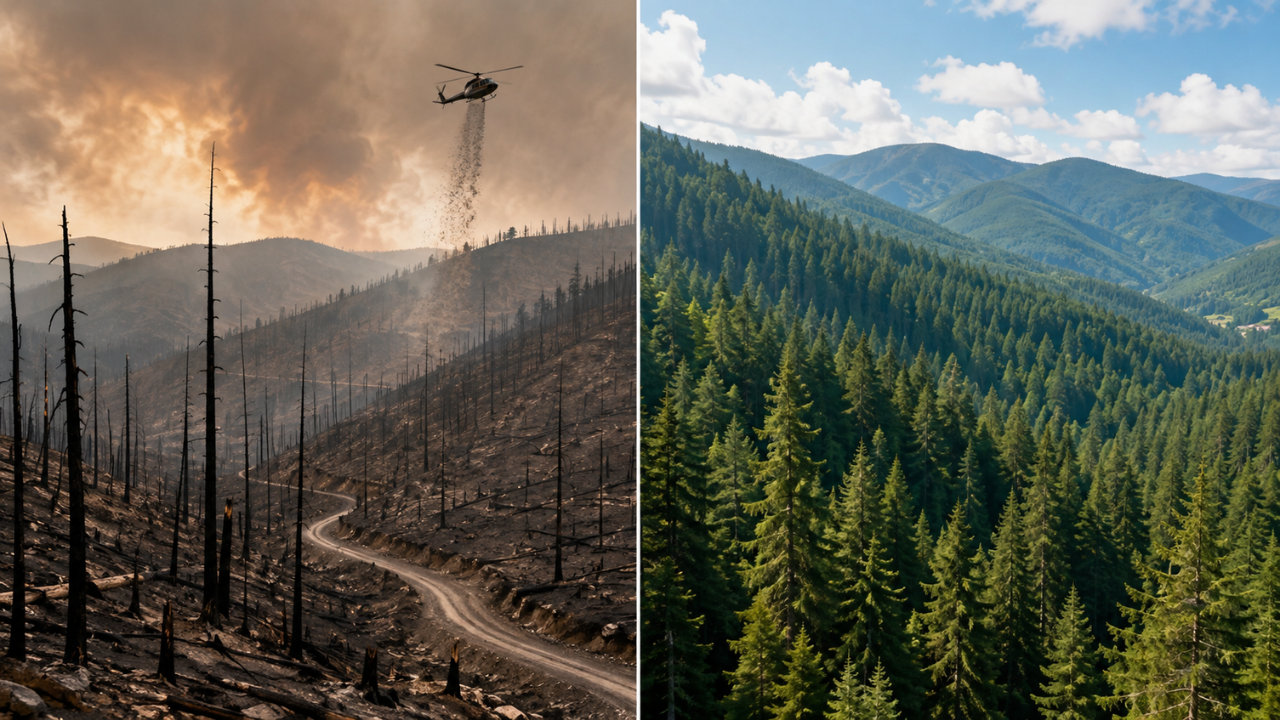
Once the money came through, planting began in 1949. Between 1949 and 1972, workers hand-planted more than 72 million seedlings across the burned land. Where the terrain was too steep or remote for people to reach, the state turned to aircraft, dropping roughly a billion Douglas-fir seeds from helicopters and planes.
This wasn't only paid crews at work. The Hoadley study reports that around 25,000 schoolchildren were bussed in from northwest Oregon over two decades to help plant trees by hand. Their contribution was meaningful, but it accounted for less than 1 per cent of the seedlings planted. Most of the heavy lifting fell to state crews and contractors.
The clean-up wasn't so tidy
The rebuilding story is often told as a clean success. The reality was messier. Ray Hoadley points out that salvage crews removed an estimated 7.5 billion board feet of dead timber from the burned land between 1934 and 1971, and that one ecological study concluded the heavy salvage logging did more damage to local soils and streams than the fires themselves. Crews also spread poison to stop rodents from eating the newly sown seeds, and sprayed herbicides to clear brush that competed with young trees. While the recovery is still remarkable, this serves as a reminder that restoring a forest is rarely as simple as just planting trees and waiting for them to grow.
From burn scar to state forest
The Hoadley paper records that the last aerial seeding wrapped up in 1970. The Oregon Department of Forestry confirms that on 18 July 1973, Governor Tom McCall officially renamed the land the Tillamook State Forest, a date the Hoadley paper also records. The department, which still manages the forest today, describes it as a healthy, productive forest that supplies timber, clean water and wildlife habitat to the state.
The page adds that ODF manages about 745,000 acres of state forestlands across Oregon, with timber sales helping fund counties, local districts and schools. It also notes that the Tillamook Burn covered a combined 355,000 acres and that 72 million seedlings were planted during the long rebuild.
Why this matters for the US today
Wildfires aren't only a West Coast headline anymore; smoke from recent fire seasons has drifted as far as Chicago and New York. Tillamook shows that even a scorched stretch of land can recover, but it also shows that recovery takes decades, money, chemical treatments and a public willing to keep paying long after the fire leaves the headlines. Oregon's forest didn't heal on its own. People built it back, seed by seed, vote by narrow vote.
Next time a wildfire dominates the news cycle, the Tillamook Burn is worth remembering: not as a simple comeback story, but as an example of how slow and costly forest recovery can be.