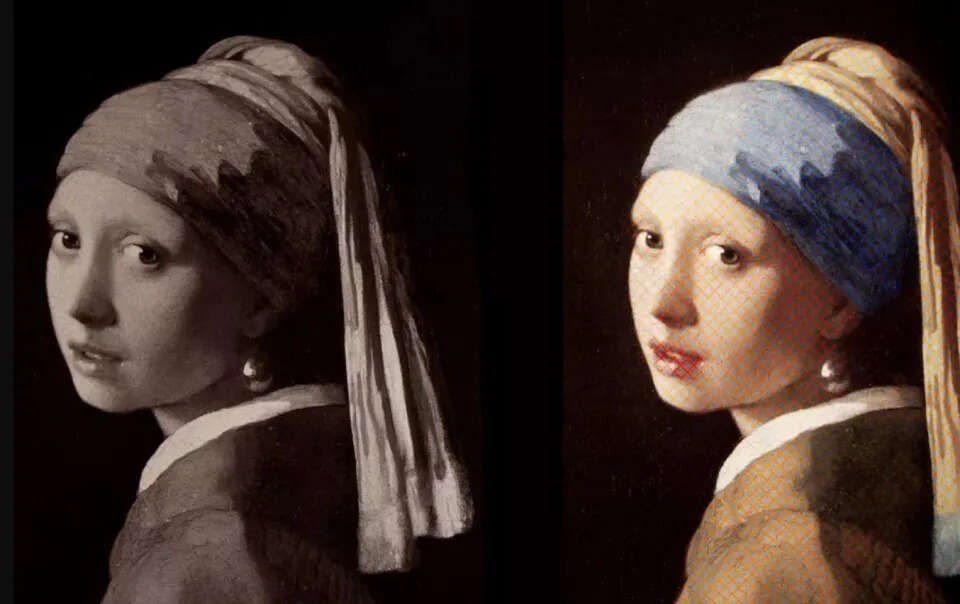
Think you've got a sharp eye? Well, only a small percentage of people—just 9%—can correctly identify the colours in this mind-bending optical illusion. At first glance, it might seem like an ordinary black-and-white painting, but take a closer look, and your brain might just play tricks on you!
Imagine two versions of the famous painting Girl with a Pearl Earring. One version is clearly black and white. The second version, however, has diagonal coloured lines running across it.
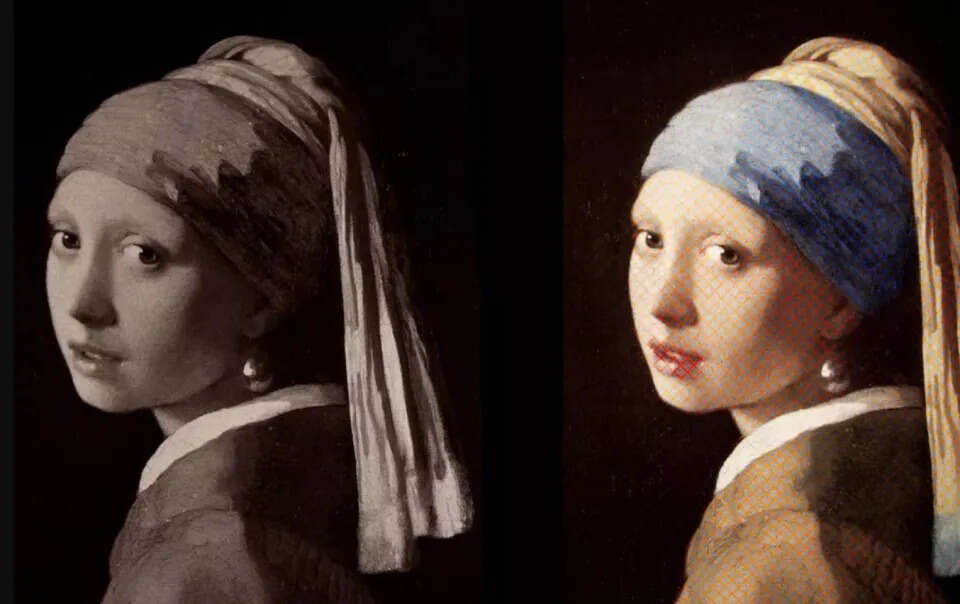
This mind-boggling illusion, showcased at London’s Twist Museum, is a perfect example of how our brains interpret colour in unexpected ways. If you can spot where the actual colours are in the image, congratulations—you’re in the top 9% of people with an extraordinary ability to perceive this tricky phenomenon.
The illusion is based on a phenomenon called colour assimilation. Essentially, when coloured lines are placed over a grayscale image, our brains blend the colours with the black-and-white background. The further you stand from the image, the more your brain fills in the gaps, making the entire picture seem coloured.
But here’s the catch: even though it appears to be in full colour from a distance, it’s actually the same black-and-white image underneath!
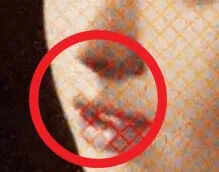
Experts suggest that this happens due to a process known as neural blurring. Our brain cells average out the light signals they receive, making the colours appear more widespread than they actually are. This is why, when viewed from a distance, the second image looks fully coloured, even though the only real colour comes from the diagonal lines.
How to see the trick clearly
Still struggling to see the illusion? Try this simple trick:
Step back from your screen or image.Squint slightly or blur your vision.Observe how the black-and-white image suddenly seems to come to life with colours.
If you’re still not convinced, zoom in or look at the image up close. You’ll notice that the colours aren’t actually spread across the entire picture—your brain simply fills in the missing details.
Why optical illusions are great for our brain
Aside from being fun, puzzles like this are great mental exercises. Studies suggest that solving visual illusions and brainteasers can:
Improve focus and concentrationEnhance problem-solving skillsBoost creativity and lateral thinkingReduce stress by engaging the mind in a playful challenge
So, did you manage to spot the trick? If not, don’t worry—you’re not alone! Optical illusions like this one prove that our brains are complex and sometimes even a little deceptive. The next time you come across a similar illusion, you’ll know exactly what to look for!