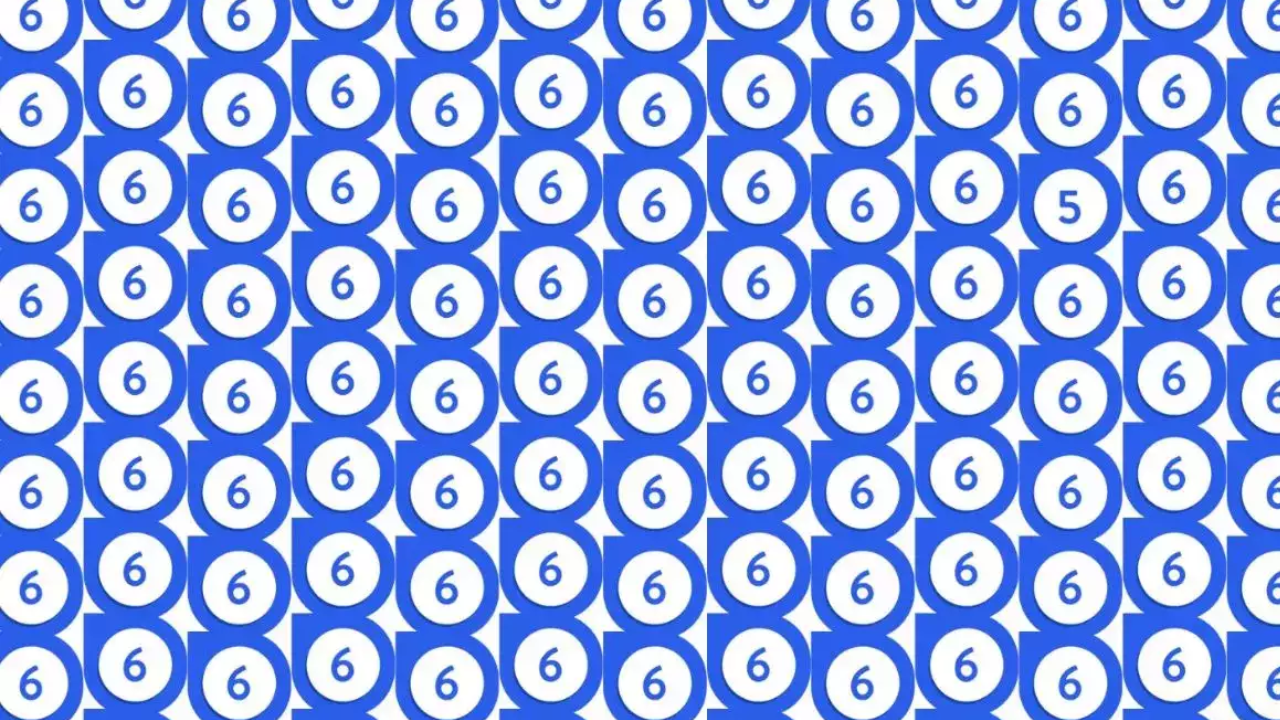
Here we are with a new challenge. In this image, the task is to spot 5.
Visual puzzles and optical illusions have long been a source of entertainment, engaging people’s cognitive skills while testing their ability to observe minute details.In this case, the number "6," with a single "5" subtly hidden within the pattern. At first glance, the image appears to be a repeated series of the number "6," placed in an orderly yet deceptive arrangement.
The difficulty of this puzzle arises from the way our brain processes visual information. The numbers are arranged in a repetitive pattern, making it easy to assume they are all the same. Our eyes naturally scan for differences, but when presented with a uniform structure, they can overlook subtle changes.
How to solve this puzzle?
If you are struggling to find the hidden "5," here are a few tips to help you:
Scan systematically – Instead of looking randomly, move your eyes row by row or column by column. This structured approach improves the chances of spotting the odd number.
Focus on shape differences – The number "5" and "6" have distinct curves, especially in the lower section. Try to spot any deviation in the shape.
Take a break and return – Sometimes, stepping away for a few seconds and coming back with a fresh perspective helps in identifying the difference.
Use a finger or pointer – Slowly move your finger across the rows while focusing on each number. This helps in isolating and examining each character individually.
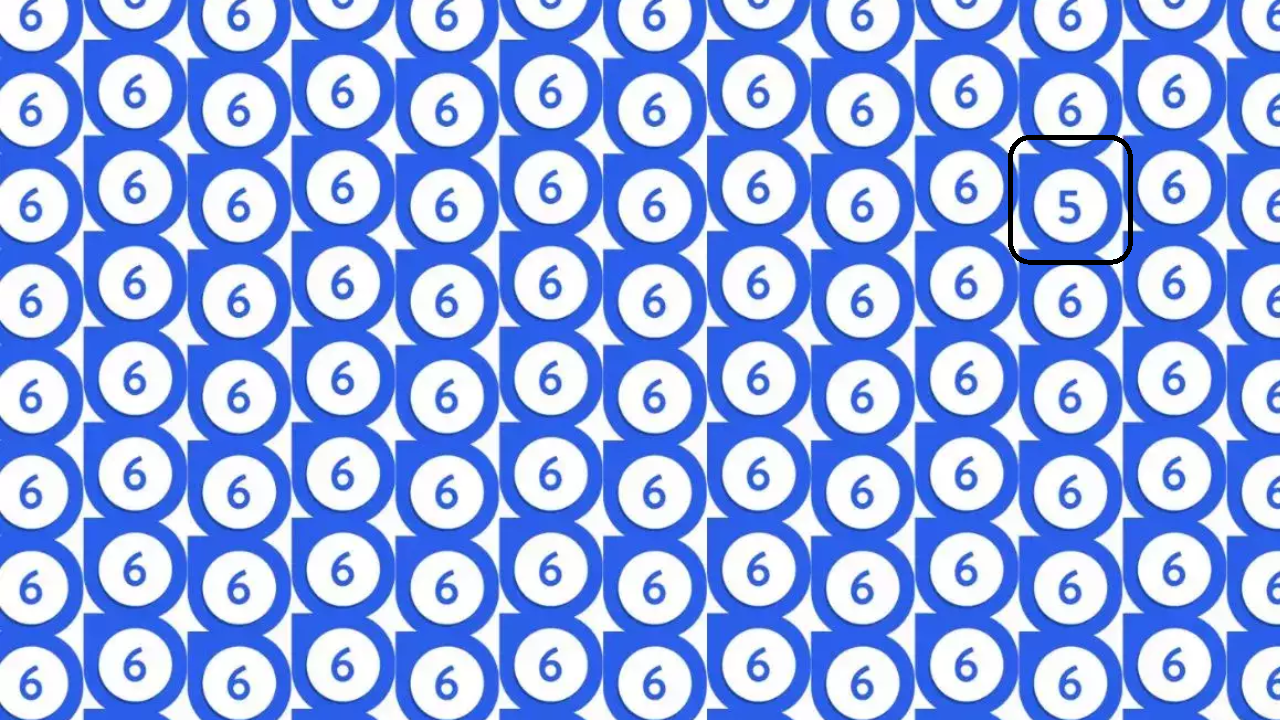
If you apply these techniques, you will likely find the number "5" positioned somewhere toward the right side of the image. Once you spot it, you will wonder how you missed it in the first place!
The popularity of these puzzles stems from their simplicity and the satisfaction of solving them. They can be shared among friends and family, sparking friendly competition. Social media platforms have played a significant role in popularizing visual challenges, with millions of people attempting to crack them and sharing their successes.
Solving a puzzle like this triggers a small dopamine release in the brain, providing a sense of accomplishment. Whether you find the hidden "5" immediately or take time to locate it, the process itself is engaging and rewarding. The use of color contrast and font style plays a role in making the task harder. Since the "5" is embedded within a uniform design, it blends in seamlessly, requiring a sharp eye to notice the variation. These types of visual tests are commonly used in cognitive assessments and brain-training exercises to improve concentration and observation skills.
Our brains are wired to recognize patterns quickly, which is useful in everyday life but can sometimes be a hindrance in puzzles like this. Optical illusions and hidden-object games train the brain to slow down and break free from automatic pattern recognition. This skill is valuable in activities requiring attention to detail, such as proofreading, data analysis, and even driving.
.jpg?w=600)