Optical illusions never fail to fascinate us. Everyday you come across a challenge that is more difficult and hard to attain than the previous one you had seen. And the common factor in all of these is that the challenge presented in each one of them is different, unique and with a higher level of difficulty.
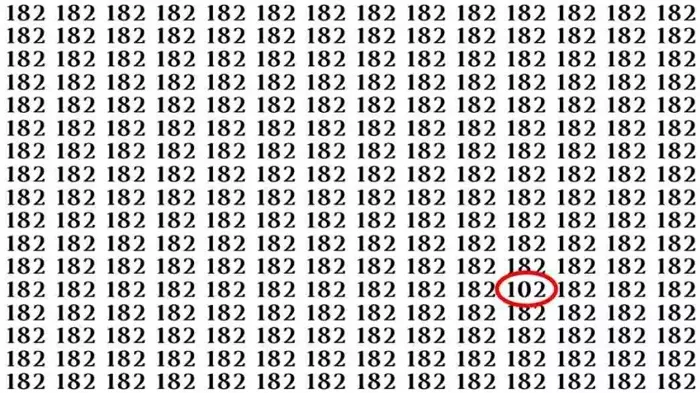
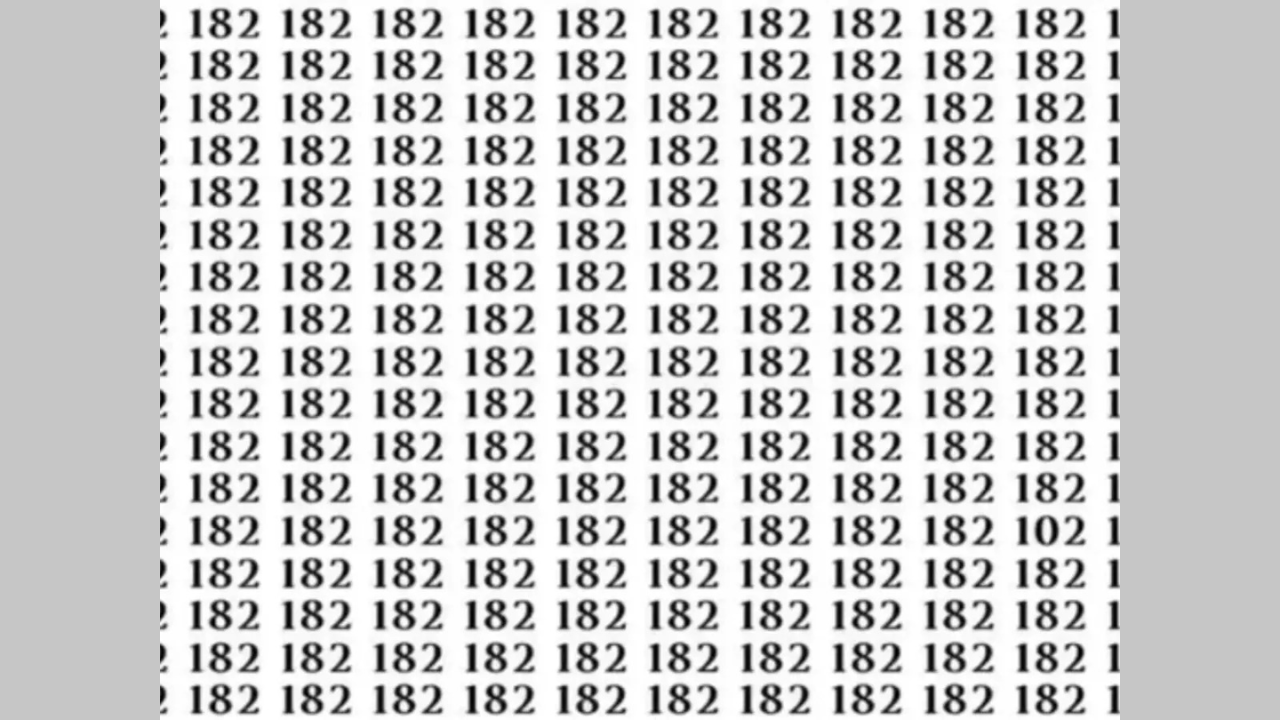
For example, in this image number 182 is arranged in columns and rows. The challenge is to find the number 102.
Now, why is it difficult? Why do many people find it extremely difficult to solve it?
This is perhaps from visual perception. Seeing so many 182 in the image our brain gets conditioned to see only 182. The similarity between both the numbers makes this puzzle even more difficult to solve.
Here's how you can easily solve it
Optical illusions are fascinating because they exploit the way our brains process visual information, leading to perceptions that differ from reality. Solving optical illusions often involves understanding the visual tricks and cognitive biases at play.
The first step in solving an optical illusion is to grasp the basic principles behind it. Many illusions rely on contrast, color, perspective, or movement. By understanding these basics, you can start to dissect how the illusion manipulates visual cues.
Identify the key elements of the illusion that contribute to the confusion. By concentrating on just one element of the illusion, such as measuring the size of the central circle, you can begin to see past the deceptive effects of surrounding stimuli.
Sometimes, changing your perspective can help solve an illusion. Moving closer or further away from the image can alter how your eyes and brain interpret it.
Deconstructing the image into simpler components can help reveal its true nature. By focusing on individual parts of the illusion rather than the whole picture, you can better understand how the elements interact to create the deceptive effect.
Solving optical illusions can improve cognitive healthSolving optical illusions can indeed provide a boost to mental health. Engaging with these visual puzzles stimulates cognitive processes, enhancing problem-solving skills and visual perception. The challenge of deciphering illusions fosters mental agility and can increase self-esteem as individuals overcome complex tasks. This cognitive exercise can also provide a satisfying sense of accomplishment, reduce stress, and promote relaxation by shifting focus away from daily concerns. Solving illusions can be a fun and engaging way to keep the mind active, which contributes to overall mental well-being and resilience.
Now, let’s get back to our puzzle. To find 102 in the image, simply focus on the middle digit of the numbers. Stop where you don’t see 8.