WASHINGTON _ As Senate Republicans moved closer to unveiling a scaled-down, or "skinny," version of legislation to replace Obamacare, opposition to the proposal grew on Thursday, as health insurers joined patient and provider groups in criticizing the still-developing plan.
Four Republican senators have also said they would oppose the measure unless they're assured that, upon Senate passage, the bill would go to a conference committee and not directly to the House for a floor vote.
Sens. John McCain of Arizona, Ron Johnson of Wisconsin, Lindsey Graham of South Carolina and Bill Cassidy of Louisiana made the demands amid reports that a legislative end-around was in the works.
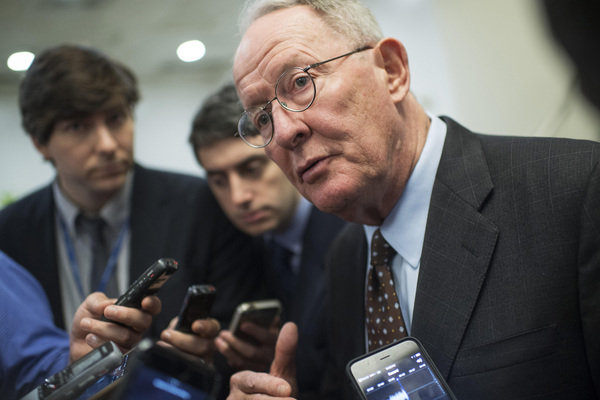
"If they don't go to conference, than I'm not going to vote," Graham told reporters in a briefing on Thursday.
"All we're looking for is a pretty simple guarantee," said Johnson. "We're not trying to tank anything. We'll vote 'yes,' as long as we get that guarantee."
Graham told reporters that McConnell assured him that House Speaker Paul Ryan "prefers to go to the conference" and "intends to go to the conference."
But Graham said Rep. Mark Meadows, R-N.C., head of the conservative House Freedom Caucus, said there's a movement in the House to vote directly on the measure and bypass the conference committee.
Unlike other Republican repeal bills that would slash Medicaid funding, cut financial assistance for marketplace coverage and weaken Obamacare consumer protections, the skinny proposal is expected to eliminate the ACA's individual coverage mandate, the employer mandate to provide coverage and the ACA's medical device tax.
The controversial bill, which Senate Majority Leader Mitch McConnell was still crafting Thursday afternoon, appears to be the final proposal that Senate Republicans will try to advance in their quest to overturn the Affordable Care Act.
But the budding measure has already faced a torrent of criticism even before its details have been made public.
In a letter to McConnell on Thursday, America's Health Insurance Plans said they would oppose any plan that scraps the individual coverage mandate without a mechanism to require continuous coverage.
"Targeted proposals that would eliminate key elements of current law without new stabilizing solutions will not solve the problems in the individual market, and in fact will result in higher premiums, fewer choices for consumers and fewer people covered next year."
A bipartisan group of 10 governors had already come out against the skinny proposal. In another letter to McConnell, the governors said it would likely "accelerate health plans leaving the individual market, increase premiums and result in fewer Americans having access to coverage."
The Congressional Budget Office reported Wednesday that a skinny bill mock-up proposed by Democrats would leave 15 million more people uninsured by 2018. The mock-up included provisions that could appear in the actual legislation.
If the skinny legislation passes the Senate with 50 votes, it could take several legislative paths, including going straight to the House, which could then vote on it directly.
If it passes the House with no amendments _ no sure thing considering possible opposition from the conservative Freedom Caucus _ it would then go to President Donald Trump who could sign it into law.
Graham said the legislation was never meant to be the final repeal legislation because it leaves much of the Obamacare infrastructure in place. He said it would "be the dumbest thing in history" to pass a bill that would destabilize the individual market, leaving Republicans to take the blame.
Graham said he had no problem being perceived as the person who scuttled passage of an Obamacare replacement bill and would do so "with joy in my heart." "I'm not the bad guy here," he said.
Under another scenario, Senate passage would move the debate to a conference committee of House and Senate members. They would then merge the House- and Senate-passed bills into final legislation that both houses of Congress would then vote on.
If the House and Senate both pass the conference bill, the legislation would go to Trump for his final signature.
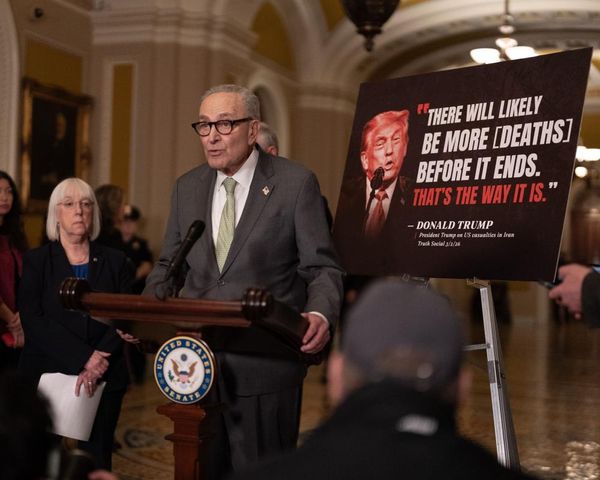
Senate Minority Leader Chuck Schumer, D-N.Y., said Thursday that Democrats would offer no more amendments until the slimmed-down proposal is revealed.
The measure could also include language to defund Planned Parenthood and cut an ACA funding stream for state and local public health programs.
But Democrats fear the legislation's details are insignificant because they view the bill as simply a vehicle to move the Obamacare debate to conference, where the more-comprehensive House-passed legislation would form the basis for the final repeal proposal.
Both legislative paths are fraught with peril as opposition to the ACA repeal-and-replace effort seems to grow each time the bill advances.
Republicans are expected to work deep into the night Thursday, voting on a series of amendments before McConnell is expected to introduce the legislation.
In an unlikely turn on Wednesday, Sen. Steve Daines, R-Mont., offered a Medicare-for-all amendment that was viewed skeptically by Democrats, and Sen. Bernie Sanders, a longtime supporter of the so-called single-payer plan.
Sanders said he wouldn't support Daines' proposal unless other Republicans did. He said the measure was probably "another joke, another sham as part of a horrendous overall process."
The measure was defeated 57-0. Not even Daines voted for the proposal. Many Democrats simply voted "present."