
The government-sponsored "Go To Travel" tourism campaign is scheduled to start July 22, amid a mix of expectation and concern over how to balance economic recovery with safeguards against the novel coronavirus.
The aim is to support the tourism industry, which has been dealt a massive blow due to the spread of the virus, but cases of infection are increasing again, particularly in Tokyo. Some local governments are concerned that tourists visiting from urban areas might spread the virus in their parts of the nation.
--Tourist destinations hopeful
Lavender fields in Furano, Hokkaido, are currently in full bloom. Many tourists visit the city every year at this time, but this year visitors are sparse. Weekend day-trippers are returning to their usual level, but the number of overnight guests, mostly consisting of tourists from outside Hokkaido and visitors from overseas, remains at just 20 to 30% of the norm.
The Furano Tourism Association has high expectations for the promotion campaign. "If things continue as they are, the future is bleak," a senior official of the association said. "We hope the campaign will serve as a catalyst for tourists to return."
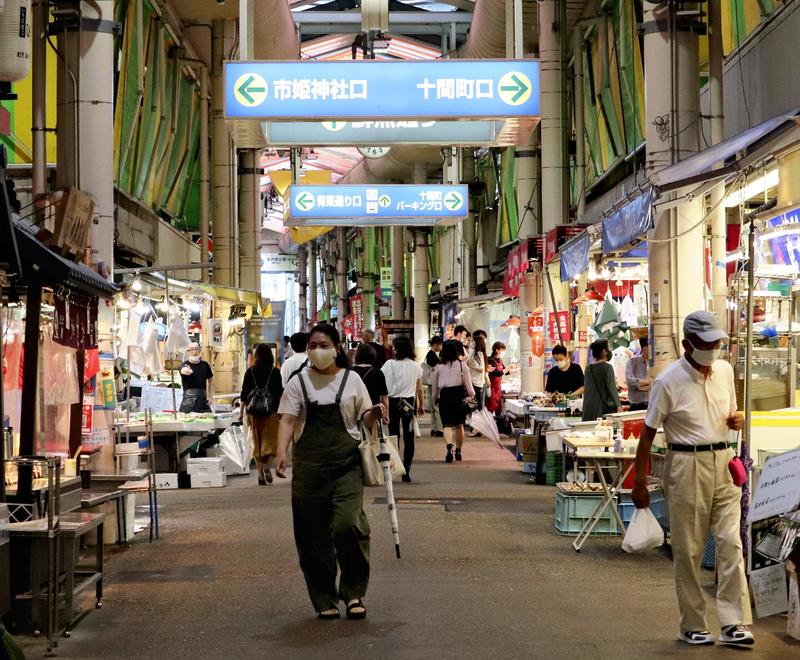
The Omicho Ichiba market in Kanazawa is also a popular tourist destination, but sales at some shops remain at around 30% the level before the pandemic.
An official of a marine product company that operates stores at the market said he has mixed feelings about the campaign. "We have high hopes but there are also fears that infections may spread again when people come from the Tokyo metropolitan area," the official said. "Both staff and guests must wear masks and take precautions."
The director of a cooperative of ryokan inns in the Dogo Onsen hot spring area in Matsuyama said: "There are concerns about the campaign, but expectations are higher. If [the campaign is] canceled, tourism will be in hell again."
--Governors' concerns
Reactions among prefectural governors vary. Okayama Gov. Ryuta Ibaragi has welcomed the campaign, saying, "The entire country is doing this with the aim of revitalizing the economy mainly through tourism, and I want to make it a success."
Yamagata Gov. Mieko Yoshimura is concerned about the spread of the virus in the Tokyo metropolitan area. "We're not entirely happy [with the campaign]," Yoshimura said. "Considering the situation of the infections and the heavy rain disaster, is it a good time to start the campaign all over the country at the same time?"
Tokyo Gov. Yuriko Koike said on Tuesday, "If you step on the brake and the accelerator at the same time, you may not get the desired effect."
The National Governors' Association is calling on the central government to gradually expand the scope of the campaign, starting with attracting visitors from neighboring areas, instead of implementing a uniform campaign across the country.
--Steps to relieve anxiety
The campaign was initially planned to start in "early August," but the date was moved up to July 22 at the initiative of the Land, Infrastructure, Transport and Tourism Ministry.
"This is to meet the demand for summer vacations during the four consecutive holidays [in July]," a ministry official said. "There were many requests from tourism-related businesses and customers around the country to 'just start it.'"
Tokyo has seen a consecutive string of days in which more than 200 people were confirmed to have been infected with the virus each day, spreading concern that the travel promotion campaign would spread the coronavirus in regional areas.
Osaka Mayor Ichiro Matsui said Tuesday that he is considering introducing a free antibody test program for city residents who plan to travel. Matsui told reporters, "We want them to make sure they're not infected before they travel."
He also said: "If travelers can say they're negative, then [people in tourism businesses] can serve their guests without worry. Osaka hopes to launch the program after consulting with experts to confirm the effectiveness of the test.
"The key to promoting tourism and preventing infections at the same time is how far the risks associated with the movement [of travelers] can be contained," said Prof. Makoto Yoshida of Kansai University of International Studies, an expert on regional tourism.
"If there are measures such as allowing both travelers and [business people] hosting the travelers to take PCR (polymerase chain reaction) tests at their request, they can feel at ease and increase the effectiveness of the campaign," Yoshida said.
Read more from The Japan News at https://japannews.yomiuri.co.jp/





.jpg?w=600)



