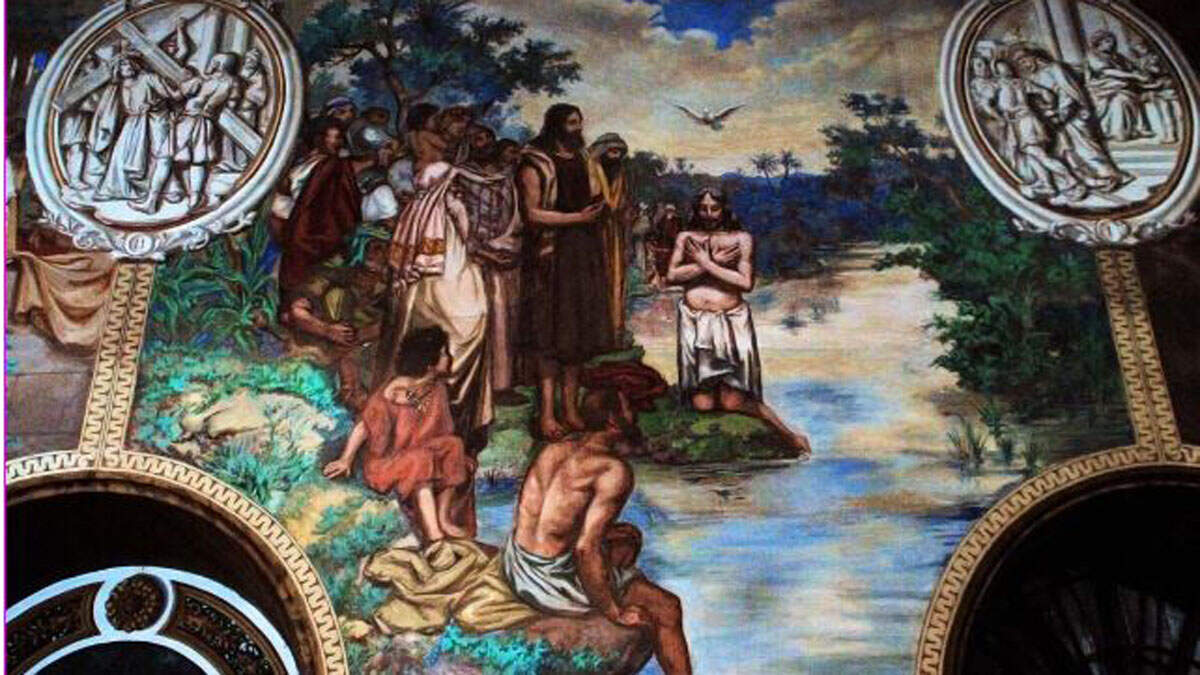
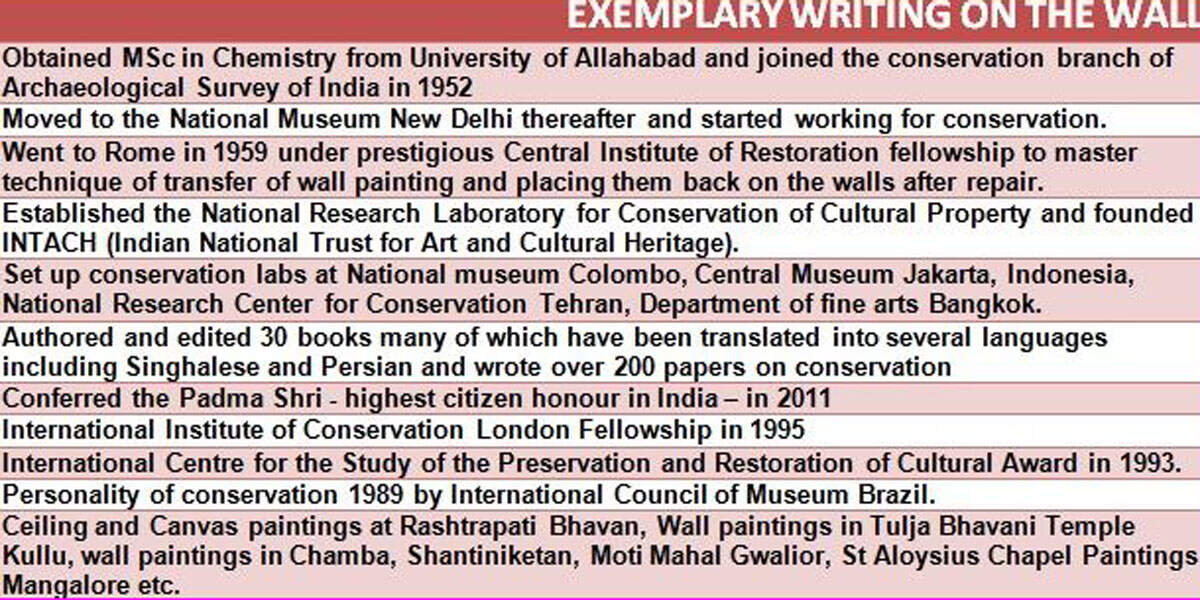
LUCKNOW: Barely out of his college after obtaining a master degree in chemistry, a young Om Prakash chose a path less explored. Aged almost 22 in 1952, the chemist joined the conservation wing of the Archaeological Survey of India to aid the cultural community in making use of chemicals and reagents to infuse a new life in paintings of the bygone era.
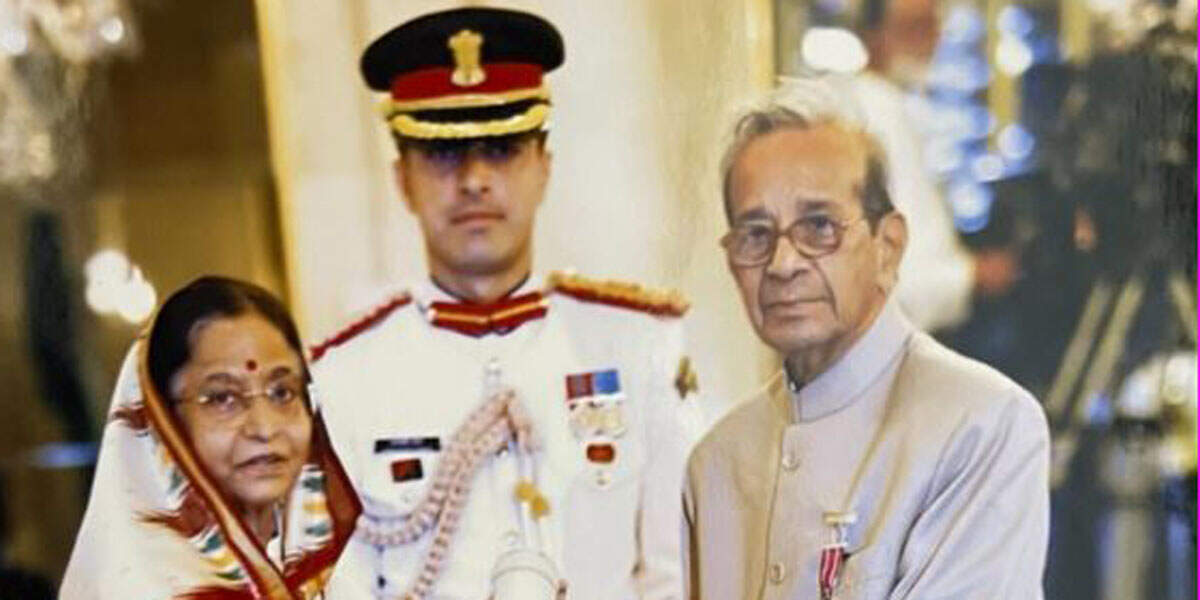
In no time, the man Om Prakash Agarwal, fell in love with his work and committed his life to the cause soon after. On Sunday, as the country entered its 75 year of independence, India lost its committed and passionate cultural conservationist son to a long ailment. He was 90. In the 69 years that fell in between, OP Sir spent his time infusing freshness in historic paintings that were losing out to the travails of weathering over years.
The ceiling and Canvas paintings at Rashtrapati Bhavan’s Ashoka Hall, Wall paintings in Tulja Bhavani Temple Kullu, wall paintings in Chamba, Shantiniketan, Moti Mahal Gwalior, St Aloysius Chapel Paintings Mangalore are just a few contributions of what he did over the years during his stint at the National Museum and thereafter. The work was well recognised on various national and international platforms besides fetching him the Padma Shri in 2011.
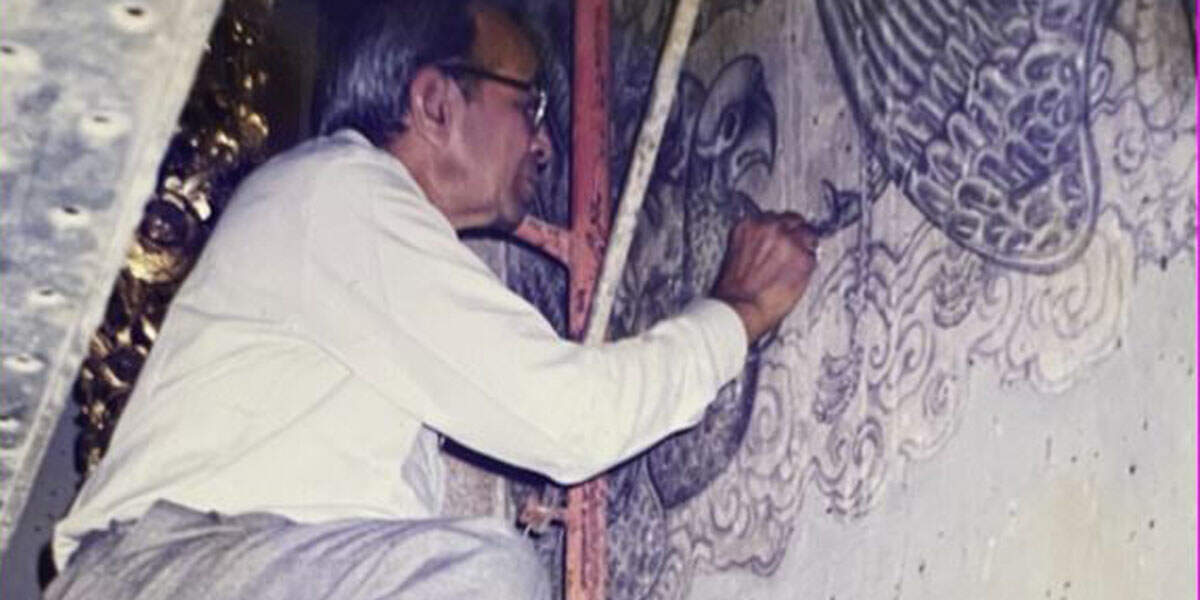
“To him his work was his definition of patriotism. He believed that the cultural legacy of the country should be conserved for posterity and did everything possible to contribute towards the cause,” concludes the proud son Ajay as he mourns the loss of the banyan of his life.
He added that there was no dearth of examples to prove his love for the nation. “The most remarkable moment was however when he refused to take the UN Assignment to work as director of International Centre for the Study of the Preservation and Restoration of Cultural Property around his retirement in the 1970s only to be able to set up country’s first National Research Laboratory for Conservation of Cultural Property and take his idea of INTACH forward which he later founded,” he said.
The conservationist’s wife Usha was his true companion and accompanied him on many restorative trails. While she has been witness to every turning point of his life, Usha has vivid memories of the project at Tulja Bhavani temple of Kullu where an ancient wall painting was to be extracted and brought to the National Museum Delhi.
“When he started his work, locals came and told him to offer a sacrifice to the deity to avoid any untoward happening to which he did not agree and went ahead with work. But the work was hampered by a chain of impediments including him injuring his leg after a fall. So his junior, also a local, reminded of the need for sacrifice. Reluctantly, he agreed but contrary to his expectations, the work went on seamlessly thereafter,” recalls Usha who followed her husband’s footsteps to take up a course in conservation in late 1960s and eventually joined INTACH in 1984 to share Agarwal’s load. Over time, she mastered in textile conservation and published the Directory of Museums in India.
Those who know Agarwal remember him as a man with two hearts. “His brain was a mirror of his actual heart. He spoke of his projects and methods as someone talking about a beloved daughter and expected the same respect and sensitivity from others,” stated Usha adding that he speak the truth even if it meant loss of a lucrative opportunity.
Citing an example, she said: “when representatives from the Manglorean church approached him, the team asked him if he will take the responsibility if the outcome of his restorative work was negative. He replied stating that please see me like a doctor of the paintings… I will treat he will cure. The team went back. But almost a decade later they came back and the church is a masterpiece today.”
In addition to scores of his students, the legacy of Om Prakash is being carried forward by his grand-daughters Nimisha and Kritika. The architect-laywer sister duo have founded an organisation that promotes artwork by folk and tribal artists of India. “Do whatever you want to but with full commitment… pour your heart into it and strive for excellence… Success will follow on its own… This is what he taught us and this is all his legacy is about,” the sister said.