
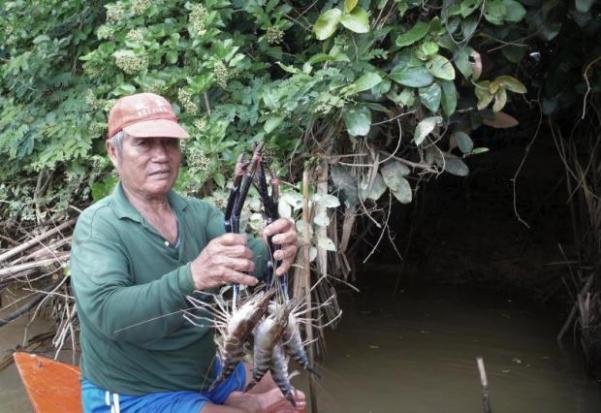
If you were thinking of treating yourself to some fine freshwater fare, then giant river prawn might well be high up on your wish list. Be prepared to get the wallet out, though, because if you've ever wondered what the most expensive freshwater creature in Thailand is, now you know the answer.
If someone working for minimum wage -- 300 baht per day -- wanted to eat a giant river prawn weighing 350g, two days' work still wouldn't cover the cost. Giant river prawns are currently priced at 1,800 baht per kilo.
Prawn
Giant river prawns are highly prized. But they are, sadly, getting harder to find. It's almost like looking for gold.
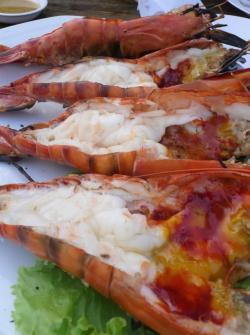
In recent years, Kung Pao Thong Chup, a restaurant along the Chao Phraya River in Sing Buri province, has become famous for its giant prawns. They cook them simply, just grilling them on charcoal, then cutting them open to show the white flesh and yellowish red prawn fat, served with a side of fish sauce and chilli.
Bangkokians have to drive almost 150km to eat there. But this isn't an example in the finest local catch. The prawns, all carefully selected, are imported from Myanmar.
Thailand used to have an abundance of giant river prawns. But these days, much of them are imported. Many years ago, a prawn importer was arrested after it was discovered he was adding to the weight of his prawns by hiding lead inside their heads. Even small pieces helped make him rich because the demand for big prawns in Thailand is so immense.
The price of giant prawns means that they are now primarily fare for the affluent. But there was a time, not so long ago, when they were a common feature in local cuisine. They were typically eaten with sweet fish sauce (a mix of palm sugar, fish sauce and tamarind juice) and neem. But as the prawns have become harder to find, people have turned to grilled catfish instead. The original river prawn-based dish only exists in the memory.
Once upon a time, giant river prawns could be found everywhere. Up and down the Chao Phraya, through Pathum Thani, Ayutthaya, Ang Thong, Sing Buri and Chai Nat, prawn catching was a thriving industry. Those who caught the prawns were specialists who didn't care about catching anything else.

These pros knew the nature of giant prawns intimately. River prawns tend to live along the edge of the river or canal. They like shade, such as the kind provided by big trees along the river. They don't like strong currents. Prawn catchers use fishing rods. They have to know how to make a specific rod and use the right bait. They must know the right time to pull up the bait in order to catch the prawn. The chances of catching a prawn are rather slim. Amateurs could waste the entire day without catching anything at all.
Giant river prawns in nature have an amazing life cycle. Once the female has mated and her eggs developed, she swims to the mouth of the river. In brackish water with salt levels of 10-15%, the mother prawn then releases over 100,000 eggs. The baby prawns feed on algae in brackish water until they are big enough to swim back upstream. They swim against the current and are at serious risk of being eaten by fish and other predators along the way. Only about 1% survive the journey.
Now the survival rate for prawns is likely to be even lower, as the water quality has worsened due to pollution. These days, it is rare to spot a giant prawn in the Chao Phraya.
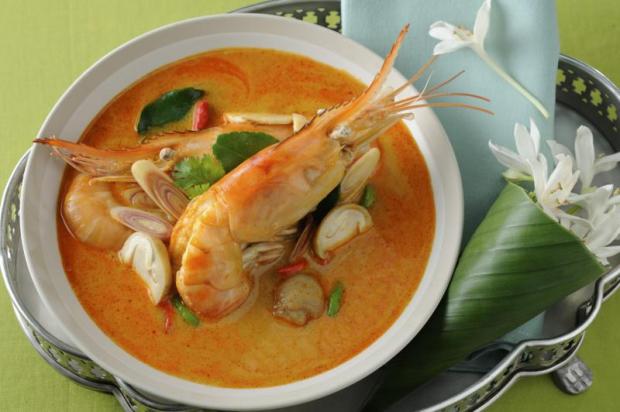
Still, their popularity has not faded. Prawn farming has become a big industry. Most prawns are now from Suphan Buri, Nakhon Pathom and Ratchaburi as these provinces have ample space for farming. Prawn farming requires good water quality, food and technology that has to be improved all the time. The sizes that prawns are sold at have to meet what the market demands. Nowadays, we have so many dishes filled with prawns of the same size, and with tom yum goong as a national dish, demand will continue to be extremely high.
Does this mean that we have no chance of getting prawns naturally from the river anymore? Not quite. It can be done but you have to know the time and place.
There are giant prawns in every river with an open mouth to the sea, such as the Nakhon Chaisri, Mae Klong and Petchaburi rivers. But it also depends on whether the waterway flows through large settlements or not. If the river passes through an urban centre, the water quality is likely to be adversely affected, limiting the birth and survival rate of the prawns. In rivers such as the Trat and Klong Chumporn where conditions are still good, giant prawns can easily be found.

Another factor that contributes to survival rates is the abundance of other aquatic life in the area. If there are enough viable alternatives, people may choose to catch other creatures instead of the prawns, especially due to the difficulties of the prawn catching process. If nobody is bothering the prawns too much, there'll be plenty of them in the area.
Giant river prawns may cost so much that it feels like you're eating gold. Perhaps it's better to eat farmed prawns and leave the rest to nature.













