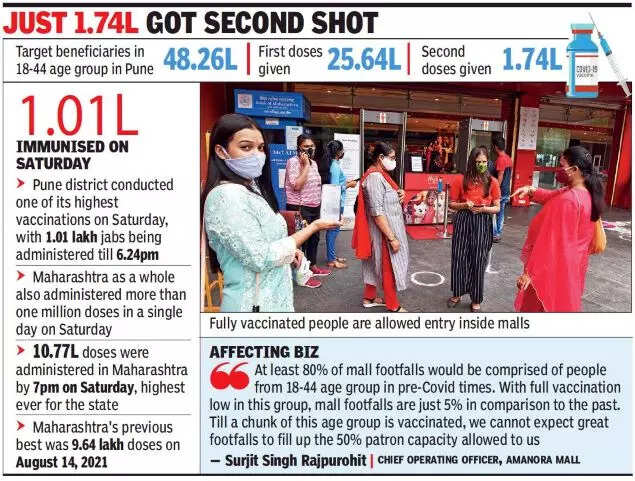
PUNE: Vaccination data from the Pune Metropolitan Region (PMR) revealed on Saturday that just 4% of its 48.26 lakh population in the 18-44 age group has been completely vaccinated so far, making them eligible for a host of relaxations allowed by the state government.
Dr Subhash Salunke, the state’s technical advisor on Covid, told TOI, “Just 4% second dose coverage in the age group is very low indeed. This would not have happened if there was adequate quantity of vaccines supplied from the Centre, considering that vaccinations for this age group began on May 1.”
He said many beneficiaries were still hesitant to get paid jabs from private vaccination sites, though those who are due and can afford paid shots must get their second doses as soon as possible. “The price of Covishield, which a majority of people have taken, is much lower than that of the other vaccines at private sites and should not be a deterrent to those who can afford. That’s a small cost for gaining protection against Covid-19,” Dr Salunke said.
The data showed that from August 1-21, daily vaccinations had touched or crossed 50,000 on just a few days in PMR. Vaccine shortage at government centres had caused municipal bodies to suspend vaccinations on several days in August.
Officials said nearly 2.5 lakh vaccine doses were currently lying unused with the private sector as demand for paid jabs had plummeted.
Dr Sanjay Deshmukh, assistant director (medical), Pune circle, told TOI, “The age group started getting jabs in June. So, many second doses are pending in this segment, almost 80%. Barely 10% people take second doses on time. The rest keep putting it off to a future date. To expedite second doses, we are now giving priority to second dose recipients, with 70% jabs at vaccination sites allocated to those due, and the rest to first dose takers.”
Dr Salunke said experts were hoping that the state would achieve full vaccination of at least 50% of eligible population by September. But the fully vaccinated numbers are still very low, which could create problems. “Low central supplies are solely to be blamed for the situation, while the state government has been trying to make best use of all possible doses it receives,” he said.
He said the experts had already made two-fold recommendations to the state government - expediting vaccination and increasing surveillance of fever cases, ILI, SARI and mutation cases in the prevailing situation when the cases are on the lower side.