Most museums and art galleries have reopened after they had temporarily closed due to the coronavirus outbreak. Many of them have also introduced an online ticket reservation system to avoid overcrowding while trying hard to prevent infections by enforcing such measures as checking visitors' temperatures and using disinfectants.
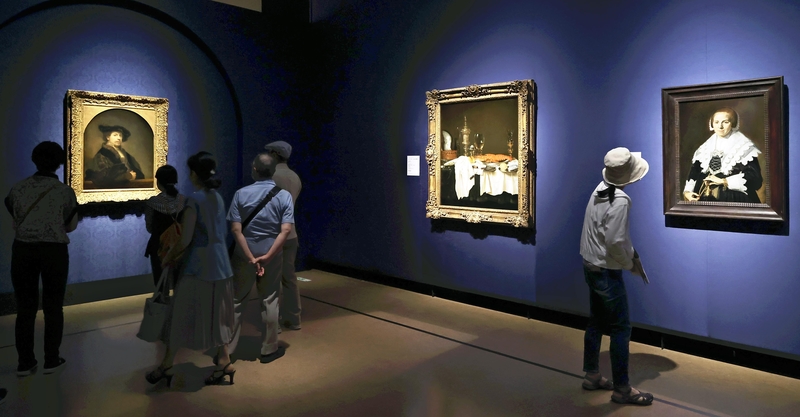
The National Museum of Western Art, located in Ueno, Tokyo, is giving an exhibition titled "Masterpieces from the National Gallery, London" through Oct. 18. All of the featured artworks are exhibited for the first time in Japan, including those by Vincent van Gogh and Johannes Vermeer.
During my recent visit to this exhibition, I saw visitors stop in front of van Gogh's "Sunflowers" and appreciate it in a leisurely way. I was very surprised as such a masterpiece painting would normally be thronged with people and visitors would not be allowed to spend much time viewing it.
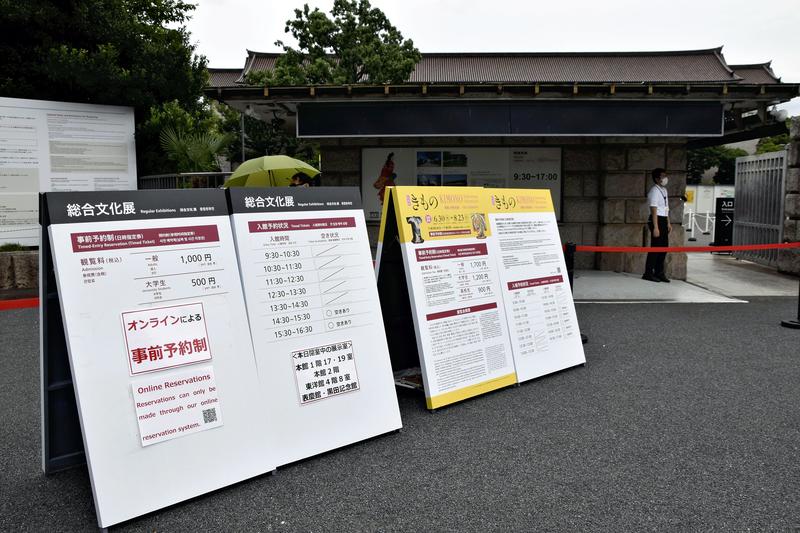
But this is now a new possibility as the art museum introduced an online ticket reservation system for the exhibition to help prevent virus infections. The system asks visitors to choose the dates and times of their visits in advance.
In principle, the museum admits a limited number of visitors at 30-minute intervals, starting from its opening time at 9:30 a.m. This measure has been successful in curbing overcrowding.
In May, museums and art galleries were advised to establish a time and date reservation system based on a guideline to prevent the spread of coronavirus at museums, released by the Japanese Association of Museums, by eliminating overcrowding inside and outside of their buildings.
To each museum or art gallery that introduces such a system, up to 2 million yen will be subsidized from the central government's supplementary budget, which was appropriated for this purpose. According to the association, about 60 facilities have inquired about the subsidy.
The Etix Data Firm, a ticketing service company in Tokyo that develops and operates online ticket reservation systems, has gotten inquiries from about 100 art galleries and museums across Japan since May 20, with about 40 having introduced a reservation system by the end of June, the company said.
Eiji Harada, president of the company, said: "Introducing a ticket reservation system is a symbol of the revival of culture-related businesses. By using this system, the private reservation of an exhibition room at fixed time intervals becomes possible. From now, we want to offer such value-added services for the better enjoyment of exhibitions."
It should be noted that such a system is spreading among more and more national museums and art galleries. Given the coronavirus outbreak, the conventional way of appreciating works at exhibitions may significantly change, especially at special exhibitions that can attract a great number of visitors.
In Tokyo, the National Museum of Nature and Science in Ueno and The National Museum of Modern Art, Tokyo in Takebashi, among other facilities, shifted to a reservation system in tandem with their reopening.
The Tokyo National Museum, which reopened on June 2, also introduced a system to reserve timed tickets on specific days on its website for an exhibition displaying pieces from its own collections, entrusted artworks, and a special exhibition titled "Kimono: Fashioning Identities," which will last until Aug. 23.
The museum garnered a lot of attention in 2015 when a huge number of visitors waited in lines for several hours to enter an exhibition featuring "Choju Giga," a popular national treasure depicting frolicking animals. Many other high-profile exhibitions were similarly overcrowded in recent years.
According to the museum, concerned about overcrowding, it had considered introducing a reservation system over the past year based on overseas precedents, such as at the Louvre Museum in Paris.
The Tokyo museum also stated that the system's introduction has caused no unexpected confusion so far.
While a reservation system guarantees that visitors can view exhibits in a much less crowded environment, each ticket is only valid at a specified time on a specified day. Another disadvantage is that even large-scale, high-profile exhibitions will face fewer profits as such systems limit the number of visitors.
Masayuki Handa, senior managing director of the Japanese Association of Museums, said: "Such reservation systems can improve services for visitors and their viewing environments, but they inevitably decrease ticket sales. Ensuring a stable business operation under these systems will be a future issue."
At a meeting of the Council for Cultural Affairs' museum division, which was held in June, there was a report that museums and art galleries use different reservation systems and it is inconvenient for users. There was also an opinion that museums should put emphasis on organizing exhibitions using cultural assets in their possession and pursue a goal of playing their social roles, now that the number of tourists visiting Japan has decreased and it is hard to give large-scale art exhibitions that feature works on loan from overseas.
Katsunori Takenouchi, manager of the general affairs department of the Tokyo National Museum, said: "Actually, we have some problems, for instance, how to deal with people who have timed tickets but have given up coming at their reserved time for some reasons. We'll also have to think about and discuss future viewing environments to prepare for the time foreign tourists start visiting Japan once again."
Read more from The Japan News at https://japannews.yomiuri.co.jp/