For more than half a century, the Assad family held such a vampire grip on Syria that it felt as if Bashar al-Assad’s survival was inevitable.
Thirteen years of civil war, the regime’s slaughter of its people, the mesmerising eruption of armed factions born from it, the quagmire of international interference all felt so relentless, so hopeless, so bloody, that it seemed unending.
This was despite the extraordinary signs of the Assad regime’s impending collapse: in early December 2024, rebels led by Ahmed al-Sharaa, a former al-Qaeda militant turned powerful opposition leader, were advancing across major cities. There were reports of Syrian army units evaporating, and there was deafening inaction from Assad’s international allies like Russia.
Even with all this, what happened one year ago today still felt unthinkable.
A confusing alliance of rebel groups stormed the capital. Political prisoners were filmed pouring out of the Saydnaya “slaughterhouse” prison.
Assad himself fled to Moscow before even his speechwriter, reportedly left behind to draft a defiant address he never delivered, knew of it.
His paper empire dissolved and the world inhaled.
One year on, however, it feels as though we are all still holding our breath.
After the bloody aftermath of the overthrow of Muammar Gaddafi in Libya, Hosni Mubarak in Egypt, Ali Abdullah Saleh in Yemen, and Omar al-Bashir in Sudan, the signs were worrying.
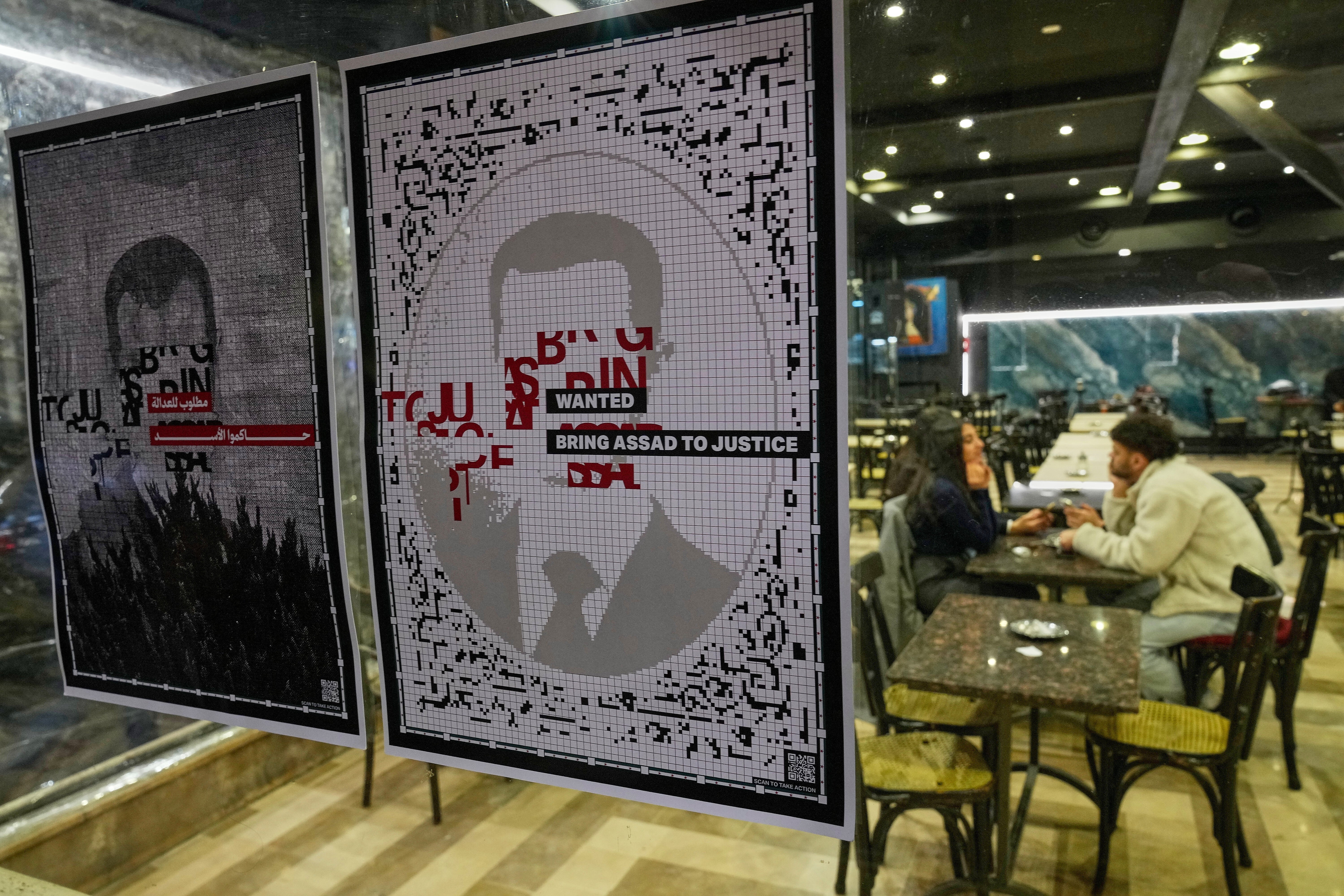
Transitions after so much violence, after dictators spend decades concentrating absolute power in structures entirely reliant on them, can trigger bloodier or more authoritarian aftermaths.
Absolute breakdown in Syria was a very real prospect: it was a divided nation long exploited by foreign powers and by international and domestic armed factions prowling their fiefdoms.
Many also expected an uncontrollable explosion of retribution after years of murderous rule by a regime that used chemical weapons against its children; that hunted down, detained, disappeared and tortured dissidents; that filled mass graves, and that hurled makeshift barrel bombs from helicopters onto villages.
There were also concerns that Assad had shattered beyond redemption the country’s economy, which had been pummelled by heavy Western sanctions. Swathes of Syria remain in rubble. According to the World Bank, it will cost more than $216bn (£162bn) to rebuild the country. The physical reconstruction costs alone amount to nearly ten times Syria’s projected yearly GDP.
So it is surprising – and welcome – that the total collapse of the state has not been the inevitable outcome.
Don’t get me wrong: there have been horrific outbreaks of violence; for example, a wave of bloody attacks against the Alawite sect, to which Assad belongs, in the coastal region of Latakia in March. In July, a bloody conflict erupted in the south involving the Druze, an ethno-religious minority with roots in Shia Islam.

The United Nations’ Human Rights Office said last week that in total, hundreds have been killed in this interim period. It documented distressing accounts of summary executions, arbitrary killings and abductions, mainly targeting members of communities and individuals accused of affiliation with the former government.
These killings, the UN added, were in some instances carried out by security forces of the interim authorities or groups affiliated with them.
Israel, surely wary of the rise of a Western-facing, powerful, prosperous Arab neighbour, has also been stirring the pot in the south. It has launched multiple deadly military operations across the country, including physical incursions into Syrian land it now occupies with the purported aim of “supporting” the Druze, whose adherents live in Syria, Lebanon and, crucially, Israel.
Whenever I have been in Syria, sitting with prominent members of the Druze community in the south and the Kurds in the north, they have expressed distrust of the new Damascus authorities.
Although al-Sharaa has reached out to various communities, he has in effect centralised power within a ruling inner circle in the capital. Kurdish commanders in particular are nervous about his onetime al-Qaeda roots, the fact that he has absorbed foreign fighters – which they regard as jihadists – into his army ranks, and that his forces have at times fought side by side with Turkish-backed factions, who they see as an existential threat.

Al-Sharaa’s government has had a slow start. The administration established national committees to investigate these two episodes of mass sectarian violence, although the reports have not been made public, and, from what I understand, there has not been an acknowledgement of any government responsibility for crimes.
His government has also formed a National Commission for Transitional Justice and a Commission for Missing Persons, led by victims, survivors and human rights defenders. There have been domestic investigations into Assad-era abuses and multiple arrest warrants issued.
But there are criticisms, for example, of a lack of willingness to examine crimes committed by those now affiliated with the new administration, either during the 13 years of civil war or since.
Syria is also struggling under the heavy shadow of sanctions. The Caesar Act, which sanctions the deposed government, was signed into law by Donald Trump in 2019 following disclosures of horrific crimes committed by Assad against his people. Since Assad’s fall, it has been suspended but not fully repealed.
This, prominent members of Syrian civil society tell me, means sanctions continue to cast a long shadow over Syria’s development. Companies continue to avoid investing in Syria for fear that sanctions could be reversed at any time. It has even had a negative impact on the Herculean task of finding Syria’s estimated 181,000 missing people (according to the Syrian Network for Human Rights) and unearthing the dozens of mass graves, work that requires international expertise and equipment.
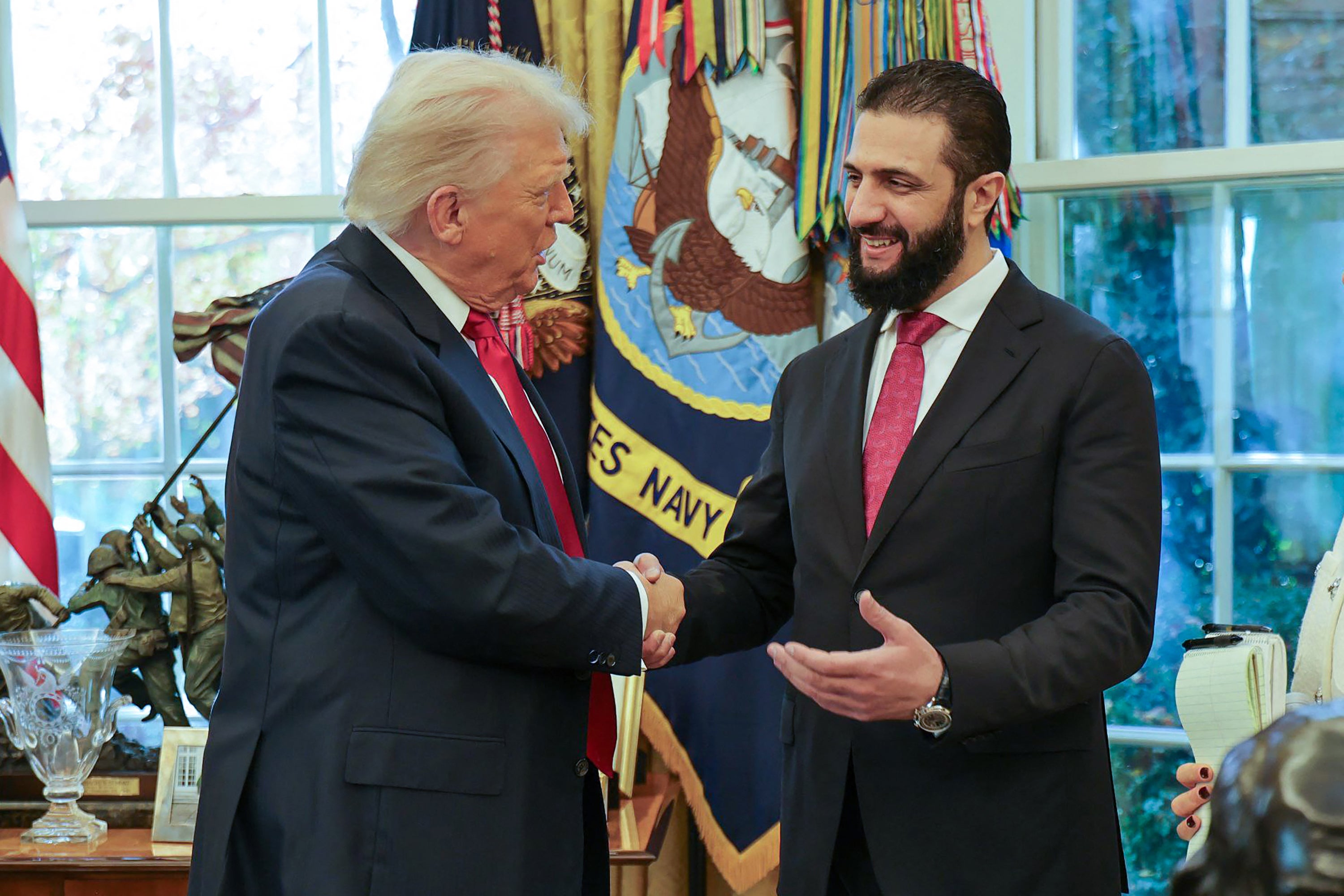
The latest reports from Washington imply that these sanctions will be lifted imminently. President al-Sharaa has been welcomed in Washington by Donald Trump – who has called him the Middle East’s new “young, attractive tough guy”.
There is positive movement forward.
But Syria remains on a knife-edge. There is a long way to go, a lot to rebuild and to heal – and the international community should work hard to help it.
Ted Cruz attacks Tucker Carlson after he reveals plan to buy home in Qatar
Washington's Mayor Bowser says the city's police chief, Pamela Smith, is stepping down
Starmer: Ukraine deal must be ‘just’ and backed with ‘hard-edged’ guarantees
New fighting along the Thai-Cambodian border is rooted in a longstanding territorial dispute
Bethlehem lights up Christmas tree for first time since 2022
Rotten wood and no bricks: Palestinians struggle to rebuild homes in ruins of Gaza