Despite the OECD's recent recommendation, the Retirement Commission has advised against raising the pension age
Raising the pension age would further disadvantage Pasifika and Māori people who already enter retirement in a much worse position, according to the Retirement Commission.
The commission released its three-yearly review of Retirement Income Policies this morning, recommending NZ Super qualification age to remain 65 or be replaced by far more complicated systems.
This time around, the review, along with its traditional brief, zeroed in on the impact the current policies had on the retirement savings outcomes and experiences of Pasifika, Māori and women who tend to arrive at pension age less economically well-off.
READ MORE: * MSD to review all debt issued to overseas pensioners * OECD: Raise pension age to prevent shock
Earlier this year the OECD recommended the New Zealand Government lift its eligibility age in line with age expectancy to ensure it would remain sustainable with an ageing population.
In 2017, the National Party also sought to lift the age of eligibility to 67 in 2040 under Bill English as prime minister, but this didn’t eventuate. Raising the pension age was also recommended by the former retirement commissioner Diane Maxwell in 2016.
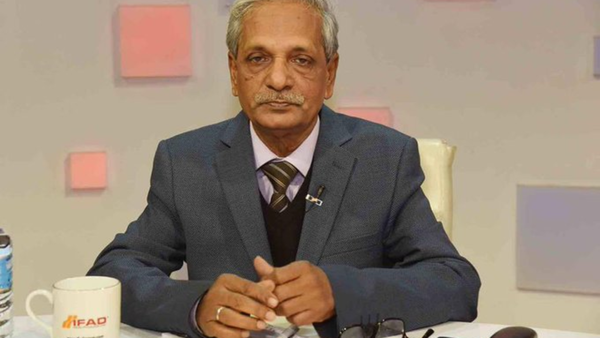
Increasing the age above 65 to create a more sustainable superannuation scheme would, according to Retirement Commissioner Jane Wrightson, create substantial inequity.
This includes significantly shorter life spans for Māori and Pasifika due to health and wellbeing inequities.
“The simplest idea 'put the age up', is the one that I say causes the most damage to cohorts in our population that don't tend to be talked about and tend to be ignored and that's not reasonable.
“Because of the longevity issues around Māori in particular, I wouldn't be at all surprised if a Treaty conversation turned up around this. It's more complicated than it sounds.”
Wrightson rejects the notion that the super age needs to be shifted in line with changing demographics, with an expected net spend of 6.4 percent of New Zealand’s total GDP by 2061 funding a quarter of the population, “That’s not that bad.”
Life expectancy
A product of colonisation and the dispossession of land, Māori face large inequities in economic wellbeing, education, incarceration and health and wellbeing, which have resulted in a significantly shorter life expectancy.
Life expectancy at birth is 73.4 years for Māori males and 77.1 for Māori women, compared to 80.9 years and 84.4 year respectively for non-Māori men and women, meaning they receive the pension for fewer years.
The death rate between 50 and 65 is between 2.3 and 2.6 times that of non-Māori. Life expectancy from age 65 is 15.4 years for Māori men and 17.5 years for women compared to 19.6 and 21.9 for non-Māori.
READ MORE
*OECD to NZ: Raise pension age to prevent Super shock
*Pensioners fight to have Covid-related debt wiped
*NZ still a long way from gender equality
Retirement Commission Māori development director Erin Thompson-Pou agreed that increasing the pension age would increase inequity.
“There are a large proportion of Māori who are not even reaching 65, so if you raise the age another five or 10 years that field of inequity grows bigger. Simply because from a Māori perspective they will have less opportunity to access Super and KiwiSaver and yet, they have contributed considerably to the design of that system.”
Thompson-Pou said the Māori population was set to grow considerably over the next 30 years
“By 2050 there will be a large proportion of Māori aged between 30 and 50, who will be significant contributors to the New Zealand tax system, yet if we don't deal with some of the issues around housing, health and education for Māori, they're not going to reach 65 to be able to access New Zealand Super or KiwiSaver let alone 75.”
For these reasons, earlier this year Te Pāti Māori suggested lowering the pension age to 57 for Māori.
Thompson-Pou said it needed to be looked at with a broader view.
“Accessing it earlier would be fine if there weren't the issues around health, education and employment pre-65.”
Health outcomes and life expectancy are far from the only factors at play in reduced retirement outcomes for minority groups.
Compared to white men, Pākehā women earn 89c on the dollar, while Māori and Pasifika men earn 84c and 81c on the dollar respectively.
This drops down to just 75c for Māori women and 72c for Pasifika women.
Other aspects include the significant impact on women’s KiwiSaver balances of taking maternity leave and often only working part time after having children, which also result in having much less when retirement age rolls around.
Recommendations
As it stands, the commission’s key recommendation for improving retirement outcomes for Māori was to create an advisory committee to fully consider issues raised through its research and lead the development of policy options to present to government.
“I don't normally like making a recommendation to get more recommendations,” Wrightson said, “but in this area it's really important. Māori is not a homogenous group and we need much better and broader insights and discussions across Te Ao Māori.
For Pasifika people the commission recommended structured financial capability programmes that would provide stronger pathways to home ownership and for financial institutions to actively consider a collective approach to borrowing.
Other recommendations included continuing to highlight and address gender and ethnic pay gaps, maintaining KiwiSaver payments during parental leave and increasing the cash asset test for the accommodation supplement to at least $42,700 per person.
Currently, the cash asset test is at $8100, unchanged from when it was introduced in 1993 as 10 percent of the average house price.