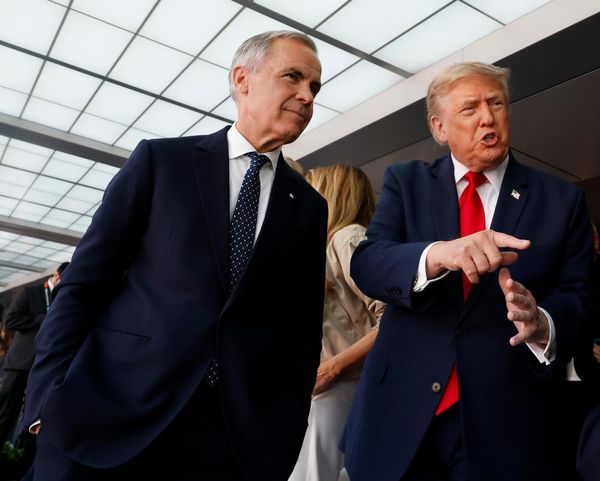
President Donald Trump remains the dominant force in Republican politics, but a new poll shows that a significant number of GOP voters and Republican-leaning independents are beginning to look for a different path after his second term as president ends in 2028.
The New York Times/Siena survey, conducted between May 11 and May 15 among 1,507 registered voters, found that three-quarters of Republican supporters approve of Trump's job performance.
Trump's grip remains strong in the party. A majority of Republicans and Republican-leaning independents said they want the party's next presidential nominee to follow his lead on most issues. Immigration remains his strongest area of support, with 80% of Republican supporters approving of his performance and 77% saying they want a successor to continue his approach.
Still, 37% of Republican supporters said they want the next nominee to move the party in a different direction. That number rises to 55% among Republican-leaning independents, a group that can be less reliable in party primaries but critical in general elections.
The clearest fractures are emerging over the economy and foreign policy. While nearly 70% of Republican supporters approve of Trump's handling of the economy, 55% also said they have a negative view of current economic conditions. Disapproval of his handling of the cost of living has climbed to 40%, up from 26% in January, according to the report.
Tariffs, one of Trump's signature policies, also appear to be losing some support inside the party. Thirty-one percent of Republicans, including 47% of young Republicans, said they want the GOP to move in a different direction on tariffs. A majority of Republicans now prefer a candidate who promises to cut corporate taxes over one who emphasizes tariffs.
Foreign policy is even more complicated. The Siena poll said 64% of registered voters overall believe the war with Iran was the wrong decision, while 55% said it has not been worth the costs. Among Republican supporters, 62% said going to war was the right decision, and more than two-thirds said they expect it to eliminate Iran's nuclear program. But only 43% said the war has been worth the cost.
That divide has opened space for competing visions inside the GOP ahead of 2028. Secretary of State Marco Rubio is widely viewed as more interventionist, while Vice President JD Vance is seen as more aligned with the party's isolationist wing.
Israel is also becoming a more divisive issue among Republicans. While a majority still supports U.S. economic and military aid to Israel, 37% now oppose that assistance, up from 28% in September. Younger Republicans are especially skeptical, with those under 45 more likely to say Trump is too supportive of Israel.
Trump's personal style is another source of unease. More than 20% of Republican supporters said they had been offended by something he said recently, up from 13% in 2024.
The poll also found that Tucker Carlson is viewed favorably by 37% of Republicans, Joe Rogan by 54%, while 69% said they had not heard of white nationalist Nick Fuentes.
Despite those tensions, Republicans appear likely to remain loyal at the ballot box. The poll found that 88% plan to vote Republican in the fall.