When Scotland’s Grid Iron theatre performed in Beirut, the audience were appalled to discover that they were expected to turn off their mobile phones, and had to be gently coaxed into compliance. When the company performed in Jordan, a member of the royal family turned up with an entourage of armed guards, so that a show designed for 30 suddenly had an audience of 70. Producer Judith Doherty and her team had to think on their feet to ensure that the entire audience experience wasn’t compromised, even if that meant being very firm with men with guns about where they could and couldn’t stand. Apparently, they behaved like lambs.
Manoeuvring an audience and responding to their needs is a real art. While I’ve seen plenty of promenade shows ruined by stewarding that is either too heavy-handed or too lax, it is not only that sort of show that requires careful handling of the audience. Traditional venues can enhance or ruin an evening with their meet and greet policies, or in some cases lack of them.
Quite simple things can ruin an evening. I once got shouted at for lingering too long in my seat, when I was still chatting with a friend about the performance less than five minutes after it had ended. It took the entire gloss off the evening. One of the pleasures of more fringe-style venues is that they encourage audiences to stick around and don’t hurry you out of the door.
Earlier this week, at the UK theatre awards, Newcastle’s Theatre Royal was recognised as the country’s most welcoming theatre, in a category voted for by members of the public. One of the reasons that I love going to the theatre for performances other than press nights is that you get a chance to see how a venue operates when it’s not on its best behaviour for critics, funders and guests.
The audience experience can be as much a part of a good night out as the show itself. Being made to feel welcome and looked after won’t make an indifferent show better, but it may take the edge off the disappointment. And great customer service adds a shine, making an enjoyable night out feel like a great one. It’s about treating your audience as human beings, not as ticket buyers who, once they’ve made their purchase, are no longer of much interest – unless it’s thought that they might be persuaded to part with more money at the bar, on a programme or on merchandise.
At the Curve in Leicester on Tuesday night, a couple had turned up a week early to see A Streetcar Named Desire. Were they turned away? No, they were welcomed and made to feel at home. Of course, it might have been more difficult if the house had been full. But however they felt about the production they ended up seeing, I think that couple will be return customers.
When an audience is cherished by a venue or theatre company, they often look after each other too. One of the great pleasures of the outdoor shows that London Bubbleused to put on in London parks was the way they were stewarded with a light touch and generosity which made audience members generous to each other too. When companies get the stewarding for promenade or immersive shows right, the audience start to self-regulate, rather than elbowing one another out of the way to get a better view. Ushers and stewards are often volunteers, frequently fantastic, and have to put up with a great deal. But there are still venues where it feels as if you are being policed, not looked after.
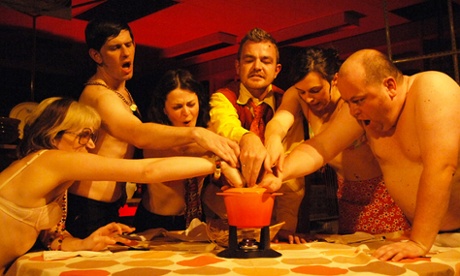
Grid Iron are currently on tour with a revival of their wonderful decade-old piece The Devil’s Larder reimagined for four different venues across Scotland, including an out of season hotel and an abandoned primary school. The company have always been ahead of their time in their exploration of promenade shows and different audience dynamics. They’ve got more competition these days, but they welcome it.
They have also been at the forefront of ensuring the best possible audience experience.They realise that there is no point delivering great work if people can’t see it, or they feel herded, or otherwise uncomfortable about what is being asked of them. In a Grid Iron show, you are always given very clear instructions from the start.
Doherty is prepared for the fact that, on this tour, Grid Iron will be reaching an audience who may be less familiar with promenade-style theatre, as well as audience members who have grown up with the company, and now have different physical needs than when they were lithe 30-year-olds. “If you think very hard about getting everybody from one end of the show to other, comfortably, safely and on time, then everything falls into place,” says Doherty. It’s a lesson worth learning, and it doesn’t just apply to promenade theatre.