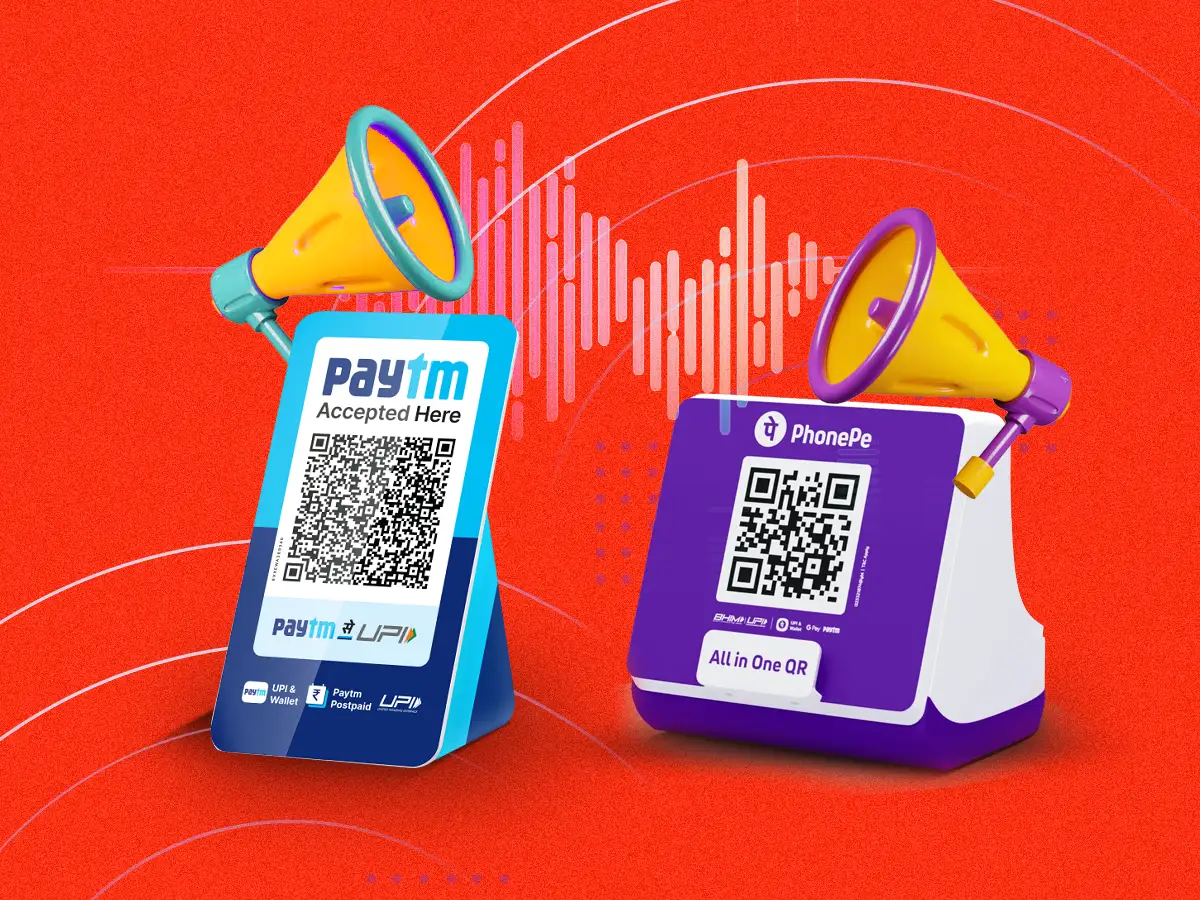
National Payments Corporation of India (NPCI) is building a common interoperable infrastructure for soundboxes which can support Unified Payments Interface-based transactions made via any payment application, according to three people in the know.
With soundboxes becoming ubiquitous across retailers and small merchants, NPCI’s single common platform will operate agnostic of which QR code is being used to accept the payment.
One of the people explained that a merchant can register the soundbox in any single payment app and connect the other QR codes onto that one app. Going forward, irrespective of which app the merchant accepts the payment through, the confirmation will happen via the same soundbox.
Emailed queries to NPCI went unanswered.
Currently, merchants use multiple QR codes from different service providers like PhonePe, BharatPe and Paytm to accept UPI payments. With each of these QR codes being connected with its own soundbox, merchants have to invest in multiple devices, said one of the people.
“But now with an interoperable soundbox, a merchant can accept payment from any QR code and use the same device for the settlement service,” the person added.
An understanding of the level of engagement for a merchant with a payment app can be best understood from the disclosures made by PhonePe in the draft documents filed with Sebi for its IPO, which was put off earlier this year.
PhonePe said it has 47 million registered merchants on its platform. Out of this base, only 11 million merchants engage with the PhonePe platform once a month and 6.7 million on a daily basis. This data is from September last year.
While some early conversations have already happened with third-party UPI apps on the issue of an interoperable soundbox, the product will take time to develop, the people mentioned in the story said. The concept has already been tested with major industry players, the people added.
On average, a merchant is estimated to pay around Rs 100-150 per month as the subscription charge for each soundbox. With a common soundbox, this cost can be minimised for the merchant, said the second person cited in the story.
In March 2026, according to NPCI data, around 14 billion UPI payments were made to merchants by consumers. Total UPI payments for the month was at 22 billion. A large part of such transactions is made at offline stores and the soundbox confirms each of these transactions via a voice message. Merchants prefer to use these devices since this helps reduce frauds and gives a transaction confirmation.
“Soundboxes have become very popular among merchants, especially for those who have a very heavy footfall. If NPCI can build a common standard for all, then this will be a big positive for the ecosystem,” said the second person.
According to disclosures made by Paytm, which is run by listed fintech firm One97 Communications, there are more than 14 million merchant subscriptions on its platform. These include PoS devices and soundboxes. Paytm is also investing in building these devices to be AI-ready and offer different services beyond payment confirmations only.
If the NPCI opens up a common API for these sound-based transaction confirmations, then there could be a new opportunity opening up in the market for a QR code agnostic payment channel, said the founder of a digital payments startup on the condition of anonymity.
They all spoke on the condition of anonymity because these conversations are still private.
According to industry insiders, payment firms like PhonePe, BharatPe, Google Pay and Paytm have been using soundbox as a measure of merchant stickiness and building associate revenue models around the device.
Now, if the soundbox gets standardised across platforms, the differentiating factor might diminish, the people cited in the story said.
This also comes at a time when the UPI payment companies are lobbying hard to bring back the merchant discount rate (MDR) system onto UPI. Industry association Payments Council of India has sent multiple communications to the finance ministry requesting it to bring back MDR—the fee that merchants pay banks for enabling digital payments.
“Without MDR, there is no business case on UPI. Smaller UPI apps are also not investing because there are no direct returns,” said the founder of another digital payments startup. “In this, soundbox was a good means of revenue generation; what happens to that source of revenue is a big question for the industry.”