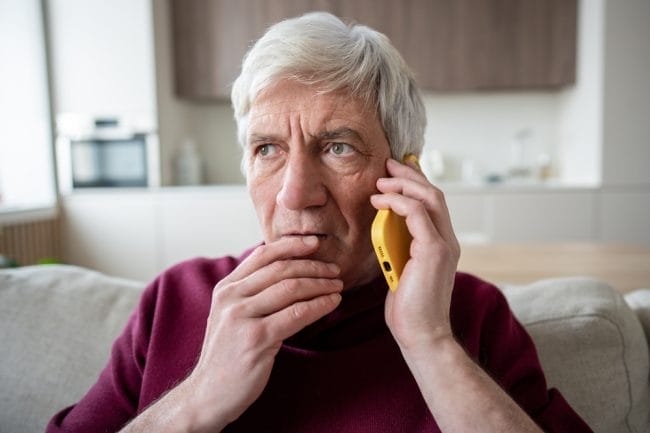
Your phone buzzes. You look down and see a missed call from a number that looks familiar. It has your local area code—maybe even your neighborhood exchange. Naturally, curiosity takes over. You assume it might be a neighbor, a local business, or a delivery driver, so you call back.
That single tap can lead to immediate and excessive charges on your phone bill. This is the “One Ring” scam, also known as Wangiri, and it is evolving for the 2026 landscape. Scammers have realized that many people no longer answer “Scam Likely” calls, so they are weaponizing local trust to trick you into calling them.
How the ‘Local Spoof’ Works
In the past, these scams often originated from clearly international numbers (like +222 or +232), making them easy to spot. However, criminals now use Voice over IP (VoIP) software to “mask” their real location with your own area code.
The strategy is simple: they let the phone ring once—long enough to leave a notification, but not long enough for you to answer. This is a calculated psychological tactic designed to trigger your curiosity. When you see a local number with a missed call, your instinct is to check if it was something important.
The Premium Rate Trap
When you call the number back, you aren’t connecting to a neighbor. Instead, the call is instantly routed to an international “premium rate” line. This is the digital-age equivalent of an expensive 1-900 number.
Once connected, you may hear a generic recording or automated voice designed to keep you on the line (“Hello? Can you hear me? One moment please…”). While you wait, your phone bill is racking up high international calling rates. These charges appear on your monthly statement as international long-distance calls, which can be difficult to dispute because you technically initiated the call.
Why Carriers Can’t Stop It Yet
The FCC has implemented STIR/SHAKEN protocols to verify caller ID, and the battle continues to intensify. As of 2026, the FCC has tightened rules requiring providers to recertify their data in the Robocall Mitigation Database, with a major deadline of March 1, 2026. This is designed to hold carriers accountable for the traffic they route.
However, the system is not yet foolproof. Scammers cycle through thousands of spoofed numbers daily, often faster than they can be flagged. Furthermore, because the victim is the one who “chooses” to dial the number back, carriers often argue that the resulting international fees are legitimate charges.
Signs You Are Being Targeted
-
The Single Ring: Legitimate callers almost always let the phone ring at least four times or leave a voicemail.
-
Neighbor Spoofing: Be wary of numbers that are nearly identical to your own. If your number ends in -0199 and you get a missed call from -0198, it is a classic sign of spoofing.
-
Missing Voicemail: If the caller has something important to say, they will leave a message. If there is no voicemail, do not call back.
Protect Your Bill
The golden rule is simple: if they didn’t leave a message, it wasn’t important. If you are truly worried that you missed a vital call, search the number online first. By 2026, most major scam numbers are indexed quickly on community reporting forums.
By ignoring that missed call, you are cutting off the scammer’s revenue stream. If you do find suspicious charges on your bill, contact your carrier immediately to report the fraud and request a reversal of the international fees.
Have you been tricked by a spoofed local number recently? Tell us what happened in the comments.
What to Read Next…
- 9 “Normal” Childhood Pranks That Are Now Illegal
- Police Warning: The New Digital Tint Meters Officers Are Using to Fine Drivers in 2026
- Impersonation Scams Are the New Pickpocketing: 4 Scripts That Separate People From Their Savings
The post One Ring Scam: Why That Local Missed Call Could Be a Bill Trap appeared first on Budget and the Bees.