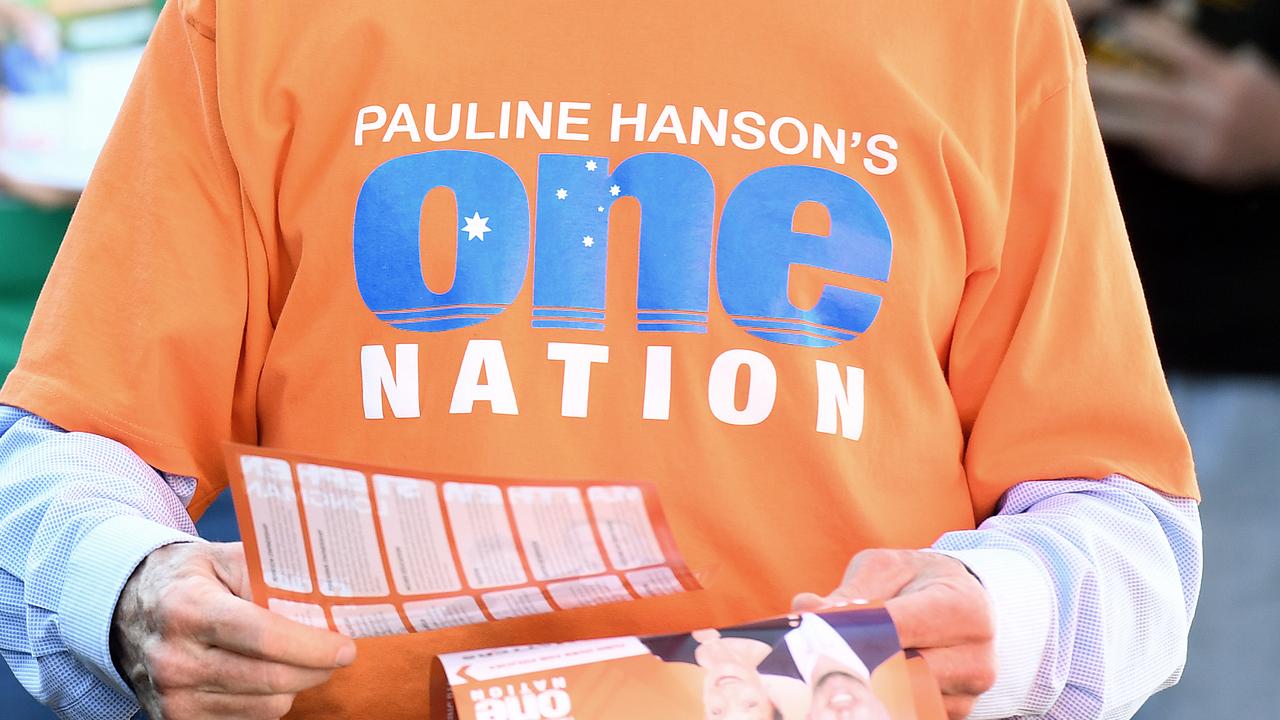
As One Nation surges in opinion polls ahead of a state election, putting it in the running to be the official party of opposition, voters are sharply divided in their opinions on the party and its policies.
The party is running candidates in all 47 lower house seats at the South Australian election, and five recent opinion polls have shown it polling at 21 to 28 per cent of the primary vote.
Racial equality activist Rowena Seutatia MacDonald, who lives in the electorate of Bragg, said that as a second-generation immigrant of Samoan descent it was impossible for her to ignore "the white supremacist ideals at the core of One Nation's policies".
"I am filled with dread at the thought that South Australia is now the testing ground for One Nation's national success," she said.
"One Nation continues to demonstrate who is and isn't welcome in their version of Australia by marginalising First Nations people, migrants, Muslims and members of the LGBTQIA+ community."

Gibson voter Chris Thipthorp said that as a worker and a union delegate, he had voted Labor for 29 years because he felt it was the party that best represented him.
But he had voted for One Nation in both the lower and upper houses as a protest vote to send a clear message that he's done with the two major party preferred system.
"What strengthened my resolve to vote One Nation is that you get called a bigot, a racist, a xenophobe, ignorant, and that's not the case at all," Mr Thipthorp said.
"(We are) people who have legitimate concerns about where the country is heading.
"I don't like that multinationals operate here and pay little to no corporate tax or royalties, I want transparency on immigration, and I don't like the government overreach with digital ID, and the hate speech laws that were rushed through."
While he likes Premier Peter Malinauskas and what he's doing, Mr Thipthorp said he wanted to send a signal to Canberra even if voting in the state election.

Anti-poverty activist Duncan Bainbridge, who is in the Adelaide electorate, said Pauline Hanson had positioned herself as a champion of the ordinary Australian while appearing increasingly aligned with the interests of people like Gina Rinehart.
"We are no longer operating in the realm of policy coherence - we are operating in the realm of political symbolism," he said.
"But symbolism does not lower your power bill. It does not stabilise your rent. It does not create secure work or reform a housing system that is structurally failing."
Instead, it redirected legitimate anger from the complexity of the problem and toward narratives that are easier to grasp but ultimately incapable of delivering material change, Mr Bainbridge said.