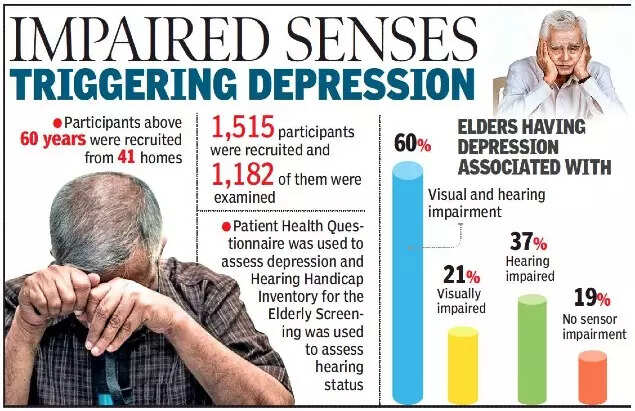
HYDERABAD: LV Prasad Eye Institute (LVPEI) has conducted a study in elderly homes in Hyderabad and found that one out of four has depression. The study, done in 41 such homes, revealed that 60% of the elderly had depression associated with eye and ear impairments.
According to Dr Srinivas Marmamula, associate director of Public Health Research and Training, “Elderly people with double sensory impairment are five times more at risk for depression. In addition, depression is higher among those with single sensory impairment than in those without any sensory impairment.”
‘Nature Journal’ published the study in its recent edition titled ‘Depression, combined visual and hearing impairment (dual sensory impairment): A hidden multi-morbidity among the elderly in residential care in India.’
Dr Srinivas told TOI, “This is one of the most extensive studies carried out among the elderly population in the residential care area. Visual and hearing problems and feeling of loneliness drive the elderly into depression. Other health and psychosocial issues and emotional factors are also contributing factors for depression.”
Researchers did not find any link between hypertension or diabetes and depression. However, they identified poor mobility as another factor. In addition, researchers said that six out of 10 elderly diagnosed with both ear and eye impairments had depression and highlighted the need for screening and referral for medical care. LVPEI’s earlier studies have found that close to a third of the elderly had visual impairment. Out of them, over 80% of visual impairment cases were due to avoidable causes.
The elderly homes ere classified into three categories. The first category is private homes where the elderly or their kin pay a monthly or annual user fee. The second category is artially subsidised homes where the elderly or their kin pay only a part of the user fee and the rest of the amount is met by philanthropic support. Finally, free homes where the elderly need not pay any user fee as external funding sources support the homes. The number of elderly residents ranges from less than 30 to over 100 in these homes.
Researchers observed that clinical assessment of depression should be done as part of the routine practice in India’s eye and ear examination clinics.