Nearly one in four adults in the five states with the most suspected alpha-gal syndrome cases carries antibodies to alpha-gal, according to CDC surveillance published in Morbidity and Mortality Weekly Report. The estimated combined seroprevalence across Arkansas, Kentucky, Missouri, Tennessee, and Virginia was 24.0 percent.
The number that matters more is the comparison. As of 2022, up to 450,000 people in the United States were estimated to have alpha-gal syndrome, which is about 0.14 percent of the population. Antibody positivity in these five states runs roughly 170 times higher than the rate of the illness.
That gap is the finding, and the researchers were direct about what follows from it. Testing people who do not have symptoms will produce a large number of positive results that do not mean what patients will assume they mean.
What Was Measured and How
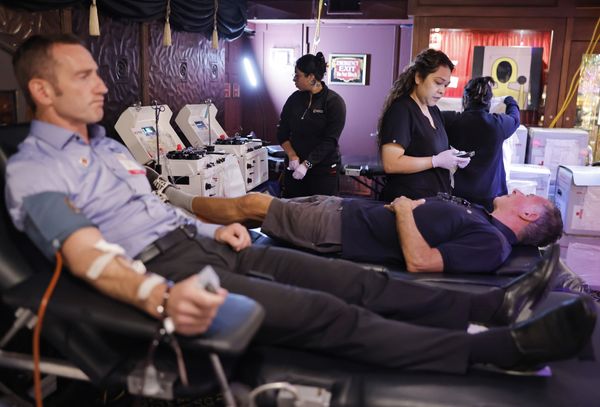
The study analyzed 3,000 residual blood donor samples, 300 from each of 10 states, collected from November 2024 through April 2025 through Creative Testing Solutions, which handles laboratory testing for the American Red Cross and Vitalant.
Serum was tested at the University of North Carolina at Chapel Hill using the ImmunoCAP o215 assay from Thermo Fisher Scientific, run on a Phadia 250 instrument. A result of 0.1 kU/L or higher was defined as positive. That is the same threshold used in the Council of State and Territorial Epidemiologists case definition, which requires clinical criteria in addition to laboratory evidence for a confirmed case.
Of the 3,000 samples, 592 were positive. Estimates were then weighted by age and sex against 2020 Census data to approximate each state's population aged 16 and older.
Arkansas had the highest estimated seroprevalence at 31.2 percent, followed by Missouri at 26.0 percent, Virginia at 22.8 percent, Kentucky at 22.7 percent, and Tennessee at 21.5 percent. Maine came in at 10.6 percent, South Carolina at 5.5 percent, and Minnesota at 5.4 percent. New Mexico and Washington, both outside the established range of the lone star tick, registered 1.9 percent and 1.1 percent.
Seropositivity was lower among adults aged 16 to 34 than among those 55 to 64, higher among men than women, and lower among Hispanic than non-Hispanic donors. For every tenfold increase in county population density, the probability of a positive result fell by 29.5 percent.
Why a Positive Result Is Not a Diagnosis
Alpha-gal syndrome is an allergic reaction to galactose-alpha-1,3-galactose, a sugar found in mammalian meat, dairy, and byproducts such as gelatin. In the United States, it is most often linked to bites from the lone star tick, whose saliva introduces the sugar and can prompt the body to make alpha-gal antibodies. Reactions can include hives, swelling, wheezing, and gastrointestinal symptoms, and can rarely be fatal.
People with those antibodies fall into two groups. Some have the syndrome. Others are sensitized without symptoms, and the evidence suggests the second group is much larger. A case-control study conducted in North Carolina identified 63 seropositive control participants, none of whom had alpha-gal syndrome. A ten-year chart review at an allergy clinic in Suffolk County, New York, found that 7.5 percent of referred patients were sensitized only.
The MMWR authors put the practical risk plainly. Relying on a positive test without considering whether a patient has compatible symptoms "might result in overdiagnosis and unnecessary dietary restrictions," they wrote.
They also noted that although the cardiovascular implications of sensitization have been studied, the evidence is not sufficient to recommend dietary changes for people who are sensitized but not allergic.
What This Means for Someone Who Eats Meat in These States
If you live in Arkansas, Kentucky, Missouri, Tennessee, or Virginia and feel fine after eating meat, this study is not a reason to change your diet or to request a test.
If you have had delayed reactions after eating red meat, typically three to six hours later rather than immediately, that pattern is worth raising with a clinician. Alpha-gal reactions are unusual among food allergies precisely because of that delay, which is one reason they are often missed.
The reasonable sequence is symptoms first, testing second, and interpretation by a clinician who considers both. Ordering an alpha-gal IgE test out of curiosity in a high-prevalence state carries a meaningful chance of a positive result that does not indicate disease, and dropping meat and dairy from a diet without cause has its own nutritional and social costs.
Tick bite prevention remains the actual intervention. Repellent, treated clothing, and prompt tick removal reduce the exposure that drives sensitization in the first place.
Limits of the Study and What Comes Next
The authors flagged three limitations that matter for interpretation.
Blood donors are not the general public. They tend to have higher socioeconomic and health status, and in this sample 92.9 percent were White and the median age was 62. Too few non-White donors participated to support reliable estimates by race. Sampling was also uneven within states because it depended on where donation centers sit, which reduces how well the results represent an entire state.
The third limitation may push the estimate itself. Blood donors disproportionately have type O blood, and there is growing evidence that type B blood is protective against both alpha-gal seropositivity and the syndrome. Because the general population includes more people with type B blood than the donor pool does, the reported seroprevalence may be an overestimate.
Two of the study's authors disclosed relevant financial relationships, including advisory board membership with Genentech and Regeneron and honoraria from allergy organizations, alongside grants from the National Institute of Allergy and Infectious Diseases and CDC.
The researchers concluded that a more specific diagnostic method, and possibly a higher positivity threshold, are needed to make alpha-gal syndrome surveillance workable. They also suggested serosurveys like this one could identify regions where the syndrome is underrecognized and help focus tick bite prevention and clinician education.
The newest confirmed finding is that alpha-gal antibodies are far more common than alpha-gal syndrome in the states where the syndrome is most reported. The people most affected are patients in those states who might be tested without symptoms. The most reasonable action is to seek testing only if you have had reactions consistent with the syndrome. The central uncertainty is what share of sensitized people eventually develop the allergy, which remains unknown.
Frequently Asked Questions
Does a positive alpha-gal antibody test mean I have the allergy? No. A confirmed case requires both compatible symptoms and laboratory evidence. Most people with alpha-gal antibodies do not have the syndrome.
Which states had the highest rates? Arkansas at 31.2 percent, Missouri at 26.0 percent, Virginia at 22.8 percent, Kentucky at 22.7 percent, and Tennessee at 21.5 percent, with a combined estimate of 24.0 percent.
What test and threshold were used? The ImmunoCAP o215 assay from Thermo Fisher Scientific, run on a Phadia 250 instrument, with a positivity threshold of 0.1 kU/L.
Should I get tested if I have no symptoms? The CDC researchers recommend testing only patients with clinically compatible symptoms, because testing without symptoms in high-prevalence areas risks overdiagnosis and unnecessary dietary restriction.
What do alpha-gal reactions look like? Hives, swelling, wheezing, or gastrointestinal symptoms, typically appearing hours after eating mammalian meat or dairy rather than immediately. Severe reactions can be life-threatening.
Could the 24 percent figure be too high? Possibly. Blood donors disproportionately have type O blood, and type B blood appears protective, so that the sample may overestimate population seroprevalence.
What actually reduces risk? Preventing tick bites. Use repellent, treat clothing, check thoroughly after time outdoors, and remove attached ticks promptly.