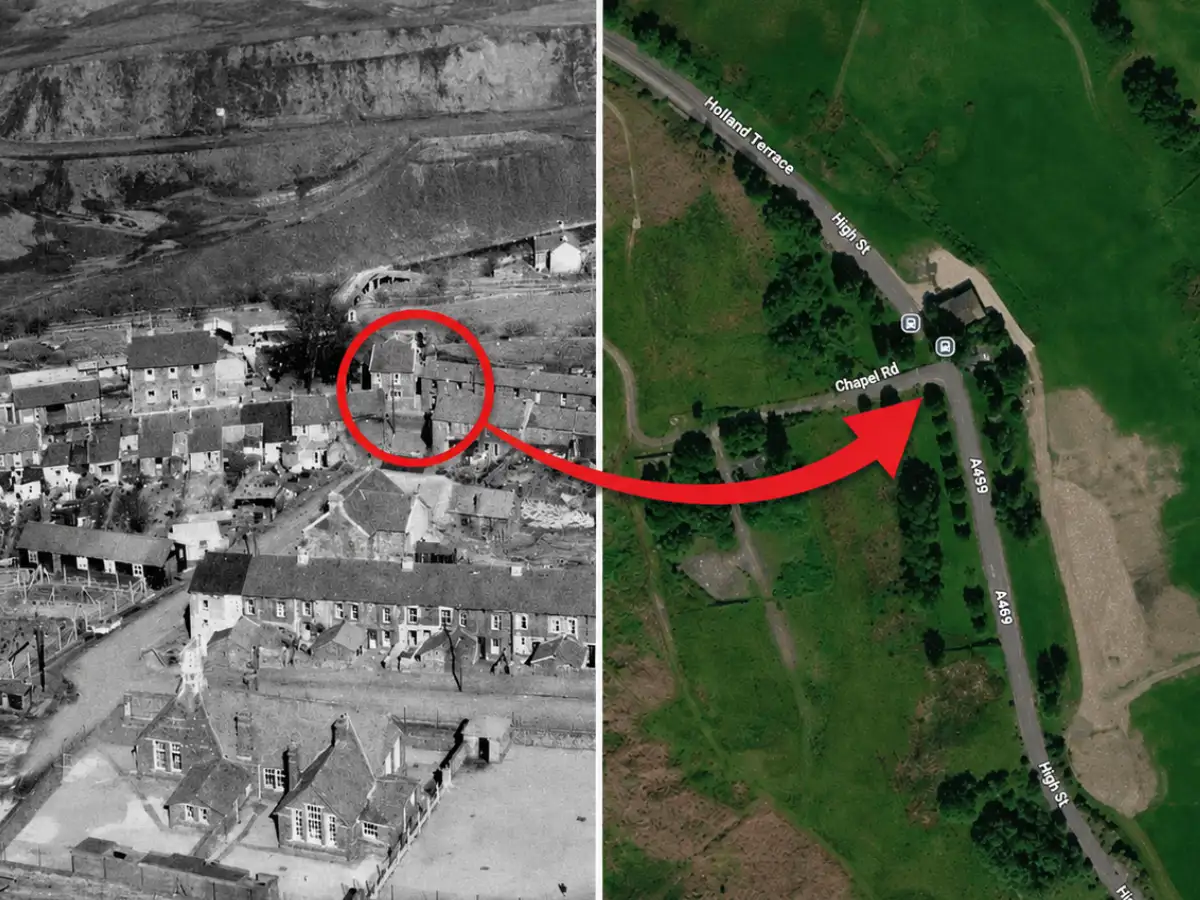
Just one home is left of a village that used to have 600 people.
A three-bedroom house in the hills of South Wales has just been sold, and it just so happens to be the last remaining building left from a village that was wiped off the map decades ago. The property at 2 Lawrence Terrace in the ex-mining village of Troedrhiwfuwch attracted 13 bidders who placed 230 bids before selling for £49,050, or about $65,000 at current exchange rates, reports Wales247. The guide price going into the online auction had been cut to just £1, or about a dollar and change.
For American readers who love a good ghost town story, this one has it all. A mountain that refused to stand still, a village that was wiped off the map, and one unassuming house that somehow fell through the cracks and is now back on the market, 50 years later.
A mountain that just would not sit still
Troedrhiwfuwch was a genuine working-class mining community in the Rhymney Valley near New Tredegar, which at its height was reportedly home to more than 600 people, including men, women, children, and pets. It had a school, a church, a chapel, a pub, a shop, a library, and a post office. But the earth beneath it had a serious problem. According to the study, ‘An historical review of landslide research in the South Wales coalfield,’ published in Geotechnical and Geological Engineering, the South Wales coalfield is one of the most concentrated areas of landslides in the United Kingdom, with repeated mining activity reactivating already unstable slopes. That is pretty much what happened at Troedrhiwfuwch.
The paper places Troedrhiwfuwch’s fate in a wider geological pattern, noting that South Wales has one of the highest landslide densities in the UK. It adds that, over the past 100 years, landslides have caused structural damage and loss of life, with many slopes first failing under periglacial conditions before human activity, especially late-19th-century mining and urban growth, reactivated them.